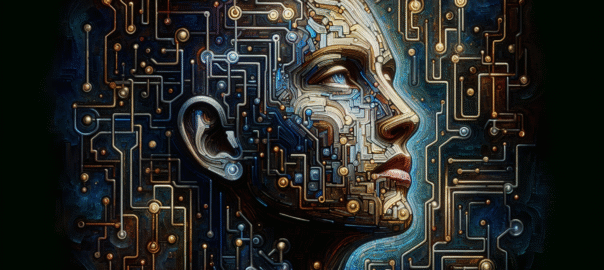
Imagine an AI that truly ‘gets’ the physical world around us—seeing, feeling, and predicting like a human. That moment is closer than you think.
In today’s rapidly evolving AI landscape, one breakthrough stands out: the development of AI models that can intuitively understand the physics of their environment. A standout example is the V-JEPA system, which learns about the physical world just by watching regular videos. This approach, highlighted in a recent article from Wired (source), promises to push AI beyond pattern recognition toward genuine physical intuition. In this post, we’ll explore why this matters, how it connects to current technologies, and what doors it could open for innovation in AI, IoT, and beyond.
As someone deeply immersed in AI, IoT, and sustainable tech, I find this advance thrilling. For years, I’ve worked on projects combining satellite data and connected devices to better understand complex systems in real-time. Teaching AI to comprehend physics like humans do could be transformative—not just for satellites interpreting Earth’s dynamic environments but also for music creation, where physical models of sound shape new compositions, and entrepreneurship, where we strive to build trustworthy, intelligent systems.
The Challenge: Teaching AI Physical Intuition
Traditional AI thrives on data and patterns but often stumbles when asked to predict outcomes in the messy, continuous physical world. Humans, from infancy, develop an intuitive physics sense—anticipating how objects fall, collide, or move—without math formulas. Replicating that in AI has been a significant hurdle.
V-JEPA’s Breakthrough: Learning From Ordinary Videos
The V-JEPA system, developed by researchers, sidesteps complicated physics programming. Instead, it trains on simple, everyday videos, learning the underlying laws governing object interactions and environmental dynamics. By predicting future frames or motions, the AI forms a mental model of gravity, momentum, and other forces.
Implications Across Industries
Imagine AI-powered drones that better navigate turbulent airflows or satellites predicting atmospheric changes more accurately by understanding physical interactions in real time. In smart cities, AI could manage traffic flow with an almost human intuition, while in robotics, this translates to safer, more adaptive machines working alongside us.
A Step Toward Truly Autonomous AI
This research points to AI that doesn’t just react but anticipates, understands context, and learns from its environment like a living being. This shift could redefine human-computer collaboration, enabling AI to assist in complex, dynamic tasks across disciplines.
Leveraging AI models that understand physical environments, a compelling startup opportunity lies in creating smart environmental monitoring systems for urban planning and disaster prevention. By integrating V-JEPA–style AI with IoT sensors, cities could anticipate structural stresses, predict flood patterns, or optimize energy usage dynamically—helping governments and businesses build more resilient, sustainable ecosystems.
AI’s journey toward physical intuition marks a profound shift—from programmed responses to genuine understanding. As these technologies mature, they won’t just augment human capability; they’ll expand the possibilities of how we innovate, create, and sustainably interact with our world. The future of AI is not just intelligent—it’s perceptive.
What is physical intuition in AI?
Physical intuition refers to an AI’s ability to understand and predict how objects move and interact in the real world, similar to human common sense about physics.
How does V-JEPA learn about physics?
V-JEPA learns by analyzing ordinary videos, predicting future movements and interactions without explicit programming of physical laws.
Why is this important for AI development?
It enables AI to operate more effectively in dynamic, real-world environments, improving tasks like robotics, autonomous vehicles, and environmental monitoring.
Can this technology apply beyond AI research?
Absolutely. It has potential uses in IoT, smart cities, satellite data analysis, and even creative fields like music production that involve modeling physical systems.
What challenges remain for AI with physical intuition?
Challenges include scaling to complex, multi-object environments and integrating physical intuition with other AI capabilities like language and reasoning.