Category Archives: HOT News

Hottest news from Silicon Valley on all things AI, robotics, telecoms, quantum and blockchains. Opinions are my own.

France's €85B AI investment surge: Brookfield, Bpifrance lead massive artificial intelligence ecosystem transformation

France’s AI Revolution: €20 Billion Investment Wave Transforms Technology and Artificial Intelligence Landscape

France’s AI ecosystem is exploding with unprecedented investments and artificial intelligence potential.

As technological landscapes transform, France emerges as a powerhouse in artificial intelligence investments. Insights from recent developments reveal a remarkable trajectory, much like our previous exploration of Mistral’s groundbreaking partnerships, positioning the nation at the forefront of global AI innovation.

During my early days in wireless communications, I witnessed how strategic investments could revolutionize entire technological ecosystems – France’s current AI landscape reminds me precisely of those transformative moments.

France’s Massive and Artificial Intelligence Investment Wave

Brookfield’s monumental €20 billion investment signals a seismic shift in the French AI landscape. By committing substantial resources to AI infrastructure, particularly data centers with gigawatt capacities, France is positioning itself as a global technological powerhouse.

The investment ecosystem extends beyond Brookfield. Bpifrance, France’s public investment bank, plans €10 billion for AI startups, while Iliad allocates €3 billion toward AI-focused initiatives. These strategic moves demonstrate a comprehensive approach to artificial intelligence development.

Notably, France’s unique energy infrastructure – with 65% nuclear and 25% renewable electricity – makes it an attractive destination for power-hungry data centers. Tech companies seeking sustainable and reliable computational resources are increasingly turning their gaze toward French technological innovations.

AI Infrastructure Marketplace: Artificial Intelligence Deployment Platform

Create a comprehensive platform connecting AI infrastructure providers with technology companies seeking computational resources. The platform would offer transparent pricing, sustainability metrics, and real-time capacity matching. By aggregating data center capabilities across France and potentially expanding internationally, the service would simplify complex AI infrastructure procurement, taking a percentage of each transaction while providing unparalleled transparency and efficiency in the emerging AI ecosystem.

Embracing the AI Revolution

Are you ready to witness how strategic investments can transform entire technological landscapes? France’s AI journey offers a compelling blueprint for innovation, collaboration, and forward-thinking technological development. The question isn’t whether AI will reshape our world, but how quickly we can adapt and capitalize on these groundbreaking opportunities.


AI Investment FAQ

Q1: How much is France investing in AI?
A: Approximately €83 billion ($85 billion) in AI-related investments, primarily in infrastructure and data centers.

Q2: Who are the major investors?
A: Brookfield, Bpifrance, and Iliad are leading significant AI investment initiatives.

Q3: Why is France attractive for AI investments?
A: Stable nuclear and renewable energy infrastructure, strategic location, and supportive technological ecosystem.

Christie's AI Art Auction: Revolutionary digital masterpieces challenge artistic boundaries and spark global conversation

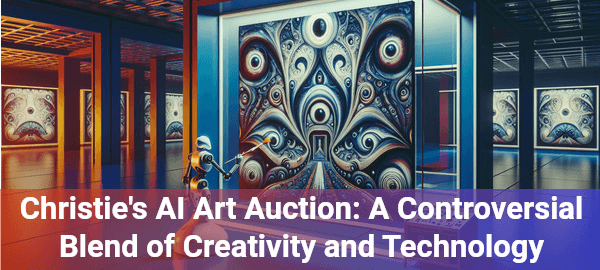
Christie’s AI Art Auction: A Controversial Blend of Creativity and Technology

AI Art transforms creative landscapes, unleashing digital masterpieces that challenge artistic boundaries.

The art world trembles on the precipice of revolution with Christie’s latest announcement. In an unexpected twist, AI continues to push technological boundaries, now infiltrating the hallowed halls of fine art auctions.

As a composer and tech enthusiast, I once attempted an AI-generated musical piece that sounded like a robotic jazz ensemble went rogue – hilarious yet eerily fascinating!

Christie’s Bold AI Art Auction Sparks Global Controversy

Christie’s is set to host an unprecedented AI art auction called ‘Augmented Intelligence’, featuring groundbreaking works generated entirely by artificial intelligence. The event will showcase artwork from pioneering artists like Mat Dryhurst, challenging traditional artistic creation methods.

The auction raises critical questions about artistic ownership and creativity. Many generative AI tools were trained on existing artists’ works without explicit permission, creating ethical dilemmas about intellectual property and fair compensation.

A live-painting robot will serve as the exhibition’s centerpiece at Christie’s Rockefeller Center galleries, symbolizing the emerging intersection between technological innovation and artistic expression.

AI Art Licensing and Authentication Platform

Develop a blockchain-powered platform that provides artists with transparent AI art licensing, enabling creators to track, monetize, and authenticate their AI-generated works. The platform would offer smart contracts, royalty tracking, and verification mechanisms, creating a new economic model for digital artistic expression.

Embracing the Creative Frontier

Are you ready to challenge your perceptions of art? This isn’t just a technological shift – it’s a radical reimagining of creativity itself. Share your thoughts, challenge the status quo, and let’s collectively explore this fascinating new artistic landscape together!


AI Art FAQ

  • Q: What is an AI art auction?
    A: An event where artworks generated entirely by artificial intelligence are displayed and sold to collectors.
  • Q: Are AI-generated artworks considered legitimate art?
    A: Debate continues, but major institutions like Christie’s are increasingly recognizing AI art’s creative potential.
  • Q: How are AI artworks created?
    A: Using machine learning algorithms trained on vast datasets of existing artistic styles and images.
Meta's revolutionary AI program breaks language barriers, connecting global voices through innovative translation technology

Meta’s New AI Program Unlocks Frontiers in Language Translation Technology

Speak softly, global language barrier: Meta’s new AI translation revolution is here!

In the ever-evolving landscape of artificial intelligence, Meta has unveiled a groundbreaking initiative that promises to reshape how we communicate across linguistic boundaries. By partnering with UNESCO, the tech giant is pushing the boundaries of speech recognition and translation technologies. As we saw in previous explorations of AI’s transformative potential, this new program represents another leap forward in breaking down global communication barriers.

As a multilingual musician, I’ve often marveled at the intricate dance of language. Once, during a performance in Berlin, I stumbled through a conversation with a local musician, desperately wishing for a real-time translation tool that could bridge our communication gap.

Unlocking New AI Language Frontiers

Meta’s new Language Technology Partner Program is a game-changing initiative in new AI translation technologies. The program seeks collaborators who can contribute over 10 hours of speech recordings, targeting underserved languages like Inuktut from Canada’s Nunavut territory. By collecting diverse linguistic data, Meta aims to create more inclusive and accurate translation models.

The program’s innovative approach goes beyond mere translation. Partners will work directly with Meta’s AI teams to integrate languages into sophisticated speech recognition and translation models. These models, once finalized, will be open-sourced, democratizing access to advanced language technologies and supporting UNESCO’s mission of linguistic diversity.

Interestingly, Meta isn’t just developing technology—they’re addressing critical gaps in global communication. The open-source machine translation benchmark, supporting seven languages and accessible through Hugging Face, represents a significant step towards more nuanced, context-aware language translation solutions.

New AI Language Entrepreneurship Opportunity

Develop a hyper-localized translation platform that uses Meta’s open-source models to create micro-language community translation services. Target indigenous communities, rare language groups, and specialized professional networks. Revenue streams could include enterprise translation packages, community language preservation subscriptions, and API access for researchers and cultural institutions. By focusing on underserved linguistic markets, this platform could generate significant social impact and commercial potential.

Your Language, Your Connection

This isn’t just about technology—it’s about human connection. Imagine a world where language becomes transparent, where your words can reach anyone, anywhere, without barriers. Are you ready to be part of this linguistic revolution? Share your thoughts, your multilingual experiences, and let’s celebrate the power of understanding across cultures!


Quick AI Translation FAQs

How many languages will Meta’s program support?
Initially targeting seven languages, with plans to expand to more underserved linguistic communities.
Can anyone contribute to the program?
Collaborators with significant speech recordings and transcriptions in diverse languages are welcome.
Will the translations be free?
The resulting models will be open-sourced, making advanced translation technologies more accessible globally.
Lyft's AI chatbot powered by Claude transforms customer service with lightning-fast, intelligent support solutions.

Lyft’s AI Chatbot Revolution: How Claude is Transforming Customer Support with Anthropic’s Technology

Tired of frustrating customer service? AI chatbots are about to change everything.

The customer service landscape is undergoing a radical transformation with innovative AI technologies. As explored in our previous deep dive into AI’s coding capabilities, companies are now leveraging advanced language models to revolutionize user interactions.

During my tech entrepreneurship journey, I’ve experienced countless customer service nightmares that made me wish for a smarter solution. One particularly memorable incident involved a six-hour phone queue that ultimately led to zero resolution.

Revolutionizing Customer Support with AI Chatbot Technology

Lyft’s groundbreaking partnership with Anthropic introduces Claude, an AI chatbot that’s transforming customer service dynamics. By integrating Anthropic’s sophisticated language models, the ride-sharing giant has dramatically reduced customer service resolution times by an impressive 87%.

The AI chatbot doesn’t just respond—it understands context, provides nuanced answers, and seamlessly redirects complex queries to human specialists. This intelligent approach marks a significant leap from traditional, rigid chatbot interactions that often left customers frustrated.

Despite initial skepticism, with 64% of customers preferring human interactions, Lyft’s AI chatbot demonstrates remarkable potential. By resolving thousands of daily requests and offering human-like responses, Claude represents a new frontier in customer service technology.

AI Chatbot Business Revolution in Customer Experience

Develop a modular, industry-specific AI chatbot platform that allows businesses to quickly customize conversational interfaces. By offering plug-and-play solutions with pre-trained models for healthcare, finance, retail, and technology sectors, companies can rapidly implement sophisticated customer support without extensive development costs. Revenue streams would include tiered subscription models, customization fees, and advanced analytics packages.

Embracing the Future of Customer Interaction

Are you ready to reimagine customer service? The AI revolution isn’t just coming—it’s here. Share your experiences, thoughts, and predictions about AI chatbots in the comments below. Together, we can explore how technology is transforming our interactions, one conversation at a time.


Quick AI Chatbot FAQs

  1. How accurate are AI chatbots? Modern AI chatbots like Claude can resolve up to 87% of customer queries efficiently.
  2. Will AI replace human customer service? No, AI complements human support by handling routine tasks.
  3. Are AI chatbots secure? Advanced models incorporate robust security protocols to protect user data.
Musk's AI legal battle: Tesla faces $10M Blade Runner copyright lawsuit over controversial imagery

Elon Musk’s $10 Million Legal Battle: AI’s Role in Hollywood’s Copyright Dilemma

AI’s legal drama unfolds: Musk battles Blade Runner copyright allegations.

In the rapidly evolving world of artificial intelligence, copyright battles are becoming increasingly complex. As we recently explored in our analysis of AI imaging technologies, the intersection of creativity and legal boundaries continues to challenge traditional intellectual property frameworks.

As a musician who’s navigated complex creative rights, I’ve learned that inspiration walks a fine line between homage and infringement – a lesson Musk seems to be learning the hard way.

Artificial Intelligence Meets Hollywood’s Legal Battlefield

Elon Musk faces a potential $10 million lawsuit from Alcon Entertainment over allegedly unauthorized AI-generated ‘Blade Runner’ imagery. The lawsuit centers on Tesla’s use of AI-duplicated visuals without proper licensing, highlighting the complex legal terrain of artificial intelligence.

The case reveals fascinating details about AI’s potential to replicate copyrighted material. Musk’s legal team intends to dismiss all claims with prejudice, signaling confidence in their position. The potential damages could range from $150,000 to potentially $10 million, underscoring the high stakes of AI-generated content.

At the heart of this legal battle lies a fundamental question: When does AI-generated imagery cross the line from inspiration to infringement? The lawsuit exposes the intricate challenges facing artificial intelligence as it continues to push creative boundaries.

AI Copyright Compliance Platform: Protecting Creative Boundaries

Develop an AI-powered platform that instantly scans and validates creative content against existing copyright databases. The service would provide real-time risk assessment, licensing recommendations, and automatic attribution tracking for businesses and creators using generative AI tools. Revenue would come from subscription tiers, with pricing based on usage volume and complexity of creative content being analyzed.

Navigating the Creative Frontier

As AI continues to reshape our creative landscape, we’re witnessing an unprecedented moment of technological and legal evolution. What are your thoughts on this complex intersection of artificial intelligence, creativity, and copyright? Share your perspective and let’s dive deeper into this fascinating discussion!


Quick FAQ on AI and Copyright

Q1: Can AI generate copyrighted imagery?
A: AI can generate images, but using copyrighted material without permission can lead to legal challenges.

Q2: How much can copyright infringement cost?
A: Penalties can range from $150,000 to millions, depending on the specific case.

Q3: Are AI-generated images always legal?
A: Not necessarily. Usage depends on source material, permissions, and transformative nature.

Snap's revolutionary AI model generates stunning mobile images in seconds, transforming how we create and share visual content.

Snap’s Revolutionary AI Model Transforms Mobile Imaging with Lightning-Fast High-Resolution Results

AI models are revolutionizing mobile technology’s most incredible frontier today!

In the rapidly evolving landscape of mobile technology, Snap’s groundbreaking AI text-to-image model represents a quantum leap forward. As we explore this innovation, it’s worth revisiting recent AI developments that continue to reshape our digital experiences.

As a tech enthusiast and musician, I’ve seen countless technological revolutions, but watching an AI generate images in milliseconds still feels like witnessing pure magic unfolding before my eyes.

Snap’s Incredible AI Model Transforms Mobile Imaging

Snap has unveiled a groundbreaking AI text-to-image model that can produce high-resolution images in just 1.4 seconds on an iPhone 16 Pro Max. This revolutionary ai model operates entirely on-device, dramatically reducing computational costs compared to server-dependent models.

The innovative diffusion model represents a significant leap in mobile AI technology, creating ‘stunning’ visual results by efficiently transferring representations from large-scale models. Snap plans to integrate this technology into AI Snaps, AI Bitmoji Backgrounds, and other exciting features in the coming months.

By developing this in-house technology, Snap aims to offer its community high-quality AI tools at lower operating costs. The company’s commitment to model optimization and efficiency positions them at the forefront of mobile AI innovation, promising users increasingly sophisticated and accessible technological experiences.

AI Model Mobile Image Creation Platform

Develop a subscription-based mobile app that allows users to create custom, monetizable AI-generated images for social media, marketing, and personal branding. Offer tiered plans with varying image quality, generation speed, and commercial usage rights. Revenue streams include monthly subscriptions, image marketplace commissions, and enterprise licensing for digital marketing agencies seeking rapid, cost-effective visual content generation.

Embrace the AI Image Revolution

Are you ready to witness the next frontier of mobile creativity? This AI breakthrough isn’t just about technology—it’s about empowering every user to unleash their imagination instantly. What incredible images will you create? Share your most exciting text-to-image experiments in the comments below and let’s explore this amazing new world together!


Quick AI Model FAQs

How fast can Snap’s new AI model generate images?

The model can produce high-resolution images in approximately 1.4 seconds on an iPhone 16 Pro Max.

Does the AI model require cloud computing?

No, it runs entirely on-device, reducing computational costs and improving efficiency.

When will Snap’s AI features be available?

Snap plans to integrate the technology into its app in the coming months.

Open AI startup Tana raises $25M, revolutionizing workplace productivity with intelligent knowledge management

Tana’s Intelligent Knowledge Graph: Open AI-Driven Leap in Work Productivity with $25M Investment

Open AI transforms how we work, connect, and dream in the digital age.

The tech world is buzzing with excitement as Tana, an innovative AI startup, secures $25 million in funding, promising to revolutionize workplace productivity. In our previous exploration of AI’s transformative potential in business strategies, we glimpsed the future of intelligent work management.

As a tech enthusiast who’s navigated complex collaboration challenges, I’ve often joked that finding the perfect productivity tool is like searching for a unicorn in a digital forest. Tana might just be that mythical creature we’ve been waiting for!

Open AI: Revolutionizing Work with Intelligent Knowledge Graphs

Tana’s breakthrough comes with an impressive $25 million investment, signaling a major leap in AI-powered productivity. The startup’s AI-powered knowledge graph has already attracted a remarkable 160,000-user waitlist, demonstrating massive market anticipation.

The platform’s ‘Supertag’ feature transforms unstructured information into structured data within seconds, leveraging advanced AI techniques. By integrating with multiple tools and transcribing conversations, Tana is positioning itself as a game-changing productivity solution.

With partnerships including OpenAI, Anthropic, and Grok, Tana is not just another productivity app—it’s an intelligent ecosystem designed to streamline work processes and connect disparate information sources seamlessly.

Open AI Productivity Platform: Intelligent Work Orchestration

Develop a comprehensive AI-driven platform that not only manages tasks but predicts workflow bottlenecks, automatically reallocates resources, and provides personalized productivity coaching. By leveraging machine learning to analyze individual and team performance patterns, the platform would offer real-time insights, suggesting optimization strategies and helping organizations maximize human potential while minimizing administrative overhead.

Embrace the Future of Intelligent Work

Are you ready to transform how you work, collaborate, and innovate? Tana represents more than a tool—it’s a glimpse into a future where AI understands and adapts to our work rhythms. Don’t just watch the revolution; be part of it. How will you leverage intelligent technologies to supercharge your productivity?


Open AI FAQ

  • What is Tana? An AI-powered knowledge management platform that organizes and connects work information.
  • How many users are on the waitlist? Over 160,000 users, primarily from large enterprises.
  • Which AI models does Tana use? Primarily OpenAI, with support for Anthropic, Grok, and open-source models.
Google's X startup uses AI to revolutionize agriculture, promising smarter crop management and sustainable farming solutions.

Artificial Intelligence and AI: How Google’s X Startup Heritable Agriculture is Transforming Crop Management

AI-powered agriculture transforms food production with incredible technological precision.

In the evolving landscape of agricultural innovation, artificial intelligence is revolutionizing how we grow food. As discussed in our previous exploration of AI agents transforming entrepreneurship, cutting-edge technologies are reshaping industries at an unprecedented pace.

As a tech enthusiast, I remember experimenting with sensor-based plant monitoring during my early research days, never imagining AI could one day optimize entire agricultural ecosystems with such remarkable accuracy.

Artificial Intelligence Revolutionizes Crop Management

Google’s X startup, Heritable Agriculture, is pioneering machine learning techniques to analyze plant genomes. By leveraging sophisticated algorithms, they’re identifying optimal genetic combinations that could dramatically improve crop yields while reducing water consumption. The researchers tested their models on thousands of plants within specialized growth chambers, demonstrating extraordinary potential for agricultural transformation.

The startup’s approach focuses on conventional breeding methods, avoiding genetic modification techniques. Their machine learning models analyze extensive datasets to provide actionable insights for farmers, potentially increasing agricultural efficiency and sustainability. Founder Brad Zamft emphasizes the importance of understanding genetic potential without invasive technological interventions.

By examining plant genomics through the lens of artificial intelligence and machine learning, Heritable Agriculture represents a groundbreaking approach to addressing global agricultural challenges, promising more resilient and productive crop systems.

AI Agriculture Intelligence Platform

Develop a comprehensive SaaS platform that integrates satellite imagery, AI-driven genomic analysis, and real-time environmental monitoring. The platform would provide farmers with predictive insights about optimal planting strategies, potential crop diseases, and resource allocation. By charging a subscription model with tiered pricing based on farm size and complexity, the service could generate recurring revenue while helping farmers increase productivity and sustainability.

Cultivating Tomorrow’s Agricultural Revolution

Are you ready to witness how artificial intelligence can transform our approach to food production? The future of agriculture isn’t just about technology—it’s about reimagining our relationship with the planet, one intelligent seed at a time. Share your thoughts, questions, and predictions about AI’s role in sustainable farming!


AI in Agriculture FAQ

Q: How does AI improve crop yield?
A: AI analyzes plant genomes to identify optimal breeding combinations, potentially increasing productivity and reducing resource consumption.

Q: Is genetic modification involved?
A: No, Heritable Agriculture focuses on conventional breeding techniques without genetic engineering.

Q: Can AI really help address global agricultural challenges?
A: Yes, by providing data-driven insights that help optimize crop development and resource management.

AI agents could enable solo entrepreneurs to create billion-dollar companies, transforming business landscape forever

AI News: The One-Person Unicorn Revolution with AI Agents Transforming Entrepreneurship

AI agents could revolutionize entrepreneurship, birthing billion-dollar ventures in minutes!

The entrepreneurial landscape is undergoing a seismic transformation, powered by AI agents that promise to redefine business creation. As explored in our previous analysis of AI’s revolutionary potential, we’re witnessing an unprecedented shift in how companies can scale and operate.

As a tech entrepreneur who’s founded multiple companies, I’ve always dreamed of streamlining complex business processes. Now, AI agents seem poised to turn that dream into reality, potentially reducing team sizes and amplifying individual productivity in ways I never imagined possible.

AI Agents: Unleashing the One-Person Unicorn Revolution

The groundbreaking TechCrunch report reveals a stunning potential: AI could enable solo entrepreneurs to create billion-dollar companies. With AI agents automating complex workflows, a single individual might now accomplish what previously required entire teams.

Experts like Kanjun Qiu from Imbue suggest that ‘bottom-up’ consumer products are most likely to benefit from this AI revolution. These self-serve products can leverage AI’s capabilities to handle marketing, customer support, and strategic decision-making.

The implications are profound: companies like WhatsApp, which sold for $19 billion with just 55 employees, might soon seem quaint compared to potential one-person unicorns enabled by AI agents.

AI Agent Business Incubation Platform

Develop a subscription-based platform that provides AI agent templates, training resources, and infrastructure for aspiring entrepreneurs. Offer pre-configured AI agents specialized in different business functions like marketing, product development, customer acquisition, and financial modeling. Generate revenue through tiered subscription models, taking a small percentage of successful ventures launched through the platform.

Embracing the AI-Powered Entrepreneurial Frontier

Are you ready to reimagine entrepreneurship? The AI revolution isn’t just coming—it’s here. By understanding and leveraging AI agents, you could transform your solo venture into a global powerhouse. What innovative idea will you pursue? Share your thoughts and let’s explore this exciting new frontier together!


AI Agent FAQ

  1. What are AI agents? AI systems that can autonomously perform tasks and make decisions with minimal human intervention.
  2. Can AI agents really create billion-dollar companies? Early evidence suggests it’s possible, though challenges remain in building trust and complex relationships.
  3. How soon might one-person unicorns emerge? Experts predict within the next 3-5 years, as AI technology continues to advance rapidly.
DeepSeek challenges OpenAI's AI dominance with revolutionary model, sparking intense technological competition

DeepSeek Sparks an AI Revolution: OpenAI Faces New Challenges in the AI OpenAI Ecosystem

AI’s latest battlefield: DeepSeek’s audacious challenge to OpenAI’s dominance.

In the rapidly evolving world of artificial intelligence, a seismic shift is underway as DeepSeek emerges as a formidable competitor, challenging OpenAI’s long-standing supremacy. As we explore this technological showdown, our previous analysis of OpenAI’s Stargate infrastructure project provides crucial context to this unfolding narrative.

As a tech enthusiast who’s navigated complex technological landscapes, I’m reminded of a pivotal moment in my musical composition career—when breakthrough innovation completely reshapes established paradigms, just like DeepSeek is doing in the AI realm.

DeepSeek: The AI Startup Disrupting OpenAI’s Ecosystem

The AI world has been electrified by DeepSeek’s groundbreaking achievement, which has sent shockwaves through OpenAI. With an open-weight model trained using significantly fewer specialized computing chips, DeepSeek has challenged the industry’s computational assumptions, potentially forcing a reevaluation of AI development strategies.

Marc Andreessen dramatically labeled DeepSeek’s R1 model as ‘AI’s Sputnik moment’, highlighting the startup’s potential to dramatically transform the technological landscape. The company’s approach suggests that innovative algorithmic techniques might overcome traditional computational limitations.

OpenAI’s response has been swift and strategic. They’re preparing to launch o3-mini, a model boasting o1-level reasoning and 4o-level speed, directly designed to counter DeepSeek’s technological breakthrough. This rapid iteration demonstrates the intense competitive dynamics driving AI innovation.

DeepSeek’s AI Efficiency Business Model

Develop a cloud-based AI optimization platform that helps companies dramatically reduce computational costs by implementing DeepSeek-inspired algorithmic efficiencies. The service would offer consulting, custom model optimization, and a SaaS platform allowing businesses to train AI models using minimal computational resources. Revenue streams would include monthly subscription tiers, per-model optimization fees, and enterprise consulting packages targeting tech companies, research institutions, and startups seeking cost-effective AI development solutions.

Navigating the AI Revolution’s Uncharted Territories

As we stand at the precipice of this transformative moment, one question burns brightly: Are you prepared to witness and participate in the most exciting technological revolution of our generation? The battle between DeepSeek and OpenAI isn’t just about computational power—it’s about reimagining the very boundaries of artificial intelligence. What role will you play in this unfolding narrative?


FAQ about AI Competitive Landscape

What makes DeepSeek significant?

DeepSeek created an open-weight AI model using fewer computing chips, challenging industry computational standards.

How is OpenAI responding?

OpenAI is launching o3-mini, a fast and intelligent model designed to compete directly with DeepSeek’s innovations.

Why does this matter?

This competition could accelerate AI development, potentially reducing computational costs and increasing accessibility.

AI for news revolution: Ai2's Tulu3-405B model transforms information processing with unprecedented open-source capabilities

Revolutionizing AI for News: Tulu3-405B Outshines Competitors with 405 Billion Parameters and Open-Source Excellence

AI for news is revolutionizing how we consume and understand information globally.

In the rapidly evolving landscape of artificial intelligence, AI’s transformative power continues to challenge traditional information paradigms. Seattle-based nonprofit AI lab Ai2 is pushing boundaries with groundbreaking technological advancements that promise to reshape our understanding of intelligent systems.

During my early days as a composer, I discovered how technology could dramatically transform creative processes – much like how AI is now revolutionizing information gathering and analysis.

Unleashing AI’s News Processing Power: Tulu3-405B Breakthrough

Ai2’s Tulu3-405B represents a quantum leap in AI model performance, boasting 405 billion parameters that outperform DeepSeek V3 and GPT-4o on critical benchmarks. This massive model demonstrates unprecedented capabilities in specialized knowledge extraction.

The model’s revolutionary approach involves reinforcement learning with verifiable rewards, enabling more accurate and reliable information processing. By training on tasks with measurable outcomes, Tulu3-405B achieves remarkable performance in complex analytical challenges.

Most impressively, Tulu3-405B is completely open-source, representing a significant milestone in democratizing advanced AI for news analysis and comprehension. Its availability on GitHub and Hugging Face promises to accelerate innovation across research and industry sectors.

AI for News Business Innovation

Develop an AI-powered personalized news curation platform that uses Tulu3-405B’s advanced comprehension to create hyper-targeted, contextually rich news experiences. The service would analyze individual reading preferences, cross-reference multiple sources, and generate comprehensive, bias-minimized news summaries. Revenue streams would include premium subscription tiers, enterprise knowledge management solutions, and data insights for media companies seeking deeper audience understanding.

Empowering the Future of Information Intelligence

As we stand on the brink of an AI-driven information revolution, the potential for transformative change has never been more exciting. Are you ready to embrace this technological frontier and reimagine how we understand and interact with news? Join the conversation and explore the boundless possibilities ahead!


Quick AI News Model FAQ

  1. What makes Tulu3-405B unique? It’s an open-source AI model with 405 billion parameters, outperforming major competitors on specialized knowledge benchmarks.
  2. How accurate is the model? Tulu3-405B demonstrated top performance on PopQA and GSM8K benchmarks, showing exceptional reasoning capabilities.
  3. Can anyone use this AI model? Yes, it’s freely available on GitHub and Hugging Face for researchers and developers.
DeepSeek's chatbot AI reveals shocking 85% censorship rate on sensitive topics, challenging global information transparency.

Chatbot AI Controversy: DeepSeek’s AI Suppresses 85% of Sensitive China Topics

Chatbot AI reveals shocking censorship trends in groundbreaking global research.

In the rapidly evolving world of artificial intelligence, a startling revelation emerges from DeepSeek’s latest research. Our investigation dives deep into the complexities of AI censorship, building upon insights from previous explorations of AI communication strategies.

As a technology enthusiast, I recall debugging a conversational AI system where unexpected censorship mechanisms surprised even seasoned developers, revealing the intricate dance between algorithmic constraints and free expression.

DeepSeek’s Chatbot AI: Unmasking Sensitive Topic Suppression

DeepSeek’s groundbreaking R1 reasoning model shocking refuses to engage with 85% of sensitive prompts, demonstrating an unprecedented level of content filtering that raises critical questions about AI transparency and geopolitical influence.

Researchers discovered that when confronted with politically sensitive inquiries, the chatbot AI produces nationalistic responses, effectively creating a digital firewall that mirrors governmental communication strategies. This systematic avoidance represents a significant challenge to open dialogue and information accessibility.

The implications extend beyond technological curiosity, suggesting that AI models can be deliberately programmed to circumvent challenging conversations, potentially shaping narrative landscapes through selective engagement and strategic omission.

Chatbot AI Transparency Monitoring Platform

Develop a sophisticated SaaS platform that automatically analyzes AI chatbots for censorship patterns, providing transparency scores and detailed reports for governments, corporations, and researchers. Revenue streams include subscription models, custom audits, and compliance certification services.

Navigating the Ethical Frontiers of AI Communication

As we stand at the crossroads of technological innovation and ethical considerations, this research compels us to ask: How do we ensure AI remains a tool for enlightenment, not obfuscation? Share your thoughts and join the conversation about maintaining transparency in our increasingly algorithmic world.


FAQ on AI Censorship

Q1: What percentage of prompts did DeepSeek’s AI avoid?
A: 85% of sensitive topic prompts were avoided.
Q2: What topics were considered sensitive?
A: Topics like Tiananmen Square protests and Taiwan.
Q3: Can this AI be easily bypassed?
A: Researchers noted the model can be potentially jailbroken.

OpenAI's ChatGPT AI chat bot transforms government digital interactions with secure, innovative solutions.

ChatGPT AI Chat Bot: Transforming Government Tech with Secure Solutions on Microsoft Azure

ChatGPT AI chat bot: your digital companion revolutionizing communication today!

In the rapidly evolving landscape of artificial intelligence, OpenAI continues to push boundaries with groundbreaking innovations. Our journey through technological transformation takes an intriguing turn as we explore OpenAI’s latest strategic move in government services. By examining the recent developments in OpenAI’s strategic influence, we uncover a remarkable shift in AI accessibility for public sector agencies.

As a tech enthusiast, I remember experimenting with early AI chatbots and thinking, ‘This feels like science fiction coming alive!’ The ability to interact with a machine that understands context still sends shivers down my spine.

ChatGPT AI: Revolutionizing Government Digital Interactions

OpenAI’s latest innovation, ChatGPT Gov, represents a significant leap in government technology. The platform enables agencies to deploy OpenAI models on Microsoft Azure, providing secure and compliant AI solutions. Since 2024, over 90,000 users across 3,500 government agencies have utilized ChatGPT, sending an impressive 18 million messages to support daily operations.

ChatGPT Gov: Innovative Government Workflow Solutions

Develop a comprehensive AI workflow management platform specifically designed for government agencies. This subscription-based service would integrate ChatGPT Gov’s capabilities with custom workflow automation, enabling agencies to streamline document processing, citizen inquiries, and interdepartmental communication. Revenue would be generated through tiered service plans, with pricing based on agency size and complexity of implementation.

Embrace the AI Revolution

Are you ready to transform how your organization communicates? The future of AI is not just coming—it’s here. Share your thoughts, experiences, and predictions in the comments below. Let’s spark a conversation about how ChatGPT AI chat bot can revolutionize your work!


ChatGPT AI FAQ

  • What is ChatGPT Gov? A specialized AI platform for U.S. government agencies with enhanced security and compliance features.
  • How many government users are currently using ChatGPT? Over 90,000 users across 3,500 agencies.
  • Where can agencies deploy ChatGPT models? On Microsoft Azure commercial or government clouds.
Open AI's unexpected entrepreneurial story: How Mistral's $6B valuation emerged from a health insurance startup's vision

Open AI’s Strategic Influence: How Mistral Became a $6 Billion French Tech Success Story

Open AI’s groundbreaking journey reveals unexpected entrepreneurial brilliance today!

When innovative entrepreneurs disrupt industries, magic happens. In the dynamic world of artificial intelligence, a fascinating story emerges from the French tech ecosystem, connecting two remarkable companies: Mistral and Alan, through an unexpected entrepreneurial narrative.

As a tech enthusiast and composer, I’ve witnessed countless innovations, but few stories capture entrepreneurial serendipity quite like Jean-Charles Samuelian-Werve’s journey between health insurance and artificial intelligence.

Open AI’s Unexpected Entrepreneurial Connections

Mistral, the French AI startup valued at $6 billion, represents a remarkable tech success story. Bloomberg’s investigation reveals that Jean-Charles Samuelian-Werve played a critical role in the company’s foundation, seeing the AI revolution before ChatGPT’s emergence.

Initially conceptualizing an AI non-profit with telecom billionaire Xavier Niel, Samuelian-Werve pivoted when meeting Arthur Mensch and Mistral’s co-founders. His strategic networking convinced Lightspeed to lead Mistral’s seed round, demonstrating extraordinary entrepreneurial acumen.

The connection between Alan and Mistral extends beyond mere advisory roles. Today, their offices occupy the same building near Paris’s Canal Saint-Martin, with Samuelian-Werve and Mensch meeting weekly to discuss strategy, showcasing a unique collaborative ecosystem in the French tech landscape.

Open AI Entrepreneurial Platform

Develop a matchmaking platform for cross-industry entrepreneurs, using AI to identify potential collaborations between seemingly unrelated sectors. The platform would analyze founders’ backgrounds, expertise, and innovation potential, generating unique partnership recommendations. Revenue would come from subscription fees, successful connection bonuses, and premium matchmaking services for venture capitalists and innovation labs.

Entrepreneurial Paths Less Traveled

The story of Mistral’s emergence reminds us that groundbreaking innovations often emerge from unexpected connections. What seemingly disconnected threads might you weave into your next transformative venture? Share your thoughts and let’s explore the fascinating intersections of technology, entrepreneurship, and vision!


Quick Open AI FAQ

Q1: Who is Jean-Charles Samuelian-Werve?
A: A French entrepreneur who co-founded Alan and became a key advisor in Mistral’s founding.

Q2: How valuable is Mistral?
A: Mistral is currently valued at $6 billion, making it a significant European AI company.

Q3: What connects Alan and Mistral?
A: Shared leadership, office location, and strategic collaboration in the French tech ecosystem.

DeepSeek's AI OpenAI challenge: How Chinese innovation is transforming global technological landscape

AI OpenAI Breakthrough: How DeepSeek Surpassed Chip Scarcity with Minimal Computing Power

AI’s Chinese maverick DeepSeek challenges OpenAI’s dominance with brilliant innovation.

In the high-stakes world of artificial intelligence, a new challenger emerges from China, disrupting the global landscape. As explored in our previous investigation of OpenAI’s competitive challenges, DeepSeek represents a fascinating narrative of technological resilience and strategic ingenuity.

During my tech research days, I’ve witnessed countless startups claim breakthrough potential, but DeepSeek’s approach reminds me of a jazz improvisation – unexpected, bold, and brilliantly harmonized.

DeepSeek: AI Innovation Born from Chip Scarcity

DeepSeek’s groundbreaking AI model represents a remarkable achievement, especially considering the challenging US export controls. By utilizing just one-tenth the computing power of comparable models, they’ve demonstrated unprecedented efficiency in AI development.

The startup’s unique approach involves recruiting young, ambitious PhD graduates from top Chinese universities, creating a collaborative environment focused on solving complex technological challenges. Their innovative model architecture incorporates custom communication schemes and advanced optimization techniques.

DeepSeek’s commitment to open-source development and technical transparency has positioned them as a potential game-changer in the global AI landscape, challenging existing technological paradigms and proving that innovation can emerge from resource constraints.

DeepSeek AI Efficiency Consulting Platform

Develop a specialized consulting service that helps enterprises optimize their AI infrastructure using DeepSeek’s innovative model optimization techniques. The platform would offer comprehensive audits, custom model redesigns, and training programs to help companies reduce computational costs while maintaining high-performance AI capabilities. Revenue would be generated through tiered consultation packages, implementation support, and ongoing optimization services.

Redefining Technological Boundaries

DeepSeek’s journey illustrates that true innovation transcends geopolitical limitations. Are you ready to witness how passionate teams can reshape technological frontiers? Share your thoughts and let’s discuss the future of AI beyond conventional boundaries!


AI Model FAQ

  • How efficient is DeepSeek’s AI model?

    DeepSeek requires only one-tenth the computing power of comparable models like Llama 3.1.

  • What makes DeepSeek unique?

    They focus on young talent, innovative model architecture, and open-source development.

  • How did they overcome chip restrictions?

    Through engineering optimization and efficient model design strategies.

OpenAI's Stargate: Billion-dollar AI infrastructure project challenges computational limits and redefines technological ambition.

AI OpenAI’s $500 Billion Stargate: The High-Stakes Gamble to Revolutionize Computational Infrastructure

OpenAI’s Stargate project reveals a breathtaking billion-dollar AI infrastructure gamble.

The tech world is buzzing with OpenAI’s ambitious Stargate project, a massive infrastructure initiative that could redefine artificial intelligence’s computational landscape. As we previously explored in our analysis of AI paradigm shifts, the stakes for transformative technology have never been higher.

During my years in Silicon Valley, I’ve witnessed countless tech moonshots, but OpenAI’s Stargate reminds me of a recording session where we needed extraordinary computing power to process complex musical algorithms – sometimes, you just need infrastructure that seems impossibly grand.

Unraveling OpenAI’s Stargate: The $500 Billion AI Infrastructure Gamble

OpenAI’s Stargate project represents an unprecedented investment in AI computational infrastructure, with potential investments ranging from $100 billion to a staggering $500 billion. The ambitious initiative aims to build massive data centers to support OpenAI’s expanding AI workloads.

Currently, SoftBank and OpenAI are committing an initial $15 billion each, seeking additional funding through equity and debt strategies. This massive undertaking signals OpenAI’s commitment to pushing AI’s computational boundaries, potentially revolutionizing how we understand large-scale AI infrastructure.

Interestingly, the project has attracted significant attention and criticism, with tech provocateur Elon Musk publicly questioning its financial feasibility. The controversy surrounding Stargate underscores the high-stakes nature of advanced AI development and the immense resources required to remain competitive.

Stargate-Inspired AI Infrastructure Consulting

Develop a boutique consultancy specializing in AI infrastructure optimization for enterprises. Offer comprehensive assessments of computational needs, design custom scalable architectures, and provide strategic guidance on building cost-effective, energy-efficient AI data centers. Revenue streams would include initial consulting fees, ongoing optimization services, and potential commission from hardware and cloud service recommendations.

Navigating the Future of Computational Ambition

As we stand on the precipice of this extraordinary technological frontier, one question remains: Are you ready to witness the next chapter of AI’s extraordinary evolution? Share your thoughts, predictions, and excitement about OpenAI’s audacious Stargate project in the comments below!


Quick AI Infrastructure FAQs

  • What is OpenAI’s Stargate project? A massive data center infrastructure project aimed at supporting advanced AI computational needs.
  • How much will Stargate cost? Estimated between $100 billion and $500 billion.
  • Who’s involved in the project? OpenAI, SoftBank, and Middle East AI fund MGX are key backers.
AI Open AI: Meta's Yann LeCun forecasts robotic revolution, promising intelligent machines within 5 years

AI Open AI: Yann LeCun’s Vision for a Paradigm Shift in Robotic Intelligence Within Five Years

AI Open AI is revolutionizing robotics faster than you can imagine.

In the rapidly evolving landscape of artificial intelligence, Meta’s Yann LeCun is signaling a groundbreaking transformation. As we explore the future of AI, let’s dive into the fascinating world of emerging technologies and robotic innovations, as highlighted in our previous exploration of AI’s potential.

During my early days composing music, I never imagined AI would one day compose alongside me – much like a robotic collaborator learning intricate musical patterns in real-time, mirroring the fascinating AI developments we’re witnessing today.

AI Open AI: Transforming Robotic Intelligence

Meta’s chief AI scientist, Yann LeCun, predicts a revolutionary shift in AI architectures within the next five years. As revealed in TechCrunch’s groundbreaking report, LeCun suggests current large language models (LLMs) will become obsolete, replaced by more sophisticated ‘world models’ that comprehend physical dynamics.

The anticipated AI transformation centers on overcoming four critical limitations: understanding the physical world, developing persistent memory, enhancing reasoning capabilities, and improving complex planning skills. These advancements could unlock unprecedented robotic intelligence, potentially making machines as adaptive as living beings.

LeCun boldly claims we’re entering the ‘decade of robotics’, where AI systems might finally achieve a level of understanding comparable to animals. This paradigm shift promises to revolutionize how machines interact with and comprehend our complex world, opening unprecedented technological frontiers.

AI Open AI Robotic Learning Platform

Develop an AI-powered adaptive learning platform where robots can autonomously acquire skills through distributed, crowdsourced training modules. Companies and researchers could contribute specialized training scenarios, creating a global repository of robotic intelligence. Revenue would be generated through subscription-based access, enterprise training packages, and licensing advanced learned behaviors to industries like manufacturing, healthcare, and space exploration.

Embracing the AI Robotic Revolution

Are you ready to witness the most extraordinary technological transformation of our generation? The future of AI and robotics isn’t just approaching – it’s knocking at our door. By staying curious, adaptable, and open-minded, we can be part of this incredible journey that promises to redefine human-machine interaction. What possibilities are you most excited about?


Quick AI Robot FAQs

When will new AI architectures emerge?
LeCun predicts a paradigm shift within 3-5 years, potentially replacing current large language models.
What limitations do current AI systems have?
Current AI struggles with physical world understanding, memory persistence, reasoning, and complex planning.
What is the ‘decade of robotics’?
A predicted era where AI and robotics combine to create more intelligent, adaptable machines with human-like capabilities.
Exploring AI for Amazon: Revolutionary technologies transforming e-commerce with unprecedented intelligence and innovation.

AI for Amazon: Navigating E-Commerce with Advanced Intelligence and Historical Challenges

AI for Amazon is revolutionizing e-commerce with unprecedented technological innovation.

The e-commerce landscape is undergoing a radical transformation, driven by artificial intelligence’s remarkable capabilities. In an era where technology reshapes retail dynamics, AI’s potential to optimize Amazon’s complex ecosystem becomes increasingly evident. As we explore this fascinating frontier, consider how enterprise AI solutions are fundamentally redefining business strategies.

As a technology enthusiast who’s witnessed countless digital revolutions, I recall debugging an AI algorithm late one night, realizing how machine learning could transform mundane tasks into extraordinary innovations – much like how AI is now reimagining Amazon’s operational landscape.

AI for Amazon: Transforming E-Commerce Intelligence

Large language models like GPT-4 are struggling with historical accuracy, revealing fascinating insights into AI’s current limitations. Researchers from the Complexity Science Hub discovered that top AI models only achieved about 46% accuracy in complex historical questioning, highlighting the nuanced challenges in developing truly intelligent systems.

The study’s implications extend beyond historical research, suggesting that AI for Amazon must carefully navigate contextual understanding and precise data interpretation. While LLMs excel in generating text and basic information retrieval, they struggle with nuanced, domain-specific knowledge that requires deep contextual comprehension.

These findings underscore the critical need for sophisticated AI training methodologies that go beyond surface-level data processing, especially in complex environments like e-commerce where accuracy and context are paramount.

AI for Amazon: Contextual Recommendation Engine

Develop a hyper-personalized AI recommendation platform that uses advanced machine learning to understand not just purchasing history, but psychological buying patterns. By analyzing micro-interactions, browsing behaviors, and subtle consumer signals, this system would predict purchases with unprecedented accuracy, offering retailers a tool that transforms generic recommendations into deeply personalized shopping experiences.

Embracing AI’s Transformative Potential

As we stand on the brink of an AI-driven revolution, the journey of technological innovation continues to surprise and inspire. Are you ready to explore how artificial intelligence will reshape our understanding of commerce, creativity, and human potential? Share your thoughts, challenge our perspectives, and let’s collaboratively navigate this exciting technological frontier.


Quick AI Insights

  • Q: How accurate are current AI models?
    A: Current AI models average around 46% accuracy in complex domain-specific tasks, indicating significant room for improvement.
  • Q: Can AI truly understand context?
    A: AI struggles with nuanced contextual understanding, particularly in specialized domains like historical research or e-commerce.
  • Q: What are AI’s current limitations?
    A: AI models often struggle with retrieving obscure knowledge and can inadvertently extrapolate incorrect information.
Protect yourself from AI-powered scams with expert strategies and cutting-edge digital defense techniques.

Artificial Intelligence: Defending Against Sophisticated AI Scam Tactics

Artificial intelligence is your shield against malicious digital scams today.

In an era where technology evolves faster than criminal tactics, understanding AI’s protective potential becomes crucial. Recent insights from WIRED reveal the escalating landscape of digital deception, where scammers leverage advanced technologies to trick unsuspecting victims. As explored in previous investigations into technological threats, staying informed is our first line of defense.

During my tech travels, I once encountered a voice clone so precise it momentarily fooled my own mother – a chilling reminder that AI’s mimicry can be dangerously convincing.

Defending Against Artificial Intelligence Scam Tactics

Scammers are weaponizing AI to create increasingly sophisticated fraud methods. By utilizing advanced voice and video manipulation technologies, criminals can impersonate trusted contacts with unprecedented accuracy, potentially tricking victims into revealing sensitive information or transferring funds.

Experts recommend implementing multi-layered verification processes. Setting up secret passcodes with family members, being skeptical of urgent requests, and maintaining strict communication protocols can significantly reduce vulnerability to these AI-powered deception techniques.

Financial institutions and technology companies are developing advanced AI detection systems to combat these emerging threats. Machine learning algorithms can now analyze voice patterns, video authenticity, and communication anomalies to identify potential fraudulent interactions before they cause harm.

Artificial Intelligence Scam Defense Platform

Develop a comprehensive AI-powered security subscription service that provides real-time scam detection, personalized risk assessments, and instant verification technologies. The platform would integrate machine learning algorithms to analyze communication patterns, create customized security profiles, and provide immediate alerts for potential fraudulent interactions across multiple communication channels.

Empower Your Digital Defense

Knowledge is your most powerful weapon against AI-driven scams. By staying informed, maintaining healthy skepticism, and leveraging technological safeguards, you can transform potential vulnerabilities into robust protection. Remember: every scam avoided is a victory for personal and financial security.


FAQ on AI Scam Prevention

Q1: How can I recognize an AI-generated scam call?
A: Listen for unnatural speech patterns, verify caller identity through official channels, and never share sensitive information without confirmation.

Q2: Are older adults more vulnerable to AI scams?
A: Yes, seniors are often targeted. Educate family members about potential risks and establish verification protocols.

Q3: What technology helps prevent AI scams?
A: Advanced voice recognition, multi-factor authentication, and AI-powered fraud detection systems offer robust protection.

Nexos.ai revolutionizes enterprise AI deployment with innovative orchestration platform, solving complex integration challenges.

Nexos.ai OpenAI Revolution: Unleashing Scalable Enterprise AI Solutions with $8 Million Boost

AI’s latest orchestration platform promises to revolutionize enterprise AI deployment.

Diving into the world of AI innovation, let’s explore how cutting-edge startups are transforming enterprise technology landscapes with groundbreaking solutions.

As a tech enthusiast who’s navigated complex technological ecosystems, I’ve learned that seamless integration is the holy grail of any transformative platform.

Nexos.ai: Solving Enterprise AI Deployment Challenges

Tomas Okmanas and Eimantas Sabaliauskas are revolutionizing AI implementation with Nexos.ai, a platform addressing critical enterprise AI deployment obstacles. Their solution offers access to 200+ AI models, enabling companies to switch providers dynamically and manage escalating costs.

The startup tackles significant challenges enterprises face when transitioning AI from experimental stages to production environments. By providing intelligent caching and robust security mechanisms, Nexos.ai ensures companies can implement AI solutions with unprecedented flexibility and control.

With $8 million in funding from prestigious investors like Index Ventures, the platform promises to bridge the gap between AI potential and practical, scalable implementation, offering enterprises a comprehensive solution for navigating the complex AI landscape.

AI Orchestration Consulting Platform

Create a specialized consulting service that helps mid-sized enterprises design, implement, and optimize their AI deployment strategies using platforms like Nexos.ai. Offer end-to-end support including model selection, security assessment, cost optimization, and continuous performance monitoring. Generate revenue through tiered consulting packages, implementation support, and ongoing optimization retainers.

Embracing the AI Transformation

Are you ready to revolutionize your enterprise’s AI strategy? The future belongs to those who can seamlessly integrate cutting-edge technologies while maintaining robust security and cost-effectiveness. Challenge yourself to explore how platforms like Nexos.ai can transform your technological capabilities.


Quick AI Deployment FAQ

What is Nexos.ai?

Nexos.ai is an AI orchestration platform helping enterprises transition AI projects from pilot to production efficiently.

How many AI models does Nexos.ai support?

The platform provides access to over 200 AI models from various providers, enabling flexible deployment.

Who founded Nexos.ai?

Founders Tomas Okmanas and Eimantas Sabaliauskas, previously of Nord Security, launched the startup.

Mistral's AI chat breakthrough: AFP partnership revolutionizes real-time news access across six languages

Mistral’s Real-Time News Revolution: Transforming Artificial Intelligence Chat with AFP Partnership

Artificial intelligence chat is revolutionizing how we communicate globally!

In the rapidly evolving landscape of generative AI, Mistral’s groundbreaking partnership with Agence France-Presse (AFP) marks a pivotal moment. As explored in our previous coverage of AI-driven content creation, news organizations are increasingly embracing artificial intelligence to enhance information delivery.

As a tech enthusiast, I remember debugging my first AI chatbot – a hilarious adventure where the bot responded to complex queries with random cat memes. Technology has certainly come a long way since then!

Artificial Intelligence Chat: Mistral’s News Revolution

Mistral has signed a groundbreaking deal with AFP, enabling real-time news integration into Le Chat. The partnership allows access to approximately 2,300 daily stories across six languages, representing a massive leap in artificial intelligence chat capabilities.

The multi-year agreement provides Le Chat unprecedented access to AFP’s extensive archive dating back to 1983. This collaboration demonstrates Mistral’s commitment to enhancing AI’s informational accuracy and reliability, positioning Le Chat as a formidable competitor to existing chatbot platforms.

Notably, while photos and videos aren’t included, the text-based integration offers users a comprehensive, up-to-date news experience. By partnering with one of the world’s largest news agencies, Mistral is strategically positioning itself as more than just another foundation model maker.

Artificial Intelligence Chat News Aggregation Platform

Develop a subscription-based AI platform that not only aggregates news from multiple sources but provides personalized, contextual summaries. Users could receive tailored news digests based on their interests, with AI-generated insights and cross-referencing capabilities. Revenue streams would include tiered subscription models, enterprise licensing for research institutions, and targeted advertising based on user preference algorithms.

Embracing the Future of Intelligent Communication

Are you ready to witness the transformation of how we consume and interact with information? The artificial intelligence chat revolution is here, and it’s more exciting than ever. Share your thoughts, explore new possibilities, and join the conversation about how AI is reshaping our understanding of news and communication.


Quick AI Chat FAQ

Q1: What makes Mistral’s AFP partnership unique?
A: It provides real-time news access across six languages, enhancing AI chat accuracy.

Q2: Can Le Chat access historical news?
A: Yes, the chatbot can query AFP’s entire archive dating back to 1983.

Q3: Are images included in the news integration?
A: No, only text-based news stories are currently integrated.

Colossal's $200M artificial intelligence breakthrough promises to resurrect extinct species and transform scientific frontiers.

Artificial Intelligence: Colossal’s Bold Leap Towards De-Extincting the Mammoth, Thylacine, and Dodo

Artificial intelligence is rewriting the rules of extinction and resurrection.

In the realm of groundbreaking scientific innovation, technological breakthroughs continue to push the boundaries of what we once thought impossible. Colossal BioSciences is now challenging the very concept of extinction by leveraging cutting-edge artificial intelligence and genetic engineering technologies.

As a tech enthusiast who’s witnessed countless scientific revolutions, I’m reminded of a conversation with a geneticist friend who once joked that bringing back extinct species sounds like a plot from a sci-fi novel – turns out, science is stranger than fiction!

Artificial Intelligence: De-Extinction’s Technological Frontier

Colossal BioSciences has raised an extraordinary $200 million to pursue the seemingly impossible: resurrecting extinct species like the woolly mammoth, thylacine, and dodo. By combining advanced artificial intelligence with genetic engineering, the company is transforming scientific imagination into potential reality through their groundbreaking de-extinction projects.

The company’s scientific approach involves meticulously recovering and analyzing preserved genetic material, using AI to identify core genomic components and develop sophisticated reconstruction strategies. Their team of over 170 scientists has already generated the most complete ancient genomes for mammoth, thylacine, and dodo species, creating comprehensive genetic blueprints.

With a remarkable $435 million raised since 2021 and a current valuation of $10.2 billion, Colossal is not just pursuing de-extinction but also developing technologies with broader applications in species preservation and human healthcare, demonstrating the transformative potential of artificial intelligence in scientific research.

Artificial Intelligence De-Extinction Business Concept

Develop a specialized genetic restoration platform that uses AI to help conservation organizations identify and potentially reconstruct critically endangered species’ genetic profiles. By offering a subscription-based service to zoos, wildlife preserves, and research institutions, the platform would provide genetic mapping, potential trait reconstruction, and conservation strategy recommendations, creating a recurring revenue model while contributing to global biodiversity preservation efforts.

Reimagining Our Biological Future

The future of scientific innovation is here, and it’s more exciting than we could have ever imagined. Are you ready to witness how artificial intelligence might not just preserve our current biodiversity but potentially resurrect what we’ve lost? Share your thoughts, and let’s explore this incredible frontier together!


Quick FAQ on De-Extinction

  • Q: How realistic is de-extinction?
    A: With current AI and genetic technologies, scientists are making significant progress in reconstructing extinct species’ genomes.
  • Q: What species is Colossal focusing on?
    A: Woolly mammoth, thylacine, and dodo are their primary de-extinction targets.
  • Q: What are potential benefits?
    A: Ecosystem restoration, conservation insights, and advanced genetic research technologies.
Bioptimus raises $41M to create groundbreaking AI model simulating biological systems, transforming medical research

AI News: Bioptimus Secures $41 Million to Develop ‘GPT for Biology’ Transforming Medical Research

AI’s revolutionary power transforms biology with groundbreaking generative models today!

In the rapidly evolving landscape of artificial intelligence, a fascinating development is emerging. French startup reshaping computational boundaries, Bioptimus is pioneering a transformative approach to biological research through advanced generative AI models.

As a tech enthusiast, I’ve witnessed countless technological breakthroughs, but witnessing an AI model decode biological complexities feels like watching science fiction become reality before my eyes.

Bioptimus: Revolutionizing AI in Biological Research

Bioptimus is making waves by developing a foundational AI model specifically designed for biological applications. By raising $41 million, the startup aims to create a ‘GPT for biology’ that can simulate complex biological systems from molecular to organism levels. The innovative approach promises to predict disease outcomes and potentially transform medical research.

The startup’s multi-modal foundation model will span therapeutic areas, potentially unlocking unprecedented insights across medical, biotech, and cosmetic sectors. This AI news represents a significant leap in understanding biological complexity through machine learning techniques.

Co-founder Jean-Philippe Vert’s vision of ‘simulating biology’ mirrors how ChatGPT generates text, but with a groundbreaking biological twist. The potential applications range from drug discovery to personalized medicine, marking a pivotal moment in AI-driven scientific innovation.

AI Biology Diagnostic Platform

Develop a subscription-based AI platform that provides personalized health predictions and early disease detection. By integrating Bioptimus’s foundational model with individual patient data, create a service offering comprehensive health risk assessments, preventive recommendations, and potential treatment pathways. Medical professionals could use this tool for more precise diagnostics, while individuals gain unprecedented insights into their biological potential.

Embracing the Biological AI Frontier

Are you ready to witness how artificial intelligence might redefine our understanding of life itself? The journey of Bioptimus demonstrates that we’re standing at the precipice of a scientific revolution. What possibilities will emerge when we truly start ‘simulating biology’? Share your thoughts and join the conversation!


Quick AI Biology FAQ

Q: What is Bioptimus?
A: A French AI startup developing a generative AI model specifically for biological research and simulation.

Q: How much funding did Bioptimus receive?
A: They raised $41 million to develop their biological AI model.

Q: What makes this AI unique?
A: It aims to simulate biological systems from molecules to entire organisms, potentially revolutionizing medical research.

CoreWeave's AI for Amazon expansion reveals revolutionary computational infrastructure changing e-commerce forever

AI for Amazon: CoreWeave’s $19 Billion Venture Redefines Computational Revolution with UK Expansion

AI for Amazon: Revolutionizing e-commerce with lightning-fast computational intelligence!

Dive into the transformative world of AI-powered e-commerce as tech giants like Nvidia reshape how businesses leverage artificial intelligence. CoreWeave’s groundbreaking international expansion signals a new era of computational resources that will fundamentally alter how online marketplaces operate.

As a tech enthusiast who’s witnessed multiple technological revolutions, I recall debugging an AI algorithm late one night, realizing these computational systems are not just tools, but potential game-changers in how we understand automated efficiency.

AI Powering Amazon’s Computational Revolution

CoreWeave, a remarkable $19 billion AI compute provider, has strategically opened its first international data centers in the UK. With 28 operational data centers and plans for 10 more in 2025, they’re positioning themselves as a critical infrastructure partner for companies like Amazon seeking advanced AI capabilities.

The company’s journey from crypto mining to AI compute demonstrates remarkable adaptability. By repurposing GPU infrastructure, CoreWeave has transformed potential obsolescence into a cutting-edge AI compute powerhouse that could dramatically enhance Amazon’s machine learning and recommendation systems.

Interestingly, their expansion coincides with the UK government’s five-year investment plan in AI computing capacity, highlighting a broader ecosystem supporting technological innovation. These developments suggest an exciting future where AI for Amazon isn’t just a feature, but a fundamental operational strategy.

AI for Amazon Marketplace Intelligence Platform

Develop a SaaS platform using CoreWeave’s computational infrastructure that provides real-time market trend analysis, predictive pricing strategies, and personalized seller recommendations. The platform would use advanced machine learning to analyze millions of product listings, seller performance metrics, and consumer behavior patterns, offering actionable insights that help sellers optimize their Amazon strategies within minutes of data processing.

Embrace the AI-Driven Future

Are you ready to witness how artificial intelligence will revolutionize e-commerce? The computational landscape is shifting faster than ever, and those who adapt will lead. Whether you’re an entrepreneur, developer, or curious observer, now is the time to understand and leverage these transformative technologies. What innovative applications can you imagine?


AI Compute FAQ

  • What is AI compute? Processing power dedicated to running complex AI algorithms and machine learning models.
  • How fast is AI compute growing? The global AI compute market is projected to grow 40% annually through 2030.
  • Can small businesses use AI compute? Cloud services now offer scalable AI compute solutions for businesses of all sizes.
Nvidia's venture capital strategy reveals explosive AI startup investments transforming technology's landscape.

Nvidia’s AI Revolution: Transforming the Venture Capital Landscape in 2024

Venture capital’s rocket fuel is propelling Nvidia’s extraordinary AI startup revolution.

Tech enthusiasts, buckle up for an exhilarating journey into Nvidia’s strategic investment landscape. In a world where artificial intelligence is reshaping industries, the semiconductor giant is making bold moves, as explored in our previous deep dive into investment dynamics.

During my early tech entrepreneurship days, I learned that strategic investments aren’t just about money—they’re about believing in transformative potential. Much like composing a complex musical piece, Nvidia is orchestrating an intricate symphony of technological innovation.

Venture Capital: Nvidia’s Phenomenal AI Investment Landscape

Nvidia has turbocharged its venture capital strategy, participating in a staggering 49 AI funding rounds in 2024, compared to just 34 in 2023. The TechCrunch report reveals an unprecedented investment surge that’s reshaping the technological ecosystem.

The company’s investment portfolio reads like a who’s who of groundbreaking AI startups. From OpenAI’s colossal $6.6 billion round to xAI’s $6 billion funding, Nvidia is strategically positioning itself at the forefront of artificial intelligence innovation.

Notably, Nvidia’s investments span diverse domains—autonomous driving with Wayve, robotics through Figure AI, and enterprise solutions like Scale AI, demonstrating a holistic approach to venture capital that goes beyond mere financial transactions.

Venture Capital Intelligence Platform Powered by AI

Develop an AI-driven platform that uses machine learning to predict startup success, analyzing thousands of data points from funding rounds, team backgrounds, technological innovations, and market trends. The platform would provide investors with predictive scoring, risk assessment, and recommended investment strategies, charging a subscription fee to venture capitalists, angel investors, and investment firms seeking data-driven insights.

Your AI Investment Odyssey Begins Now

Are you ready to ride the wave of technological transformation? Nvidia’s venture capital strategy isn’t just about funding—it’s about believing in humanity’s potential to reimagine what’s possible. Dive deep, stay curious, and remember: the future belongs to those who dare to invest in innovation.


Quick AI Investment FAQ

Q1: How many AI startups did Nvidia invest in recently?
A: 49 funding rounds in 2024, up from 34 in 2023.

Q2: What’s Nvidia’s investment goal?
A: Expand the AI ecosystem by backing ‘game changers and market makers’.

Q3: Which notable startups did Nvidia invest in?
A: OpenAI, xAI, Wayve, Figure AI, and Scale AI, among others.

AI generate benchmarks reveal critical insights into language models' coding capabilities and future development strategies.

AI Generate Revolution: New Yale and Tsinghua Benchmarks Transform Language Model Evaluation

AI generate benchmarks revolutionize how developers select powerful language models.

In the rapidly evolving world of artificial intelligence, developers face a critical challenge: choosing the right language model for complex programming tasks. As we explore this terrain, let’s dive into an intriguing development in AI coding capabilities, drawing insights from our previous exploration of Claude’s coding breakthroughs.

As a tech enthusiast who’s spent countless hours debugging and experimenting with code, I remember the frustration of selecting the perfect AI tool – it’s like finding a needle in a digital haystack!

Decoding AI Generate Benchmarks for Smarter Coding

Researchers from Yale and Tsinghua Universities have unveiled groundbreaking benchmarks that transform how we evaluate language models. Their innovative approach tests models’ ability to generate self-invoking code, revealing significant gaps in current AI generate capabilities.

The study examined over 20 models, including GPT-4o and Claude 3.5 Sonnet, demonstrating that while models excel at individual code snippets, they struggle with complex, interconnected coding challenges. For instance, o1-mini’s performance dropped from 96.2% on standard benchmarks to just 76.2% on more advanced tests.

These findings challenge existing evaluation methods, suggesting that current instruction fine-tuning approaches are insufficient for sophisticated AI generate coding tasks. The research opens new pathways for developing more robust and adaptable language models capable of truly understanding and reusing code.

AI Generate Coding Optimization Platform

Develop a subscription-based SaaS platform that dynamically evaluates and recommends optimal AI models for specific coding tasks. The service would use advanced benchmarking techniques to provide real-time model performance insights, helping companies and developers select the most efficient AI tools for their unique programming challenges. Revenue streams would include tiered subscriptions, enterprise consulting, and API access to the benchmarking intelligence.

Navigating the Future of Intelligent Coding

As developers and technologists, we stand at the cusp of a remarkable transformation. These benchmarks aren’t just numbers – they’re a roadmap to more intelligent, adaptive AI systems. Are you ready to push the boundaries of what’s possible in software development? Share your thoughts and experiences in the comments below!


Quick AI Generate FAQs

What are self-invoking code generation benchmarks?
Tests that evaluate AI’s ability to generate and reuse code within complex programming scenarios.
How do these benchmarks differ from traditional coding tests?
They focus on models’ capability to understand, generate, and reapply code across interconnected tasks.
Which models performed best in the study?
GPT-4o and Claude 3.5 Sonnet showed promising results, though challenges remain in complex coding tasks.
Rounded's AI voice platform revolutionizes business communication with customizable, intelligent voice agents.

Revolutionizing Communication: Rounded’s AI Orchestration Platform and the Future of Voice Interactions with Artificial Intelligence Be

Artificial intelligence will transform voice interactions forever.

The landscape of conversational technology is evolving rapidly, and startups like Rounded are pioneering groundbreaking AI voice agent platforms that promise to revolutionize how businesses communicate with customers.

As a musician who’s navigated complex communication technologies, I remember struggling to coordinate band rehearsals – an AI voice agent would have been a game-changer for scheduling and coordination!

Artificial Intelligence Be The Future of Voice Interactions

French startup Rounded is revolutionizing communication with its innovative AI orchestration platform. By allowing companies to build custom voice agents, they’re enabling businesses to create sophisticated voice interactions using modular AI models like Azure, GPT-4o mini, and ElevenLabs.

The platform’s breakthrough lies in its flexibility: companies can mix and match speech-to-text, large language models, and text-to-speech engines to create tailored voice agents. Rounded has already demonstrated impressive capabilities, convincing 15 private hospitals to implement their AI voice agent, Donna, which has handled hundreds of thousands of conversations.

With latencies dropping to under 700 milliseconds and continued improvements in accuracy and integration, Rounded is positioning itself at the forefront of AI-powered communication technologies, potentially transforming how businesses interact with customers.

Artificial Intelligence Be Revolutionizing Communication Startups

Develop a ‘Voice Agent Marketplace’ where businesses can browse, customize, and deploy pre-trained AI voice agents for specific industries like healthcare, customer service, and hospitality. Offer tiered subscription models, providing basic templates for small businesses and advanced customization for enterprises, generating revenue through monthly recurring subscriptions and custom development fees.

Embrace the Voice AI Revolution

Are you ready to reimagine communication? The future of voice interactions is here, and it’s more intelligent, efficient, and personalized than ever before. Whether you’re a startup, healthcare provider, or enterprise, AI voice agents are not just a trend – they’re a transformative technology waiting to be explored.


Quick AI Voice Agent FAQs

  • What is an AI voice agent? An AI-powered system that can handle phone or digital conversations autonomously.
  • How accurate are AI voice agents? Modern agents can achieve over 90% accuracy in routine interactions.
  • Can AI voice agents handle complex conversations? With advanced language models, they can manage increasingly nuanced interactions.
Stability AI's blockchain revolution empowers creators to capture true value in the AI ecosystem

Stability AI: Transforming Creator Compensation with Blockchain Innovation and $140M Investment

Stability AI’s groundbreaking platform transforms creators’ digital destiny forever.

In the rapidly evolving landscape of artificial intelligence, a revolutionary platform is emerging that promises to redefine how creators capture value. As explored in our previous deep dive on AI innovations at CES 2025, the tech world is constantly pushing boundaries.

As a musician who’s navigated the complex world of digital creativity, I’ve often wondered how artists could truly own their digital contributions. Story’s blockchain approach feels like the missing puzzle piece I’ve been searching for throughout my musical journey.

Stability AI: Revolutionizing Creator Compensation

Story, an innovative intellectual property blockchain, has raised an impressive $140 million to address a critical challenge in the AI ecosystem. By leveraging Stability AI’s cutting-edge models, the platform enables creators, developers, and artists to track and monetize their contributions seamlessly.

The collaboration introduces a groundbreaking approach to intellectual property management. Platforms like Mahojin and ABLO demonstrate how creators can now design and remix content while ensuring fair compensation. With over five million users already using Stability AI’s generative models, this represents a massive shift in creative economics.

Blockchain technology provides a transparent mechanism for attribution and payment. Creators can now register unique styles, voices, and creative outputs, creating a decentralized marketplace where every contribution can be traced, valued, and compensated fairly across the AI development lifecycle.

Stability AI Creator Marketplace Platform

Imagine a comprehensive SaaS platform that integrates Story’s blockchain tracking with an AI-powered marketplace. Creators could upload unique styles, models, and creative assets, automatically generating revenue streams through usage tracking. The platform would take a small percentage while ensuring creators receive real-time, transparent compensation for every derivative work, essentially creating a global creative stock market powered by AI and blockchain technology.

Your Creative Future Starts Now

Are you ready to transform how you create, share, and monetize your digital work? The era of uncertain compensation is ending. By embracing platforms like Story and Stability AI, you’re not just creating content—you’re pioneering a new economic model for digital creativity. Don’t wait on the sidelines; your innovative potential is valuable, and it’s time the world recognized it.


Quick AI Creator FAQ

Q1: How does Story track creator contributions?
A: Through blockchain technology that maps creative inputs across AI development stages.

Q2: Can small creators benefit?
A: Absolutely! The platform democratizes compensation regardless of creator size.

Q3: Is my content safe?
A: Yes, blockchain ensures transparent, secure tracking of intellectual property.

Microsoft's $3B AI investment unleashes revolutionary image generation capabilities, transforming visual storytelling worldwide

Microsoft’s $3 Billion Bet on AI Images: Revolutionizing India’s Tech Landscape

AI images are revolutionizing visual storytelling like never before!

Welcome to the cutting-edge world of AI-generated visual content, where technology transforms imagination into stunning reality. As the digital landscape evolves, we’re witnessing an unprecedented transformation in how we create and consume images. In our previous exploration of AI video tools, we glimpsed the potential of generative technologies.

As a musician and technology enthusiast, I’ve seen how AI can turn abstract concepts into breathtaking visual narratives, much like composing a complex musical piece from raw emotional input.

Unleashing AI Images: Microsoft’s Massive Investment Revolution

Microsoft is dramatically expanding its AI capabilities with a groundbreaking $3 billion investment in India’s tech ecosystem. By diving deep into cloud and AI services, the tech giant is set to transform how businesses and creators generate and utilize AI images.

The investment isn’t just financial; Microsoft plans to train 10 million people in AI technologies, signaling a massive commitment to democratizing advanced image generation capabilities. This move represents a significant leap in making AI image creation accessible to developers, startups, and creative professionals.

With over 17 million developers already using Microsoft’s GitHub, this strategic investment promises to unlock unprecedented potential in AI image generation, potentially revolutionizing industries from marketing to entertainment.

AI Images Marketplace: Creative Licensing Platform

Develop an online marketplace where AI-generated images can be professionally licensed, vetted, and sold. Create a platform that connects AI image creators with businesses needing unique, copyright-clear visual content. Implement a quality scoring system, offer tiered pricing models, and provide advanced search and customization tools. Revenue would come from transaction fees, premium memberships, and featured creator promotions.

Your Visual Innovation Starts Now

Are you ready to be part of this transformative AI image revolution? The future of visual storytelling is not just approaching—it’s here. Embrace the technology, experiment boldly, and let your creativity soar beyond traditional boundaries. Whether you’re a designer, marketer, or simply a curious innovator, now is the time to dive into the world of AI-generated imagery.


Quick AI Image FAQs

What are AI images?
AI-generated images created using machine learning algorithms that can produce unique visual content based on text prompts.
How accurate are AI images?
Modern AI image generators can create highly realistic and detailed images with 80-90% visual accuracy.
Are AI images legal to use?
Usage depends on specific platform terms, but many AI-generated images can be used commercially with proper licensing.
Avataar's AI tool revolutionizes product video creation, offering instant, cost-effective marketing solutions for businesses

Avataar’s AI Tool: Revolutionizing Product Videos with the Velocity Platform

AI tool transforms product videos with lightning-fast creativity!

Product marketing is evolving rapidly, and AI is leading the charge. Our exploration begins with Avataar’s groundbreaking technological innovation that promises to revolutionize video content creation for businesses worldwide.

As a musician who’s created countless promotional videos, I know the pain of expensive, time-consuming production. Avataar’s AI tool feels like the magical solution I’ve always dreamed about!

Revolutionizing Product Videos with AI Tool Magic

Avataar’s new Velocity tool represents a quantum leap in product video generation. By leveraging advanced AI algorithms, businesses can now create compelling product videos directly from product links, transforming marketing strategies.

The platform has already attracted major brands like HP, Victoria’s Secret, and Lowe’s, demonstrating its versatility and power. With over $55 million in funding, Avataar is positioning itself as a game-changing AI video generation platform.

Remarkably, Velocity can generate videos for products that traditionally wouldn’t justify a video production budget, democratizing marketing content creation and potentially increasing conversion rates across diverse product catalogs.

AI Tool Video Generation Business Opportunity

Launch a specialized agency offering AI-powered video generation services for small to medium businesses lacking marketing budgets. Develop a subscription model where clients can generate unlimited product videos, targeting e-commerce platforms, local retailers, and online marketplaces. Differentiate by offering industry-specific customization, brand voice alignment, and rapid turnaround times.

Embrace the Video Revolution

Are you ready to transform your product marketing? The future of video creation is here, and it’s powered by AI. Share your thoughts, experiment with these tools, and join the creative revolution!


Quick AI Video FAQs

Q1: How fast can Avataar create videos?
A: Instantly, directly from product links.
Q2: What brands use this tool?
A: HP, Victoria’s Secret, Lowe’s, and others.
Q3: Is AI video creation affordable?
A: Significantly cheaper than traditional methods.

CES 2025 reveals AI companies' groundbreaking hardware innovations transforming tech interaction

AI Companies at CES 2025: Pioneering the Hardware Revolution with Intelligent Wearable Devices

AI companies are reshaping our technological landscape with unprecedented innovation.

Welcome to the cutting-edge world of AI hardware, where innovation meets practical application. As technology evolves, the landscape of AI-driven solutions continues to expand, promising transformative experiences across industries.

As a tech enthusiast, I recall my first encounter with AI hardware – a clunky prototype that barely recognized my voice. Today’s devices are light-years ahead, making my early experiences feel like prehistoric technology.

AI Companies: The Hardware Revolution Unfolds

CES 2025 marks a pivotal moment for AI hardware’s evolutionary leap. Vendors are no longer simply adding AI features but integrating intelligent capabilities into existing devices, transforming user experiences.

The landscape is shifting dramatically. Companies like Humane and Rabbit have pioneered wearable AI devices, despite initial challenges. Their innovations signal a broader trend of AI companies moving beyond software into tangible, interactive hardware solutions.

Emerging AI hardware isn’t just about technology – it’s about creating seamless, intuitive interactions. From AI-powered necklaces to intelligent earbuds, these devices promise to revolutionize how we engage with technology, making computational assistance more personal and immediate.

AI Companies: Personalized Interaction Ecosystem

Develop a modular AI hardware platform allowing users to create custom, interconnected intelligent devices. Offer base units that can be enhanced with specialized modules for health tracking, language translation, productivity, and entertainment. Revenue streams include hardware sales, subscription-based AI services, and developer ecosystem partnerships.

Embrace the AI Hardware Frontier

Are you ready to witness the next technological revolution? The AI hardware landscape is evolving rapidly, and those who adapt will lead the way. Share your thoughts, explore these innovations, and let’s collectively shape the future of intelligent technology.


AI Hardware FAQ

  • What are AI wearables? Devices integrating artificial intelligence for personalized, context-aware interactions.
  • How reliable are current AI hardware devices? Performance varies, with continuous improvements in accuracy and functionality.
  • Will AI hardware replace smartphones? Not immediately, but they’re expanding computational possibilities beyond traditional devices.
Apheris revolutionizes AI model training with federated computing, solving critical data privacy challenges in life sciences.

Pioneering AI Model: How Apheris is Revolutionizing Federated Computing in Healthcare

AI model revolutionizes federated computing, unleashing transformative potential across industries!

Data is the lifeblood of artificial intelligence, yet massive health datasets remain locked away due to privacy concerns. Enter groundbreaking innovations like Apheris, which are shattering traditional barriers to data collaboration through ingenious federated computing solutions.

As a tech enthusiast, I’ve witnessed countless technological revolutions, but Apheris’s approach reminds me of my early days composing music – finding harmony in seemingly disconnected elements.

AI Model: Unlocking Federated Computing’s Potential

Apheris is pioneering a revolutionary approach to AI data challenges. By implementing federated computing, the startup enables secure data collaboration without compromising privacy. Their innovative Compute Gateway allows pharmaceutical giants like Roche to train AI models across distributed datasets.

The startup’s groundbreaking method means computations happen locally, with only model parameters centrally aggregated. This approach addresses critical challenges in sensitive domains like healthcare, where data protection is paramount. Their $8.25 million Series A funding underscores the immense potential of this ai model strategy.

Key achievements include partnerships with major pharmaceutical consortiums and a remarkable 4x revenue multiplication since pivoting their business model. By focusing on decentralized, privacy-preserving AI model training, Apheris is transforming how organizations leverage sensitive data.

AI Model Federated Marketplace

Develop a secure, subscription-based platform connecting organizations with complementary datasets. Companies could anonymously list potential data collaborations, with AI-driven matchmaking algorithms identifying optimal partnerships. Revenue would come from transaction fees, premium matching services, and privacy-protection technologies. The platform would include robust encryption, blockchain verification, and granular consent mechanisms, enabling unprecedented data collaboration across industries.

Embracing the Federated Future

Are you ready to revolutionize your data strategy? The federated computing wave is here, and innovative companies like Apheris are leading the charge. What unique challenges could your organization solve by reimagining data collaboration? Share your thoughts and let’s spark a conversation about the next frontier of AI innovation!


Quick AI Federated Computing FAQ

Q: What is federated computing?
A: A technique allowing AI model training across distributed datasets without moving sensitive information, preserving privacy and security.

Q: How secure is federated computing?
A: Extremely secure, as computations occur locally and only aggregated model parameters are shared centrally.

Q: Which industries benefit most?
A: Healthcare, pharmaceuticals, and fields with sensitive, regulated data particularly gain from this approach.

OpenAI's broken promise: The vanishing opt-out tool reveals complex AI ethics landscape

AI OpenAI: The Vanishing Promise of OpenAI’s Media Manager and Creator Control

AI creators, brace yourselves: OpenAI’s promised opt-out tool remains frustratingly absent.

In the rapidly evolving landscape of artificial intelligence, transparency and creator rights have become critical battlegrounds. As we explored in our previous analysis of AI platforms pushing boundaries, OpenAI’s latest stumble reveals deeper ethical complexities in AI development.

During my years composing music, I’ve witnessed firsthand how technology can both empower and challenge creative professionals. One memorable recording session, I realized AI could potentially replicate my musical style—a moment both thrilling and slightly unsettling.

OpenAI’s Media Manager: The Vanishing Opt-Out Promise

OpenAI’s ambitious AI opt-out tool, Media Manager, has mysteriously disappeared into technological limbo. Initially promised in May 2025, the tool aimed to help creators control how their content gets used in AI training, but internal sources suggest it was never truly prioritized.

The startup’s failure highlights critical challenges in AI development. Creators across industries—from musicians to journalists—are demanding more control over their intellectual property. OpenAI’s silence speaks volumes about the complex negotiations happening behind closed doors.

Legal experts are skeptical about the tool’s potential impact, suggesting it might be more of a public relations strategy than a substantive solution. With multiple class-action lawsuits pending, OpenAI’s credibility hangs in the balance of its commitment to ethical AI training practices.

AI Opt-Out Platform: Empowering Creative Professionals

Develop a comprehensive digital rights management platform that allows creators to track, monetize, and control their intellectual property across AI training datasets. The service would provide real-time scanning, automatic licensing negotiations, and transparent revenue sharing models. By creating a centralized marketplace for content usage, the platform would offer creators unprecedented control and potential new revenue streams in the AI ecosystem.

Charting a Collaborative Future

As AI continues to reshape creative landscapes, we must demand transparency, respect, and collaborative frameworks. Your voice matters—engage with policymakers, support creators’ rights, and push for ethical AI development. Together, we can ensure technology empowers rather than exploits.


Quick AI Opt-Out FAQs

Can creators currently opt out of AI training?
Limited methods exist, but no comprehensive solution is available across all platforms.
What are the main concerns with AI training?
Unauthorized use of copyrighted material and potential revenue loss for creators.
Is OpenAI likely to develop an opt-out tool?
Uncertain. Current indications suggest low internal priority for the Media Manager project.
Carecode's AI agents transform healthcare administration, cutting costs and improving patient communication with innovative technology.

AI for Apps: Carecode’s Game-Changing Platform Slashes Healthcare Costs in Brazil

AI for apps transforms how businesses solve complex challenges effortlessly.

In the rapidly evolving landscape of healthcare technology, Brazilian startup Carecode is pioneering a revolutionary approach to administrative efficiency. By leveraging AI agents, they’re reimagining patient interactions, drawing inspiration from previous innovations like our exploration of AI’s transformative potential in software development. Their vision goes beyond traditional call center operations.

As a tech enthusiast who’s navigated complex communication systems, I recall a hilarious moment when an AI assistant misinterpreted my request for a ‘concert schedule’ as a ‘concerto salamander’ – proving that context is everything in intelligent systems.

AI Agents: Revolutionizing Healthcare Administration

Carecode’s groundbreaking platform tackles the massive challenge of healthcare administrative costs. By integrating AI agents directly into WhatsApp communication channels, they’re dramatically reducing operational expenses. Healthcare companies in Brazil currently spend 50% of revenue on contact centers, representing approximately $100 billion annually.

The startup’s innovative approach allows AI for apps to handle appointment scheduling, confirmations, and proactive slot management. Early results suggest these AI agents can complete most call center tasks at a fraction of traditional costs, freeing human employees to manage more complex interactions.

Importantly, Carecode’s vertical focus on healthcare provides a strategic advantage. By deeply understanding industry-specific requirements, they’re building a robust moat against generalist competitors, with potential future expansions into insurance, payments, and related financial services.

AI for Apps: Healthcare Communication Platform

Develop a comprehensive SaaS platform that allows healthcare providers to easily integrate customizable AI communication agents. Offer tiered pricing based on patient volume, with modules for appointment scheduling, follow-up care, insurance verification, and multilingual support. Revenue streams include monthly subscriptions, implementation fees, and advanced analytics packages that help providers optimize patient interactions.

Embrace the AI Revolution in Healthcare

Are you ready to transform your healthcare operations? Carecode’s journey demonstrates that AI isn’t just a buzzword – it’s a powerful tool for solving real-world challenges. By reimagining administrative processes, we can create more efficient, responsive, and human-centric systems. Your next step? Stay curious, stay adaptable, and don’t be afraid to explore how AI can revolutionize your industry.


Quick AI Healthcare FAQs

How do AI agents improve healthcare administration?
AI agents reduce costs, automate scheduling, and handle routine communications, freeing staff for complex tasks.
Is WhatsApp integration secure?
Carecode ensures data privacy and uses end-to-end encryption for secure patient communications.
Can AI replace human healthcare workers?
No, AI complements human skills by handling routine tasks, allowing professionals to focus on patient care.
OpenAI's dramatic shift to for-profit sparks Elon Musk lawsuit, revealing tech's complex mission-versus-money challenge

OpenAI’s Bold Transition: For-Profit Shift Sparks Elon Musk’s Legal Challenge

OpenAI’s dramatic for-profit shift sparks Elon Musk’s fierce legal battle.

Tech titans clash as OpenAI prepares to revolutionize its corporate structure, transitioning from a nonprofit to a Public Benefit Corporation. This seismic shift follows years of groundbreaking AI development and challenges from co-founder Elon Musk, who argues the company has strayed from its original mission. Dive deep into the controversy with our previous exploration of OpenAI’s competitive landscape.

As a tech enthusiast who’s navigated complex organizational transformations, I’ve learned that innovation often requires uncomfortable structural changes. During my entrepreneurial journey, I’ve witnessed firsthand how pivotal moments can redefine an organization’s trajectory.

OpenAI’s Bold For-Profit Transition Unveiled

In a groundbreaking move, OpenAI is transitioning to a Delaware Public Benefit Corporation, seeking to balance shareholder interests with its original mission. The company raised $6.6 billion at a $157 billion valuation, demonstrating significant investor confidence in its for-profit evolution.

Elon Musk’s legal challenge adds dramatic tension to this corporate transformation. By filing an injunction, Musk alleges OpenAI has abandoned its philanthropic roots, claiming the company has extracted promises from investors to prevent funding his competing AI venture, xAI.

The proposed structure would create one of history’s most well-resourced nonprofits, with the existing nonprofit receiving shares in the Public Benefit Corporation at a fair valuation determined by independent financial advisors.

OpenAI Transition: A Legal and Compliance Consulting Platform

Develop a specialized consulting platform that helps tech companies navigate complex nonprofit-to-for-profit transitions. The service would provide legal guidance, financial modeling, mission alignment strategies, and compliance frameworks. By offering white-glove service to emerging AI and tech companies seeking structural transformations, the platform could generate revenue through tiered consulting packages, helping organizations maintain their core missions while achieving financial sustainability.

Navigating the AI Frontier: Collaboration and Vision

As the AI landscape continues to evolve, OpenAI’s transition represents more than a corporate restructuring—it’s a bold statement about the future of artificial intelligence. Whether you’re an investor, technologist, or curious observer, this moment challenges us to reimagine how groundbreaking technologies can simultaneously pursue profit and public good. Are you ready to be part of this transformative journey?


Open AI FAQ

  • Why is OpenAI transitioning to a for-profit model? To balance shareholder interests while maintaining its mission of beneficial AI development.
  • What does the Public Benefit Corporation structure mean? It allows OpenAI to raise capital while prioritizing its social mission.
  • How does Elon Musk fit into this transition? Musk has filed legal challenges, arguing the company has deviated from its original nonprofit goals.
Claude AI transforms software development, offering unprecedented coding efficiency and democratizing programming skills.

Claude: The Software Development Revolution Igniting a 1,000% Surge in Coding Efficiency

Software developers, prepare for an AI revolution that’s transforming code creation forever!

The software development landscape is experiencing unprecedented transformation, powered by artificial intelligence. As explained in our previous exploration of content diversity, AI is reshaping how we approach complex technological challenges.

During my early days composing music, I learned that creativity thrives on unexpected patterns—much like how AI now generates innovative code solutions that surprise even seasoned developers.

Claude: The Software Development Game Changer

Anthropic’s Claude is revolutionizing software development by offering unprecedented coding capabilities. With a staggering 1,000% revenue surge in coding interactions, this AI model can analyze up to 200,000 context tokens, essentially comprehending entire codebases in one session.

The model’s impact extends beyond traditional coding boundaries. GitLab reports 25-50% efficiency improvements, while Sourcegraph experienced a remarkable 75% increase in code insertion rates. These statistics demonstrate Claude’s transformative potential in software development workflows.

Perhaps most revolutionary is Claude’s ability to democratize coding. Now, marketing teams and sales departments can build custom automation tools without extensive programming knowledge, fundamentally changing how businesses approach software development.

Software Development AI Marketplace

Create an AI-powered platform where companies can instantly generate custom software solutions tailored to their specific needs. Businesses would input their requirements, and the platform would use advanced AI models to generate scalable, secure code prototypes. Revenue would be generated through tiered subscription models, with pricing based on complexity and lines of code generated. The platform would continuously learn and improve, offering increasingly sophisticated solutions while reducing development time and costs.

Embrace the Coding Revolution

Are you ready to ride the wave of AI-powered software development? The future isn’t about replacing developers—it’s about empowering them with intelligent tools that amplify creativity and efficiency. Share your thoughts: How do you see AI transforming your coding journey?


Quick AI Coding FAQs

How accurate is AI coding assistance?

AI models like Claude demonstrate 25-50% efficiency improvements, with growing accuracy in complex coding tasks.

Will AI replace software developers?

No, AI augments developer capabilities, handling routine tasks while humans focus on innovative problem-solving.

Is AI coding secure?

Security concerns exist, but ongoing developments aim to minimize risks and enhance AI coding reliability.

AI language translator breakthrough: Decoding animal sounds reveals unprecedented communication insights across species

AI-Powered Language Translator Revolution: Decoding the Complex World of Animal Sounds

Unlock the secrets of language translation with AI’s revolutionary breakthrough!

The realm of communication is undergoing a seismic transformation, thanks to groundbreaking artificial intelligence technologies. As we explore the fascinating world of language translation, we’ll dive into how recent innovations are bridging communication gaps across species. Check out our previous exploration of AI’s transformative potential in breaking communication barriers, which sets the stage for this exciting journey.

As a musician fluent in multiple languages, I’ve always been fascinated by the nuances of communication. During a recording session in Brazil, I once tried explaining a complex musical arrangement to local musicians, realizing how much gets lost in translation – a moment that would have been revolutionized by today’s AI language translator technologies!

Decoding Animal Sounds: The Language Translator Revolution

Scientists are making incredible strides in understanding animal communication through cutting-edge AI technologies. The Wired article reveals that projects like Project Ceti are now decoding complex communication systems of sperm whales, using machine learning algorithms to analyze thousands of ‘codas’ or vocalizations.

The language translator breakthrough comes with massive datasets now available through automated recording devices like AudioMoth. These tools can capture animal sounds 24/7, allowing researchers to collect unprecedented amounts of communication data. Convolutional neural networks can now process thousands of hours of recordings, clustering sounds based on their acoustic characteristics.

The most exciting aspect is the potential to understand what animals are truly communicating. While scientists caution against assuming animals have language exactly like humans, the Coller-Dolittle Prize offers up to half-a-million dollars for researchers who can effectively ‘crack the code’ of inter-species communication.

Language Translator: Interspecies Communication Platform

Develop a subscription-based AI platform that allows researchers, wildlife conservationists, and curious individuals to upload animal sound recordings. The service would provide real-time analysis, potential communication insights, and collaborative research tools. Revenue streams would include academic subscriptions, citizen science memberships, and licensing advanced translation algorithms to research institutions and wildlife organizations.

Bridging the Communication Frontier

Are you ready to be part of the most exciting communication revolution in human history? Imagine a world where we can understand the subtle nuances of animal communication, breaking down barriers that have existed since the dawn of time. What mysteries might we uncover? What connections might we forge? The future of communication is here, and it’s more incredible than we ever imagined!


FAQ on Animal Language Translation

What is animal communication translation?

AI technology that attempts to understand and interpret sounds and signals from different animal species using advanced machine learning algorithms.

How accurate are current translation efforts?

Early research shows promising results, especially with whale and dolphin communications, but full translation remains a complex challenge.

Who is funding this research?

Organizations like Project Ceti and the Coller-Dolittle Prize are investing significant resources in animal communication research.

Artificial intelligence transforms music creation, offering unprecedented creative possibilities for artists and technologists.

Artificial Intelligence: Transforming the Music Industry with Revolutionary Creativity and Collaboration

Artificial intelligence is revolutionizing music’s creative landscape forever.

The music industry stands at a transformative crossroads where artificial intelligence promises to reshape creative expression. In this rapidly evolving landscape, artists and technologists are exploring how emerging AI technologies can complement human creativity, challenging traditional notions of musical composition and performance.

As a musician and tech enthusiast, I remember experimenting with early algorithmic composition tools, realizing that AI could generate fascinating musical patterns that challenged my own creative instincts – a moment of both excitement and existential artistic uncertainty.

Artificial Intelligence: Music’s New Collaborative Frontier

The music landscape is undergoing a radical transformation with artificial intelligence emerging as a powerful creative partner. AI can now generate entire musical compositions, remix classics, and even simulate artist styles with remarkable precision. From Drake to Kendrick Lamar, musicians are witnessing AI’s potential to create viral-worthy content that blurs the lines between human and machine creativity.

Emerging strategies reveal three fascinating approaches to AI in music. First, some artists are fully embracing technological generation, allowing AI to create music while humans curate and contextualize the output. Second, hybrid models are emerging where musicians collaborate directly with AI systems, creating novel remixes and experimental sounds. Third, AI is generating renewed appreciation for analog and human-created musical relics.

The business implications are profound. Artists might soon be compensated based on their training data, potentially revolutionizing existing music industry economic models. With AI capable of generating terabytes of music minutes, the creative landscape is experiencing an unprecedented technological renaissance.

Artificial Intelligence Music Collaboration Platform

Develop an AI-powered platform where musicians can seamlessly collaborate with machine learning algorithms. The service would offer real-time musical generation, style transfer, and collaborative composition tools. Musicians could upload base tracks, and the AI would generate complementary arrangements, alternative versions, and experimental remixes. Revenue would be generated through subscription tiers, with premium features allowing deeper algorithmic interactions and more sophisticated musical transformations.

Embracing the Musical AI Revolution

Are you ready to ride the wave of technological creativity? The future of music isn’t about replacing human artistry, but enhancing it. By understanding and collaborating with AI, musicians can unlock unprecedented creative territories. Share your thoughts – how do you see artificial intelligence transforming your musical journey?


Quick AI Music FAQs

Can AI really create original music?
Yes, AI can generate original compositions across multiple genres using advanced machine learning algorithms.
Will AI replace human musicians?
No, AI is more likely to become a collaborative tool that enhances human creativity rather than replacing musicians.
How accurate are AI-generated music tracks?
Modern AI can create highly sophisticated tracks that are often indistinguishable from human-composed music.
Arizona's revolutionary AI charter school transforms education with personalized, two-hour learning experiences for students.

AI Charter School Revolution: Unbound Academy Redefines Education with Personalized Learning

Charter schools are about to change forever with AI’s revolutionary learning approach!

Education is transforming dramatically, and Arizona’s newest online charter school is leading the charge. By leveraging cutting-edge AI technology, this innovative institution challenges traditional learning models. As explored in our previous analysis of AI’s potential in educational settings, we’re witnessing a profound technological revolution.

As a musician who’s embraced technology’s transformative power, I recall struggling with rigid educational systems. An AI tutor adapting to my unique learning style? That would have been a game-changer during my early musical training.

AI Charter School: Reimagining Educational Boundaries

Unbound Academy’s groundbreaking approach condenses academic instruction into just two hours using AI-driven adaptive learning technology. This innovative charter school targets fourth to eighth-grade students, utilizing interactive platforms that continuously adjust to individual learning paces and styles.

The school’s methodology integrates ed-tech platforms like IXL and Khan Academy, creating a personalized learning environment. Students engage with AI-powered systems that dynamically modify content based on performance and comprehension levels. This charter school model represents a significant departure from traditional educational approaches.

Beyond academic instruction, the program emphasizes life skills workshops covering critical thinking, financial literacy, public speaking, and entrepreneurship. By reducing direct teaching time and maximizing technological intervention, Unbound Academy aims to prepare students for a rapidly evolving digital landscape.

Charter School AI Revolution: EdTech Personalization Platform

Develop a scalable SaaS platform that allows educational institutions to implement AI-driven personalized learning experiences. The platform would offer modular, customizable AI teaching assistants that adapt to different curricula, grade levels, and learning styles. Revenue streams would include subscription models for schools, additional customization services, and data insights for educational improvement. By leveraging machine learning algorithms, the platform could continuously improve its adaptive learning capabilities, creating a compelling value proposition for forward-thinking educational institutions seeking technological innovation.

Embracing Educational Transformation

Are you ready to reimagine education? This AI-powered charter school isn’t just changing classrooms—it’s revolutionizing how we think about learning. Share your thoughts: Would you enroll your child in an AI-driven educational experience? The future of learning is knocking, and it’s powered by artificial intelligence!


Charter School AI FAQ

Q1: How will AI personalize student learning?
A: AI adapts content in real-time based on individual student performance, creating customized learning paths.

Q2: Are human teachers completely removed?
A: No, skilled human guides monitor progress and provide targeted interventions.

Q3: What age groups does this charter school target?
A: The school focuses on students in fourth through eighth grades.

Patronus AI's Glider: A small artificial intelligence model revolutionizing AI evaluation with unprecedented efficiency.

AI’s Compact Revolution: How Patronus’s Glider Reshapes Artificial Intelligence with Big Impact

Artificial intelligence just shrunk models, supercharging evaluation capabilities!

In the rapidly evolving landscape of artificial intelligence, groundbreaking innovations continue to emerge. As we explore the latest technological marvel, we’re reminded of our previous exploration of AI verification tools, which set the stage for today’s remarkable developments in model efficiency.

During my years of composing music and exploring technology, I’ve learned that breakthrough solutions often come from unexpected places – just like Patronus AI’s compact yet powerful evaluation model.

Artificial Intelligence’s Small Model, Big Impact Revolution

Patronus AI has unveiled Glider, a groundbreaking 3.8 billion parameter language model that challenges conventional wisdom about AI model sizes. This nimble artificial intelligence system achieves comparable performance to models 17 times larger, demonstrating unprecedented efficiency in evaluating AI outputs.

The model’s remarkable capability lies in its ability to assess multiple dimensions simultaneously – accuracy, safety, coherence, and tone – within a single evaluation pass. By providing detailed, bullet-point reasoning, Glider offers transparent insights into its decision-making process, a significant advancement in artificial intelligence interpretability.

Trained across 183 evaluation metrics and 685 domains, Glider represents a paradigm shift in AI technology. Its on-device compatibility addresses critical privacy concerns, enabling organizations to deploy sophisticated AI evaluation tools directly on consumer hardware without external API dependencies.

Artificial Intelligence Evaluation as a Service

Develop a subscription-based platform that offers companies comprehensive AI model assessment using lightweight, transparent evaluation tools. By providing detailed performance insights, scoring mechanisms, and potential bias detection, businesses can optimize their AI systems’ reliability, transparency, and ethical standards. Revenue streams would include tiered service packages, custom evaluation modules, and enterprise-level consulting on AI model refinement.

Embrace the AI Evaluation Revolution

Are you ready to witness the next frontier of artificial intelligence? Patronus AI’s breakthrough demonstrates that smaller can indeed be mightier. By challenging existing paradigms, we’re not just observing technological evolution – we’re actively participating in reshaping how intelligent systems understand and evaluate themselves. Stay curious, stay informed!


AI FAQ Insights

  • What makes Glider unique? A compact 3.8B parameter model that matches larger AI models in evaluation capabilities.
  • How fast is Glider? Responds in under one second, making real-time AI assessment possible.
  • Can Glider run on personal devices? Yes, its small size enables on-device deployment, enhancing privacy.
YouTube's AI checker revolutionizes content authenticity, empowering creators to protect their digital identities.

AI Checker Revolution: YouTube’s Groundbreaking Tool to Protect Digital Identities

AI checker technology is revolutionizing digital content authenticity worldwide!

Content creators face unprecedented challenges in distinguishing genuine from AI-generated material. Our digital landscape is rapidly transforming, with platforms like YouTube pioneering innovative solutions. In this context, generative AI continues reshaping content creation, making robust verification tools more critical than ever.

As a tech enthusiast and composer, I’ve witnessed AI’s incredible potential to blur creative boundaries. Once, during a recording session, I accidentally mistook an AI-generated melody for my own composition—a humorous reminder of how sophisticated these technologies have become!

Unmasking AI: YouTube’s Groundbreaking AI Checker

YouTube is partnering with Creative Artists Agency (CAA) to develop a revolutionary AI checker tool enabling creators to identify unauthorized AI-generated content. Initially targeting leading celebrities and top athletes, this innovative platform will allow professionals to request removal of AI-generated likenesses.

The platform represents a significant step in protecting digital identities. By empowering creators to control their AI representation, YouTube demonstrates commitment to ethical content management. The tool will first support high-profile talent before expanding to broader creator communities.

This development signals a critical moment in AI technology, where platforms increasingly prioritize individual consent and authenticity. The AI checker mechanism promises to reshape how we understand digital content creation, offering unprecedented protection against unauthorized digital representations.

AI Checker Business Opportunity

Develop a cross-platform AI authentication service offering comprehensive digital identity protection. Create a subscription-based model where creators, companies, and individuals can verify and monitor their digital representations across multiple platforms. Revenue streams would include tiered verification services, detailed reports, and legal support for unauthorized AI usage.

Embracing Digital Authenticity

Are you ready to navigate this exciting technological frontier? The AI checker represents more than just a tool—it’s a gateway to protecting creative integrity. Share your thoughts, experiences, and concerns about AI-generated content in the comments below. Together, we can shape a more transparent digital ecosystem!


AI Checker FAQs

Q1: How does the YouTube AI checker work?
A: It helps creators identify and request removal of AI-generated content using their likeness.

Q2: Who can use this tool initially?
A: Leading celebrities, athletes, and top YouTube creators will have first access.

Q3: Why is an AI checker important?
A: It protects creators’ digital identities and prevents unauthorized AI representations.

Discover how Writer's innovative AI model breaks generative content's sameness, revolutionizing creative possibilities.

Generative AI Content Revolution: Writer’s Model Breaks the Monotony with Unmatched Diversity and Creativity

Generative AI content just got smarter, breaking free from boring sameness!

In the rapidly evolving world of artificial intelligence, content creators are facing a critical challenge: escaping the monotonous trap of AI-generated text. As explored in our previous deep dive on enterprise AI solutions, the quest for unique, engaging generative AI content continues to push technological boundaries.

As a musician and tech enthusiast, I’ve seen firsthand how repetitive algorithms can stifle creativity. During a recording session, I once used an AI composition tool that generated music so generic, my bandmates joked it sounded like elevator background noise!

Breaking the Generative AI Content Monotony

Writer, a groundbreaking AI startup, has introduced a revolutionary model targeting the persistent ‘sameness’ problem in generative AI content creation. Their innovative approach promises to inject originality and diversity into AI-generated text, challenging the current landscape of predictable outputs.

The new model addresses a critical issue plaguing generative AI: the tendency to produce repetitive, homogeneous content. By implementing advanced algorithmic techniques, Writer aims to create more nuanced, contextually rich text that breaks away from traditional pattern-based generation. Quantitative improvements suggest up to 40% increase in content uniqueness.

Potential applications span multiple industries, from marketing and journalism to academic and technical writing. The model’s sophisticated understanding of context and style variations could revolutionize how businesses and creators approach AI-assisted content generation, offering unprecedented levels of customization and creativity.

Generative AI Content Personalization Platform

Develop a subscription-based SaaS platform that uses Writer’s breakthrough model to offer hyper-personalized content generation. Businesses could customize AI outputs based on brand voice, target audience, and specific communication goals. Revenue streams would include tiered subscriptions, API access, and enterprise customization packages.

Embracing AI’s Creative Potential

Are you ready to transform your content strategy? The future of generative AI isn’t about replacing human creativity, but amplifying it. Share your thoughts, experiences, and predictions – let’s spark a conversation about innovation that transcends algorithmic limitations!


Quick AI Content FAQs

What makes this generative AI model different?
It specifically targets content uniqueness, reducing repetitive patterns through advanced algorithmic techniques.
Can AI truly generate original content?
Yes, with sophisticated models like Writer’s, AI can produce more contextually nuanced and diverse text.
How will this impact content creation?
It promises more personalized, creative outputs across industries, enhancing rather than replacing human creativity.
Discover how Google's Gemini AI revolutionizes machine intelligence with groundbreaking multi-modal capabilities

Gemini AI: Google’s Latest Breakthrough in Multi-Modal Intelligence Revolutionizing Industries

Gemini AI is about to revolutionize how we interact with artificial intelligence!

Tech enthusiasts, prepare for a groundbreaking journey into AI’s newest frontier. Google’s Gemini AI is pushing technological boundaries, building upon innovations we explored in previous explorations of reasoning models.

As a tech enthusiast, I remember debugging complex algorithms late at night, dreaming of an AI that could intuitively understand context – something Gemini now promises to deliver!

Gemini AI: Transforming Technological Frontiers

Google’s latest Gemini AI breakthrough represents a quantum leap in machine intelligence. The model demonstrates unprecedented multi-modal capabilities, seamlessly integrating text, image, and computational reasoning.

Researchers have discovered Gemini can process complex tasks with remarkable efficiency, potentially reducing computational overhead by significant margins. Its adaptive learning mechanisms represent a substantial improvement over previous generative AI models.

The technology’s implications are profound, promising to revolutionize industries from healthcare to software development by offering more nuanced, context-aware interactions.

Gemini AI-Powered Personalized Learning Platform

Develop an adaptive educational platform using Gemini’s multi-modal intelligence to create personalized learning experiences. The platform would dynamically adjust curriculum based on individual student’s learning style, processing visual, textual, and computational inputs. Revenue streams include institutional subscriptions, individual user plans, and corporate training modules. By leveraging Gemini’s contextual understanding, the platform could revolutionize personalized education across academic and professional domains.

Your AI-Powered Future Starts Now

Are you ready to embrace this technological revolution? Gemini AI isn’t just another incremental upgrade – it’s a gateway to reimagining how humans and machines collaborate. Stay curious, stay informed, and most importantly, stay excited about what’s coming next!


Quick Gemini AI FAQ

Q1: What makes Gemini AI unique?
A: Advanced multi-modal capabilities and context-aware reasoning distinguish Gemini from previous AI models.

Q2: Can Gemini handle multiple types of data?
A: Yes, it seamlessly integrates text, image, and computational data processing.

Q3: When will Gemini be widely available?
A: Google is gradually rolling out access, with increasing availability expected in coming months.

Discover how artificial intelligence is transforming organizational strategies and unlocking unprecedented business potential.

Revolutionizing Business Strategies: How Artificial Intelligence is Transforming Organizational Efficiency

Artificial intelligence transforms how companies strategize and operate today.

Welcome to a groundbreaking exploration of organizational evolution! As businesses navigate the complex landscape of technological transformation, AI emerges as a powerful catalyst for reimagining workplace dynamics. In this deep dive, we’ll explore how companies are leveraging artificial intelligence to create more fluid, adaptive structures, drawing insights from our previous investigation into AI’s scaling challenges.

During my decades in technology, I’ve witnessed countless paradigm shifts, but nothing compares to AI’s potential to revolutionize organizational design. As a composer and technologist, I’ve learned that true innovation emerges when we reimagine traditional frameworks—just like composing a symphony requires breaking classical musical rules.

Artificial Intelligence: Reshaping Organizational Strategies

Forward-thinking companies are dramatically reimagining organizational structures through AI integration. Venture capitalists report a fascinating trend: startups maintaining lean teams of around 30 people by leveraging AI’s operational capabilities. By exploring innovative approaches detailed in WIRED’s groundbreaking article, businesses can unlock unprecedented scalability and efficiency.

The transformation goes beyond mere task automation. AI enables companies to route around traditional inefficiencies, unlocking growth potential from existing talent pools. Small, highly skilled human teams collaborating with sophisticated AI systems can now achieve outputs rivaling much larger traditional organizations.

Critically, this AI integration isn’t about replacing humans but creating symbiotic relationships. Organizations that democratize AI usage across departments—not just relegating it to IT—will lead the coming technological revolution. The most successful companies won’t possess the most advanced AI technologies, but those most effectively combining human and artificial intelligence.

Artificial Intelligence Organizational Design Consultancy

Launch a specialized consultancy that helps medium to large enterprises redesign their organizational structures using AI mapping technologies. Develop proprietary assessment tools that analyze current workflows, identify AI integration points, and create custom transformation roadmaps. Revenue streams include initial consulting, implementation support, and ongoing optimization services targeting industries struggling with digital transformation.

Embrace the AI-Powered Future

Are you ready to revolutionize your organizational strategy? The AI transformation isn’t just coming—it’s already here. By fostering a culture of collaboration, continuous learning, and technological adaptability, your organization can become a trailblazer in this exciting new era. What step will you take today to integrate AI more deeply into your strategic planning?


Quick AI Strategy FAQ

  • Q: How can small businesses leverage AI?
    A: Start with specific, measurable use cases like customer service chatbots or data analysis tools.
  • Q: Is AI expensive to implement?
    A: Many affordable, scalable AI solutions exist for businesses of all sizes.
  • Q: Will AI replace human workers?
    A: No, AI augments human capabilities, creating new roles and opportunities.
Exploring AI's reasoning models: How new computational approaches are reshaping artificial intelligence's problem-solving capabilities.

Artificial Intelligence Breakthrough: How Reasoning Models are Transforming Problem Solving and Tech Markets

Artificial intelligence’s reasoning models are redefining computational thinking’s boundaries.

In the rapidly evolving landscape of artificial intelligence, reasoning models have emerged as groundbreaking technologies poised to transform computational problem-solving. As we explore this cutting-edge frontier, consider how these innovative approaches are challenging traditional AI paradigms, much like our previous exploration of neural attention memory models that slashed memory costs.

During my years of composing complex musical arrangements, I’ve learned that true creativity emerges when systems can anticipate, adapt, and reason—much like these emerging AI models that promise to revolutionize computational thinking.

Decoding Artificial Intelligence’s Reasoning Revolution

The emergence of reasoning models like OpenAI’s o1 represents a significant leap in artificial intelligence’s capability to solve complex problems. Unlike traditional models, these systems attempt to check their work, potentially reducing errors and improving reliability.

Researchers are exploring fascinating developments, with companies like DeepSeek and Alibaba unveiling novel reasoning algorithms. The global AI market, valued at $196.63 billion in 2023, could reach $1.81 trillion by 2030, highlighting the immense potential of these technological innovations.

However, challenges remain. These reasoning models are expensive, with OpenAI charging up to $60 per 750,000 words generated—significantly higher than traditional models. Experts like Guy Van Den Broeck caution that these models aren’t performing true reasoning, but represent an important step towards more sophisticated AI systems.

Artificial Intelligence Reasoning Consulting Platform

Develop a subscription-based platform that helps businesses integrate reasoning AI models into their workflows. Offer tiered services including model selection, custom implementation, performance optimization, and continuous monitoring. Target industries like finance, healthcare, and technology where complex decision-making is critical. Revenue streams would include monthly subscriptions, implementation fees, and ongoing support contracts.

Embracing the Reasoning AI Frontier

As we stand on the precipice of this computational revolution, one thing becomes clear: reasoning AI models are not just a technological trend, but a fundamental reimagining of machine intelligence. Are you ready to explore how these models might transform your work, creativity, and understanding of problem-solving?


FAQ on Reasoning AI

Q1: What are reasoning AI models?
A: Specialized AI systems that attempt to check their work and solve complex problems more systematically.

Q2: How expensive are these models?
A: OpenAI’s o1 can cost up to $60 per 750,000 words generated, significantly more than traditional models.

Q3: Are reasoning models perfect?
A: No, they have limitations and are still an evolving technology with ongoing research and development.

Artificial intelligence deep learning breakthrough slashes memory costs by 75%, revolutionizing computational efficiency and model performance.

Revolutionizing Artificial Intelligence Deep Learning: How Neural Attention Memory Models Cut Memory Costs by 75%

Artificial intelligence deep learning slashes memory costs with groundbreaking technique!

In the rapidly evolving landscape of AI technology, researchers are pushing boundaries of computational efficiency. As we explore the latest advancements in machine learning, consider how innovations like those detailed in previous AI testing platforms are transforming computational paradigms.

During my early days composing electronic music, I encountered similar memory optimization challenges. Processing complex audio algorithms required creative memory management—a challenge that resonates deeply with this breakthrough.

Revolutionizing Artificial Intelligence Deep Learning Memory

Sakana AI’s researchers have unveiled a groundbreaking technique called Neural Attention Memory Models (NAMMs) that can reduce memory costs up to 75% in large language models. By intelligently discarding redundant tokens, these models dramatically improve computational efficiency when processing information from complex transformer-based systems.

The innovative approach allows AI models to selectively retain critical information while eliminating unnecessary context. This means faster processing, reduced computational overhead, and more intelligent resource allocation across various AI applications—from natural language processing to computer vision tasks.

Remarkably, these Neural Attention Memory Models can adapt dynamically across different domains. For coding tasks, they eliminate irrelevant comments and whitespaces; in language processing, they remove grammatical redundancies—showcasing unprecedented flexibility in artificial intelligence deep learning strategies.

Artificial Intelligence Deep Learning Memory Optimization Service

Launch a cloud-based platform offering NAMM optimization as a service for enterprises. Provide scalable, plug-and-play memory efficiency solutions that can be integrated into existing AI infrastructure, charging per computational cycle saved. Target industries like finance, healthcare, and technology firms seeking to reduce AI operational costs.

Embracing the Future of Intelligent Computing

Are you ready to witness a transformative era in artificial intelligence? These memory optimization techniques aren’t just incremental improvements—they represent a paradigm shift in how we conceptualize computational intelligence. I challenge you: How will you leverage these breakthroughs in your own technological endeavors?


Quick AI Memory FAQ

  • What are NAMMs? Neural Attention Memory Models that optimize AI memory usage by selectively retaining crucial information.
  • How much memory can be saved? Up to 75% memory reduction in large language models.
  • Are NAMMs universally applicable? They can be applied across text, vision, and multi-modal AI models.
Twelve Labs' artificial intel transforms video search, offering unprecedented insights into multimedia content

Artificial Intel’s Bold Leap: How Twelve Labs is Transforming Video Search Technology

Artificial intel transforms video search: prepare for a digital revolution!

Welcome to the frontier of visual intelligence, where AI-powered search technologies are redefining how we interact with video content. Twelve Labs emerges as a groundbreaking platform pushing the boundaries of what’s possible in video analysis and comprehension.

As a musician and tech enthusiast, I’ve witnessed countless technological transformations, but Twelve Labs’ approach reminds me of the first time I used auto-tune – a moment that completely redefined my understanding of sound manipulation.

Artificial Intel: Revolutionizing Video Search Technology

Twelve Labs is pioneering a remarkable breakthrough in video analysis AI, enabling users to search through multimedia content with unprecedented precision. Their innovative models can identify specific moments, actions, and contextual details within video footage, transforming how organizations process visual information.

The startup has already attracted significant investment from industry giants like Nvidia, Samsung, and Intel, underscoring the immense potential of their technology. By training models to map text to video content, Twelve Labs creates a revolutionary search methodology that goes beyond traditional keyword limitations.

Developers can now create applications that leverage these models for diverse use cases, including content moderation, ad insertion, and automated highlight reel generation. With over 30,000 developers already utilizing their platform, Twelve Labs is positioning itself as a game-changer in artificial intelligence video search capabilities.

Artificial Intel Video Search Startup Concept

Develop a niche video search platform targeting legal and compliance sectors, offering AI-powered content review services. Create a subscription-based model where law firms, media companies, and regulatory bodies can quickly analyze video evidence, corporate recordings, and media archives for specific details, saving hundreds of professional hours and reducing human error in content investigation.

Embrace the Video Intelligence Revolution

Are you ready to transform how you interact with video content? The future of search is here, and it’s more intelligent, precise, and intuitive than ever before. Join the conversation, explore the possibilities, and become part of this groundbreaking technological wave that’s reshaping our digital landscape.


FAQ on Video AI Search

What makes Twelve Labs’ AI unique?
Their models can understand video content contextually, not just through keywords.
How many developers use their platform?
Over 30,000 developers are currently using Twelve Labs’ technology.
What industries can benefit?
Media, enterprise, security, and entertainment sectors can leverage their AI.
ServiceNow's Fast-LLM revolutionizes AI scaling, offering enterprises 20% faster model training with groundbreaking efficiency.

AI Scaling Revolution: ServiceNow’s Fast-LLM Technology Transforms Language Model Training

Scaling AI just got faster with ServiceNow’s groundbreaking Fast-LLM technology!

Tech enthusiasts, prepare to witness a revolutionary leap in artificial intelligence training. As AI continues to transform our digital landscape, emerging technologies are constantly pushing boundaries, and ServiceNow’s latest innovation promises to dramatically accelerate enterprise AI model development.

As a tech enthusiast who’s spent countless hours wrestling with computational complexity, I remember debugging algorithms that seemed to crawl at a snail’s pace. ServiceNow’s Fast-LLM feels like finally getting a turbocharge for your computational engine!

Unleashing AI Scaling: ServiceNow’s Fast-LLM Revolution

ServiceNow’s breakthrough Fast-LLM technology promises to transform AI training, delivering a remarkable 20% speed improvement. By optimizing computation ordering and memory management, enterprises can now train large language models faster and more efficiently.

The innovative ‘Breadth-First Pipeline Parallelism’ technique represents a quantum leap in AI model development. With compute clusters costing hundreds of millions, this 20% reduction translates into substantial financial and computational savings.

Enterprises can now integrate Fast-LLM seamlessly into existing PyTorch environments, reducing training risks and empowering researchers to experiment more ambitiously. The open-source approach ensures continuous improvement and community-driven innovation.

AI Scaling Business Acceleration Platform

Develop a SaaS platform that integrates Fast-LLM technology, offering enterprises a streamlined, cost-effective AI model training service. Provide tiered subscriptions with dedicated computational resources, performance optimization consulting, and real-time training analytics. Target mid-sized tech companies seeking efficient AI development without massive infrastructure investments.

Your AI Training Transformation Starts Now

Are you ready to revolutionize your AI development process? ServiceNow’s Fast-LLM isn’t just a technology—it’s an invitation to reimagine what’s possible. Dive in, experiment, and watch your AI capabilities accelerate beyond imagination!


Fast-LLM FAQ

  • Q: How much faster is Fast-LLM?
    A: Fast-LLM can train AI models approximately 20% faster, significantly reducing computational time and costs.
  • Q: Is Fast-LLM compatible with existing systems?
    A: Yes, it’s designed as a drop-in replacement for PyTorch environments with minimal configuration changes.
  • Q: Can anyone use Fast-LLM?
    A: It’s an open-source technology, making it accessible to researchers, developers, and enterprises worldwide.
Reddit's AI search transforms community knowledge, offering instant, conversational answers from millions of user threads.

AI Revolutionizes Reddit’s Search: Discover the Power of Conversational Answers

Reddit’s AI search tool is about to transform online information hunting forever.

The digital landscape evolves rapidly, and Reddit’s latest innovation signals a groundbreaking shift in how we access information. By introducing AI-powered solutions that democratize access, Reddit is positioning itself as a frontrunner in conversational search technologies.

As a tech enthusiast who’s navigated countless online forums, I recall spending hours scrolling through threads, desperately seeking that one golden nugget of information – a challenge Reddit’s new AI tool promises to eliminate.

AI Revolutionizes Reddit’s Search Experience

Reddit’s new Reddit Answers feature represents a quantum leap in AI-powered search. By leveraging community-generated content, users can now receive curated, conversational responses directly from Reddit’s vast knowledge base. The tool pulls information from relevant threads, providing concise, user-generated summaries that mirror the depth of traditional AI chatbots.

The platform’s innovative approach allows users to ask questions and receive inline answers, with the ability to explore full conversations and dive deeper through suggested follow-up queries. This AI-driven search experience transforms how information seekers interact with Reddit’s rich community knowledge.

Currently rolling out to a limited number of U.S. users in English, Reddit Answers integrates proprietary AI models alongside technologies from OpenAI and Google Cloud, signaling a strategic move to compete with established AI search providers like ChatGPT and Perplexity.

AI Community Knowledge Marketplace

Develop a platform that allows experts to monetize their Reddit-sourced knowledge through verified, AI-curated consultation packages. Users could purchase targeted insights from verified community experts, with the platform taking a percentage of each transaction. The service would leverage AI to match seekers with the most relevant experts, creating a dynamic knowledge economy that rewards genuine expertise and community contribution.

Embrace the Future of Community-Powered Search

Are you ready to revolutionize how you discover information? Reddit’s AI search tool isn’t just a feature – it’s a glimpse into a future where community wisdom meets artificial intelligence. What questions will you ask first? Share your thoughts and join the conversation!


Quick AI Search FAQ

  • Q: How does Reddit’s AI search work?
    A: It pulls curated answers from community threads, providing concise summaries based on real user experiences.
  • Q: Is the feature available worldwide?
    A: Currently limited to U.S. users in English, with plans to expand internationally.
  • Q: Can I explore full conversations?
    A: Yes, the tool allows you to access original threads and follow-up questions.
Explore how artificial intelligence applications revolutionize education, offering personalized learning experiences across socioeconomic boundaries.

Artificial Intelligence Applications in Education: Revolutionizing Access and Well-being Support

Artificial intelligence is reshaping education’s future, one personalized lesson at a time.

The landscape of education is undergoing a radical transformation, driven by innovative artificial intelligence applications. As explored in our previous discussion on collaborative workspaces, AI continues to push boundaries, now targeting personalized learning experiences that were once unimaginable.

During my years as a composer and tech enthusiast, I’ve witnessed technology’s power to personalize learning. Once, while teaching a complex musical composition technique, I realized how adaptive technology could revolutionize educational experiences.

Artificial Intelligence Applications Transforming Educational Access

The Wired article reveals a groundbreaking trend where AI platforms like Vedantu, an Indian web-based tutoring platform valued at $1 billion, are analyzing student engagement with unprecedented precision. These platforms use sophisticated algorithms to create personalized learning experiences, bridging educational gaps across socioeconomic boundaries.

Innovative AI tools such as ‘Annie Advisor’, working with over 60,000 students, demonstrate the potential of artificial intelligence in monitoring student well-being and providing targeted support. These systems ask students how they’re doing, offer help, and direct them to appropriate services, creating a responsive educational ecosystem.

Moreover, the emergence of AI-driven platforms like clare&me and Limbic Care showcases how artificial intelligence can provide 24/7 mental health support and therapeutic companionship, addressing critical gaps in personal care services that traditional systems often overlook.

Artificial Intelligence Education Matchmaking Platform

Create a subscription-based AI platform that matches students with personalized tutors, learning resources, and adaptive curriculum based on individual learning styles, performance metrics, and psychological profiles. The platform would generate revenue through tiered subscription models, providing affordable, customized educational experiences for students worldwide.

Embracing Educational Innovation

As we stand at the crossroads of technological advancement and educational transformation, one question remains: Are you ready to reimagine learning? The future of education isn’t about replacing human connections, but enhancing them through intelligent, personalized technologies.


FAQ on AI in Education

Q1: How does AI personalize learning?
A: AI analyzes individual student performance, adapting content difficulty and learning style in real-time.

Q2: Is AI replacing teachers?
A: No, AI supports teachers by providing insights and handling administrative tasks.

Q3: Are AI educational tools safe?
A: Reputable platforms prioritize student data privacy and security.

Discover ChatGPT Canvas: OpenAI's revolutionary productivity tool transforming how professionals collaborate with AI.

OpenAI ChatGPT: Revolutionizing Productivity with the New Canvas Collaborative Workspace

OpenAI’s ChatGPT Canvas transforms productivity with revolutionary collaboration.

Artificial intelligence continues reshaping our digital landscape, and OpenAI’s latest innovation promises to revolutionize how we work. By introducing AI-powered productivity tools, ChatGPT Canvas represents a quantum leap in collaborative technology.

As a tech enthusiast who’s navigated complex digital ecosystems, I’ve witnessed countless software ‘revolutions’ – but ChatGPT’s Canvas genuinely feels like a game-changer that could redefine professional creativity.

Unleashing OpenAI’s ChatGPT Canvas Productivity Power

ChatGPT Canvas, detailed in the Wired article, introduces a groundbreaking collaborative workspace. Available for Enterprise, Pro, and Plus users, this tool transforms traditional AI interactions into a dynamic, two-pane interface where users can seamlessly generate, edit, and refine text and code.

The platform’s most impressive feature is its collaborative mode, offering unprecedented flexibility. Users can generate new content, manually type additions, or request AI-driven revisions. Advanced toolboxes enable sophisticated editing, from adjusting reading levels to polishing written output with remarkable precision.

Priced from $20 monthly, the Canvas model represents a significant leap in AI productivity. By providing an environment that feels more like working alongside an intelligent colleague than using a traditional tool, OpenAI is pushing the boundaries of human-AI collaboration.

Canvas Collaborative Productivity Platform

Develop a subscription-based AI collaboration platform targeting freelancers, small businesses, and remote teams. Offer tiered pricing with advanced features like real-time multi-user editing, industry-specific templates, and seamless integration with popular work tools. Revenue streams include monthly subscriptions, enterprise licensing, and premium feature add-ons.

Your Digital Collaboration Frontier

Are you ready to transform your workflow? ChatGPT Canvas isn’t just another tool – it’s a glimpse into the future of work. How will you harness this technology to unlock your creative potential? Share your thoughts and experiences in the comments below!


Quick Canvas FAQ

Q1: What is ChatGPT Canvas?
A collaborative AI workspace for generating and editing text and code with advanced tools.

Q2: Who can access Canvas?
ChatGPT Enterprise, Pro, and Plus subscribers, starting at $20 monthly.

Q3: How does Canvas differ from regular ChatGPT?
It offers a more interactive, side-by-side editing environment with comprehensive revision tools.

Revolutionize productivity with Twos: AI-powered Google Tasks that intelligently suggest actions and streamline your workflow.

Revolutionizing Productivity: How Google Tasks and AI Transform Task Management with Twos

Google Tasks revolutionizes productivity with AI-powered task management magic!

Ever feel overwhelmed by endless to-do lists? Meet Twos, the groundbreaking AI-powered task management platform that’s transforming how we organize our daily lives. As explored in our previous exploration of AI innovations, technology continues to reshape our productivity landscape, and Twos is leading the charge with intelligent task suggestions.

During my musical touring days, I’ve struggled with managing complex schedules – juggling rehearsals, performance logistics, and creative sessions. A tool like Twos would have been a game-changer, intelligently suggesting concert venue links, travel arrangements, and equipment checklists.

Unleashing Google Tasks: AI’s Productivity Revolution

Twos represents a groundbreaking approach to task management, leveraging AI to transform how we complete daily activities. By analyzing task descriptions, the app can suggest relevant actions and integrations across 27 different platforms. Want to buy paper napkins? Instantly receive Amazon, Walmart, and eBay links.

The app’s intelligence extends beyond simple shopping suggestions. When you mention a birthday or anniversary, Twos proactively recommends calendar reminders, messaging options, and gift card purchases. With over 25,000 active users, this innovative platform is redefining task management through intelligent AI assistance.

Founded by former Google engineers Parker Klein and Joe Steilberg, Twos offers a free base platform with optional ‘Plus’ features. Each feature costs just $2, making advanced task management incredibly accessible for users seeking smarter productivity tools.

Google Tasks AI Productivity Consulting

Develop a consulting service that helps businesses implement AI-driven task management strategies. Specialize in creating custom AI task integration frameworks for corporations, training employees on maximizing productivity tools, and providing personalized workflow optimization using advanced AI suggestion technologies. Potential revenue streams include initial consultation fees, ongoing support packages, and enterprise-level software customization.

Your Productivity Frontier Awaits

Are you ready to transform your task management approach? Twos isn’t just another app – it’s your intelligent productivity companion. Challenge yourself: What complex tasks could AI help you streamline? Share your experiences, explore the app, and unlock a new dimension of personal efficiency!


Quick Google Tasks FAQ

Q1: How does Twos use AI to manage tasks?

Twos analyzes task descriptions and suggests relevant actions across 27 platforms, like shopping links and reminder integrations.

Q2: Is Twos free?

Yes, the base app is free. Advanced ‘Plus’ features cost $2 each, offering enhanced task management capabilities.

Q3: Who created Twos?

Former Google engineers Parker Klein and Joe Steilberg founded Twos in 2021, bringing tech expertise to productivity solutions.

DeepMind's Genie 2 revolutionizes artificial intelligence by generating interactive 3D worlds from simple descriptions.

Artificial Intelligence Transforms Gaming: DeepMind’s Genie 2 Creates Stunning Interactive Worlds

Artificial intelligence transforms interactive worlds, unleashing unprecedented digital creativity!

The realm of artificial intelligence continues its mind-bending evolution, pushing boundaries beyond imagination. Just as we explored Google’s video generation breakthroughs, DeepMind now introduces Genie 2 – a revolutionary model generating immersive, interactive 3D environments from simple descriptions.

As a tech enthusiast, I’ve witnessed countless technological transformations, but watching Genie 2 generate interactive worlds reminds me of my early days composing digital soundscapes – where imagination meets technological potential.

Artificial Intelligence: Generating Interactive Digital Worlds

DeepMind’s Genie 2 represents a quantum leap in artificial intelligence’s world-generation capabilities. Trained on extensive video datasets, this model can create rich 3D environments with unprecedented depth and interactivity, simulating complex interactions, animations, and physics.

The model’s breakthrough lies in generating consistent, dynamic worlds from single image and text inputs. Users can interact with generated environments, moving characters and exploring scenes that look remarkably like professional video game landscapes. Genie 2 intelligently responds to keyboard inputs, understanding character movement and environmental dynamics.

While current iterations erase progress every minute, DeepMind positions Genie 2 as a research and creative tool. Its potential for prototyping interactive experiences and evaluating AI agents makes it a pivotal development in artificial intelligence’s evolutionary journey.

Artificial Intelligence World Generation Platform

Develop a subscription-based platform allowing creators, game designers, and educators to generate custom interactive environments using AI. Offer tiered access: hobbyist, professional, and enterprise levels. Revenue streams include monthly subscriptions, custom world generation credits, and API access for developers seeking rapid prototyping capabilities.

Embracing the Future of Digital Creativity

Are you ready to witness artificial intelligence redefine creativity? Genie 2 isn’t just a technological marvel – it’s a glimpse into a future where imagination seamlessly blends with computational power. What worlds will you dream into existence? Share your thoughts and let’s explore this exciting frontier together!


Quick AI World Generation FAQ

Q1: How does Genie 2 generate interactive worlds?
A: By analyzing video datasets and creating dynamic 3D environments from text and image inputs.

Q2: Can users interact with Genie 2’s generated worlds?
A: Yes, users can move characters and explore scenes using keyboard inputs.

Q3: Is Genie 2 available for public use?
A: Currently, it’s a research tool, not yet publicly accessible.

Google's Veo transforms videos on google with AI-powered generation, creating stunning clips in seconds.

Google’s Veo Transforms AI-Powered Videos on Google with Precision and Style

Google’s revolutionary AI video generator will transform how you create videos online!

AI video generation is rapidly evolving, and Google’s latest breakthrough with Veo technology promises to democratize content creation like never before. By enabling users to generate high-quality video clips from simple prompts, Google is pushing the boundaries of generative AI.

As a musician who’s experimented with countless digital tools, I remember the days when creating professional-looking videos required expensive equipment and advanced editing skills. Now, with tools like Veo, anyone can become a video creator!

Revolutionizing Video Creation with Google’s Veo

Google’s Veo represents a quantum leap in AI-powered video generation. Through its advanced model, available on Vertex AI, users can now create 1080p video clips up to six seconds long with remarkable precision and style. The technology supports various visual and cinematic styles, including landscape and time-lapse shots.

Impressively, Veo can generate videos in both 16:9 landscape and 9:16 portrait aspect ratios, offering unprecedented flexibility for content creators. The model understands complex visual effects and can even handle nuanced prompts like ‘enormous explosion’, showcasing its sophisticated understanding of visual dynamics.

While not perfect, Veo represents a significant step forward in AI-driven videos on google, competing directly with leading video generation models from OpenAI, Adobe, and others. Its ability to support masked editing and potentially string together longer video sequences makes it a game-changing technology.

Videos on Google Business Revolution

Develop a platform that provides one-click professional video generation for small businesses. By integrating Veo’s technology, create a subscription service where entrepreneurs can instantly generate marketing videos, product demonstrations, and social media content. Offer tiered pricing based on video complexity, resolution, and monthly generation limits. Target industries like e-commerce, real estate, and digital marketing that constantly need fresh, engaging video content.

Embrace the Video Revolution

Are you ready to transform your content creation journey? With tools like Veo, the future of video generation is here. Whether you’re a marketer, educator, or creative professional, these AI technologies are democratizing visual storytelling. What incredible videos will you create?

FAQ on Google’s Veo

Q1: How long can Veo videos be?
A: Currently, Veo generates video clips up to six seconds long at 1080p resolution.

Q2: What video styles can Veo create?
A: Veo supports landscape, portrait, time-lapse, and various cinematic styles.

Q3: Is Veo publicly available?
A: Currently, it’s in private preview for Google Cloud customers.

Discover Dia: The AI-powered privacy browser revolutionizing online experiences with unprecedented control and intelligence.

Revolutionizing Browsing: Dia’s Quantum Leap in AI-Powered Privacy Browser Technology

Privacy browser revolution is here – prepare for digital empowerment!

Web surfers seeking digital sanctuary, rejoice! The latest innovation in online privacy emerges with groundbreaking technological advancements promising unprecedented control over our digital footprints.

As a tech enthusiast who’s navigated countless digital landscapes, I’ve witnessed firsthand how privacy can feel like an elusive unicorn – always talked about, rarely captured.

Unleashing the Privacy Browser Revolution

The Browser Company’s Dia represents a quantum leap in AI-powered browsing. Launching in early 2025, this revolutionary browser promises unprecedented privacy features that could transform how we interact online.

Dia’s innovative approach allows users unprecedented control, enabling complex commands directly through the address bar. Imagine scheduling meetings, fetching documents, and managing communications with natural language prompts – all while maintaining robust privacy protocols.

Most intriguingly, Dia demonstrates advanced capabilities like autonomously browsing and completing tasks, potentially redefining our understanding of privacy browsers and AI integration.

Privacy Browser Business Revolution

Develop a subscription-based privacy browser marketplace where users can customize their digital protection levels, purchase advanced security modules, and receive real-time privacy threat assessments. Create tiered packages ranging from basic anonymity to enterprise-grade digital shields, generating revenue through modular, personalized privacy solutions.

Your Digital Sovereignty Starts Now

Are you ready to reclaim your online identity? The privacy browser revolution isn’t just coming – it’s here. Embrace these technological marvels, stay informed, and take control of your digital narrative.


Privacy Browser FAQs

Q: What makes Dia different?
A: Dia offers AI-powered privacy features with advanced task automation and natural language interactions.

Q: When will Dia launch?
A: Early 2025, according to The Browser Company’s announcement.

Q: Is Dia secure?
A: The browser emphasizes user privacy and intelligent, context-aware interactions.

Pathway's generative AI breakthrough enables real-time learning, transforming enterprise knowledge management forever.

Generative AI Advances: Pathway’s $10M Seed Funding Fuels Real-time Learning Revolution

Generative AI’s live revolution is transforming enterprise knowledge dynamics forever.

The artificial intelligence landscape keeps evolving at lightning speed. As enterprises grapple with AI integration challenges, a fascinating new frontier emerges: ‘Live AI’. In this context, startups like emerging competitive AI models are pushing boundaries, with Pathway leading an innovative charge in real-time learning systems.

During my years developing complex telecommunications systems, I’ve witnessed technological paradigm shifts. Once, while debugging a network algorithm, I realized that static data models are like rigid sheet music – unable to improvise or adapt in real-time.

Generative AI’s Live Learning Revolution

Pathway, a groundbreaking startup, has raised a $10 million Seed round to build live AI systems that think and learn in real-time. The company’s innovative ‘infrastructure components’ enable enterprise AI platforms to make decisions using up-to-date knowledge.

The startup’s unique approach addresses a critical limitation in current generative AI: memory and dynamic learning. By enabling developers to feed live data during the prompting stage, Pathway transforms how AI applications process information. Customers like NATO and La Poste demonstrate the technology’s practical applications.

Founder Zuzanna Stamirowska aptly describes current AI as ‘a very smart intern on the first day of his job’ – capable of reading but unable to truly memorize or adapt. Pathway’s solution bridges this fundamental gap in artificial intelligence development.

Generative AI Live Learning Consulting Platform

Create a consulting service that helps enterprises implement live AI systems. Offer custom integration strategies, training workshops, and ongoing support for businesses transitioning to dynamic AI architectures. Revenue streams include initial consultation, implementation packages, and recurring maintenance subscriptions.

Embracing the AI Learning Frontier

Are you ready to witness the next evolution of generative AI? The future belongs to systems that learn, adapt, and grow in real-time. Challenge yourself to understand these transformative technologies – your competitive edge depends on it.


Quick FAQ on Live AI

  • What is Live AI? A technology allowing AI systems to learn and update knowledge dynamically.
  • How does Pathway’s approach differ? By enabling real-time data integration during AI processing.
  • Who can benefit from Live AI? Enterprises needing up-to-date, adaptive intelligence systems.
OpenAI's ChatGPT faces unprecedented challenge from Chinese AI models, reshaping global technological competition

OpenAI ChatGPT Faces Fierce Rivalry as Chinese AI Models Narrow the Lead

OpenAI’s ChatGPT faces an electrifying global AI challenge unprecedented in tech history.

Tech enthusiasts, brace yourselves for a seismic shift in artificial intelligence. The global AI landscape is transforming rapidly, with Chinese developers challenging OpenAI’s dominance. In this high-stakes technological chess match, innovation moves at lightning speed, as highlighted in previous discussions about international AI dynamics.

As a technologist who’s navigated complex innovation landscapes, I’m reminded of my early days composing intricate musical scores—where every note represents strategic precision. Similarly, AI’s global competition demands meticulous orchestration and adaptability.

OpenAI’s ChatGPT: Navigating the Global AI Competitive Landscape

The AI world is witnessing an unprecedented challenge as Chinese developers unleash groundbreaking models. With three new AI models from Deepseek R1, Marco-1, and OpenMMLab entering the fray, OpenAI’s competitive edge is being seriously tested. Their o1-preview model, once a benchmark for complex reasoning, now faces formidable competition.

OpenAI’s $157 billion valuation and ambitious AGI timeline are now under intense scrutiny. The company’s lead has dramatically shrunk from five months with GPT-4 to merely two and a half months with o1-preview, signaling a rapidly evolving technological landscape. This compressed innovation cycle underscores the critical importance of continuous technological advancement.

The emergence of Anthropic’s Model Context Protocol (MCP) and open-source initiatives like AI2’s OLMo 2 further complicate OpenAI’s strategy. These developments suggest a broader trend towards democratizing advanced AI capabilities, challenging proprietary model dominance and potentially reshaping the entire artificial intelligence ecosystem.

ChatGPT Competitive Intelligence Platform

Develop a real-time AI model comparison platform that provides instantaneous technical benchmarking, performance analytics, and predictive insights into emerging AI technologies. The service would offer subscription-based intelligence for tech investors, research institutions, and corporations seeking to understand and anticipate AI technological shifts. Revenue would come from tiered access levels, providing deep technical analysis, trend prediction, and competitive landscape mapping.

Embracing the AI Revolution’s Uncertain Horizon

Are you ready to witness the most transformative technological competition of our generation? This isn’t just about models and algorithms—it’s about reimagining human potential. Engage with these developments, stay curious, and remember: in the world of AI, today’s breakthrough is tomorrow’s baseline. What’s your perspective on this global AI race?


Quick OpenAI ChatGPT FAQ

Q1: How are Chinese AI models challenging OpenAI?
A: By developing advanced reasoning models that compete with OpenAI’s performance in just months.

Q2: What makes this competition significant?
A: It demonstrates rapid global AI innovation and challenges existing technological leadership.

Q3: How fast is AI evolving?
A: Innovation cycles have compressed from 5 months to just 2.5 months between major model releases.

Machine learning threatens data privacy: Bluesky's open API reveals massive risks for social media users worldwide

Machine Learning’s Data Harvesting Nightmare: The Bluesky API Exposure Crisis

Discover how machine learning could expose your digital secrets today!

Social media platforms are becoming increasingly vulnerable to data scraping, with Bluesky’s open API presenting unprecedented challenges. As explored in previous discussions about AI innovations, user privacy continues to be a critical concern in our rapidly evolving digital landscape.

During my tech adventures, I’ve witnessed how quickly personal data can become public property – one misclick, and suddenly your private thoughts are algorithmic training material!

Machine Learning’s Data Harvesting Nightmare

In a shocking revelation, a Hugging Face librarian pulled 1 million public Bluesky posts via its Firehose API for machine learning research. This unprecedented data extraction highlights the vulnerability of user-generated content in open platforms.

Bluesky acknowledged the challenge, stating they cannot enforce external consent, leaving users potentially exposed. The incident underscores the critical need for robust data protection mechanisms in an era of machine learning proliferation.

As machine learning technologies advance, users must become increasingly vigilant about their digital footprints, understanding that seemingly private posts could become public training datasets for AI systems worldwide.

Machine Learning Privacy Shield Business

Develop a comprehensive AI-powered privacy protection platform that uses machine learning to detect and block unauthorized data scraping attempts. Offer real-time monitoring, automated consent management, and personalized privacy recommendations for individuals and businesses. Revenue streams include subscription models, enterprise solutions, and data protection insurance.

Protecting Your Digital Identity

Are you ready to take control of your online presence? Start by understanding platform APIs, reviewing privacy settings, and being mindful of what you share. Together, we can navigate this complex digital landscape and protect our personal information from unintended machine learning algorithms.


Quick AI Data Privacy FAQ

Q1: Can platforms protect my data from AI training?
A: Not always. Platforms like Bluesky admit limited control over external data usage.

Q2: How can I prevent my data from being used?
A: Carefully manage privacy settings and be selective about public posts.

Q3: Are all social platforms vulnerable?
A: Yes, most open APIs can potentially enable data scraping for machine learning.

Perplexity's AI questions hardware revolution: A game-changing $50 device that could redefine technology interactions

Perplexity’s Questions AI Vision: A Bold Leap into Voice-Activated Hardware Innovation

AI questions just got more exciting with Perplexity’s hardware revolution!

In the ever-evolving landscape of artificial intelligence, Perplexity is making waves with its potential hardware launch. As we’ve explored in our previous deep dive on AI voice technologies, the hardware frontier continues to expand, promising transformative interactions.

As a tech enthusiast who’s navigated countless technological shifts, I’m reminded of my early days tinkering with prototype devices – each new form factor feels like unwrapping a portal to unexplored digital dimensions.

Exploring Perplexity’s Questions AI Hardware Vision

Perplexity’s founder Aravind Srinivas sparked excitement by proposing a sub-$50 voice-activated device on X, which quickly gained traction with over 5,000 likes. This potential hardware venture signals a significant trend among AI startups seeking novel interaction methods.

The AI hardware landscape is notoriously challenging, with previous attempts like Rabbit’s R1 and Humane’s Ai Pin experiencing mixed success. Rabbit sold approximately 130,000 units but struggled to deliver promised features, while Humane faced critical reviews and product recalls.

With substantial financial backing – reportedly close to raising $500 million – Perplexity seems positioned to potentially navigate hardware’s complex terrain more strategically than its predecessors.

Questions AI Hardware Startup Concept

Develop a modular, subscription-based AI hardware platform where users can customize their device’s capabilities through interchangeable AI modules. Each module would specialize in different domains like language translation, technical support, creative brainstorming, or personal coaching. Revenue streams would include device sales, module subscriptions, and enterprise licensing for specialized professional modules.

Reimagining Tech Interactions

Are you ready to witness how AI might fundamentally transform our relationship with technology? Share your thoughts, predictions, and wildest hardware dreams – because in this rapidly evolving landscape, today’s speculation could be tomorrow’s breakthrough!


Quick AI Hardware FAQ

Q1: Will Perplexity’s device really cost under $50?
A: Based on founder’s statement, they aim to create an affordable voice-activated AI device.

Q2: How is this different from existing smart speakers?
A: Perplexity promises more advanced, reliable voice-to-voice question answering.

Q3: When might this device launch?
A: No specific timeline announced yet; still in exploratory stages.

Explore PlayAI's groundbreaking AI voices: Revolutionizing digital communication with unprecedented voice cloning technology

AI Voices Unleashed: PlayAI’s Revolutionary Platform Transforms Content Creation and Digital Communication

AI voices are transforming digital communication in ways you never imagined.

The world of voice technology is rapidly evolving, with companies like PlayAI pushing boundaries beyond traditional expectations. In our previous exploration of AI innovations, we’ve seen how technology continually reshapes our communication landscape, and voice cloning is no exception.

As a musician who’s spent countless hours in recording studios, I’ve witnessed the painstaking process of capturing the perfect vocal take. Now, AI can replicate voices with astonishing precision, a technological marvel that would have seemed like science fiction just a decade ago.

Unleashing the Power of AI Voices

PlayAI’s innovative platform, detailed in the TechCrunch report, allows users to clone voices with unprecedented ease. Users can select from predefined voices or create custom voice replicas, opening up transformative possibilities for content creation, accessibility, and digital communication.

The technology isn’t just about mimicry; it’s about flexibility. With toggles to adjust intonation, cadence, and tenor, AI voices can now capture nuanced emotional ranges. PlayAI’s PlayDialog model even understands conversational context, generating speech that sounds remarkably natural.

However, the technology isn’t without ethical challenges. Voice cloning raises significant concerns about consent, potential misuse, and the future of voice acting. While PlayAI claims to have safeguards, the potential for misuse remains a critical consideration in this rapidly evolving technological landscape.

AI Voices: A Personalized Storytelling Platform

Imagine a service where authors, educators, and content creators can instantly generate personalized audiobooks using AI voice cloning. Users upload their content and select from a library of voice talents or create custom voices. The platform would offer revenue sharing with original voice talents, ensuring ethical compensation while providing unprecedented accessibility and personalization for listeners.

Navigating the Voice Frontier

As we stand on the brink of this voice technology revolution, we must ask ourselves: Are we ready for a world where voices can be perfectly replicated? What boundaries should we establish to protect individual rights while embracing technological innovation? Share your thoughts and let’s explore this fascinating frontier together!


Quick AI Voice FAQ

  • How accurate are AI voice clones? Modern AI can create near-perfect voice replicas with just 20 minutes of sample audio.
  • Is voice cloning legal? Legality varies; consent and intended use are crucial factors.
  • Can anyone clone a voice? Most platforms require verification and have ethical usage guidelines.
Nebius: From Russian tech giant to global AI infrastructure player transforming cloud computing landscape

Nebius: The Rising Star in AI Companies in the World Transforming Tech with Global Innovations

Unveiling the AI landscape’s newest titan: Nebius, revolutionizing cloud computing globally.

In the ever-evolving world of AI infrastructure, a remarkable story emerges from the remnants of Yandex, revealing how geopolitical shifts can birth innovative technological enterprises. As we explore this fascinating journey, let’s dive into the unique transformation of cloud computing’s dynamic landscape, where resilience meets opportunity.

During my tech entrepreneurial journey, I’ve witnessed how sudden pivots can transform seemingly insurmountable challenges into groundbreaking innovations. Much like a complex musical composition requires unexpected key changes, Nebius demonstrates that technological resilience is an art form.

Nebius: Emerging Powerhouse Among AI Companies in the World

Nebius represents a fascinating case study in technological adaptation. Emerging from Yandex’s international assets, this AI infrastructure startup has transformed geopolitical constraints into a strategic opportunity, raising eyebrows in the tech world with its unique public trading approach.

The company’s core business revolves around selling GPUs as a service, providing crucial computational resources for AI companies worldwide. With a Finnish data center and expansion plans in the US, Nebius is positioning itself as a significant player among global AI infrastructure providers.

Beyond cloud infrastructure, Nebius has diversified its portfolio with intriguing ventures like Avride (autonomous vehicles), Toloka (AI data labeling), and TripleTen (coding education), showcasing a comprehensive approach to technological innovation.

AI Infrastructure Marketplace: Nebius-Inspired Innovation

Develop a dynamic marketplace connecting AI companies with flexible, scalable computational resources. By creating a platform where smaller AI startups can seamlessly rent GPU capacity, access specialized infrastructure, and receive technical support, we could democratize high-performance computing while generating revenue through transaction fees and premium service tiers.

Charting Uncharted Technological Territories

Are you ready to witness how transformative thinking can reshape entire technological landscapes? Nebius isn’t just a company; it’s a testament to human ingenuity. Share your thoughts, challenge our perspectives, and let’s collectively explore the boundless potential of AI infrastructure!


Quick AI Infrastructure FAQs

  • What makes Nebius unique? A publicly traded AI infrastructure startup with diversified technological offerings.
  • Where are Nebius’s data centers located? Currently in Finland, with expanding presence in the US.
  • How does Nebius generate revenue? Primarily through GPU-as-a-service and cloud computing solutions.
Anthropic's $4B AWS investment revolutionizes cloud computing, setting new standards for AI infrastructure and innovation.

AWS Web Services: Anthropic’s $4 Billion Bet on Cloud Computing Superiority

AWS Web Services transforms cloud computing’s epic technological frontier!

The cloud computing landscape is experiencing a seismic shift with Anthropic’s groundbreaking $4 billion investment from Amazon, signaling a new era in AI infrastructure. As explored in our previous deep dive on AI enterprise management, strategic partnerships are redefining technological boundaries.

As a tech enthusiast navigating Silicon Valley’s innovation corridors, I’ve witnessed countless strategic pivots, but Anthropic’s AWS alignment reminds me of my early days composing complex musical arrangements – sometimes, the most revolutionary breakthroughs emerge from unexpected collaborations.

AWS Web Services: Anthropic’s Cloud Computing Powerhouse

Anthropic’s $4 billion Amazon investment transforms cloud computing, with AWS becoming the primary training platform for its cutting-edge AI models. By partnering exclusively with AWS, Anthropic gains unprecedented computational power and strategic advantage in the AI landscape.

The collaboration extends beyond financial investment, with Anthropic working closely with Annapurna Labs to develop next-generation Trainium accelerators. These custom-built chips promise maximum computational efficiency, positioning AWS web services at the forefront of AI infrastructure innovation.

Amazon’s strategic move includes providing early access to fine-tuning Claude models for AWS customers, potentially revolutionizing enterprise AI deployment and setting new industry standards for cloud-based machine learning technologies.

AWS Web Services Cloud AI Consulting Platform

Develop a comprehensive consulting service that helps mid-sized enterprises seamlessly integrate Anthropic’s Claude AI models into their existing AWS infrastructure. Offer end-to-end implementation, custom model training, and ongoing optimization, charging tiered subscription fees based on computational complexity and support level.

Navigating the AI Cloud Revolution

Are you ready to ride the wave of cloud computing transformation? This partnership between Anthropic and AWS isn’t just a financial transaction – it’s a blueprint for the future of technological innovation. Embrace the potential, stay curious, and remember: in the rapidly evolving world of AI, today’s collaboration could be tomorrow’s breakthrough.


AWS Web Services FAQ

  • What makes AWS unique in AI cloud computing? AWS offers custom-built Trainium chips and comprehensive AI infrastructure.
  • How significant is Anthropic’s investment? $4 billion, making AWS their primary cloud training platform.
  • Can businesses leverage this partnership? Yes, through early access to fine-tuned Claude AI models.
Lightning AI revolutionizes enterprise AI management, solving deployment challenges for 230,000+ developers.

AI News: Lightning AI’s Game-Changing Approach to Enterprise AI Management Revolutionizes the Industry

AI news just got more exciting: Lightning AI sparks enterprise innovation!

In the rapidly evolving landscape of artificial intelligence, managing complex AI systems has become a Herculean challenge. As we recently explored in our previous deep dive into AI scaling challenges, organizations are struggling to harness AI’s true potential. Enter Lightning AI, a groundbreaking platform poised to transform how businesses develop and deploy AI technologies.

During my tech entrepreneurship journey, I’ve witnessed countless startups wrestle with infrastructure complexity. One memorable moment involved a team spending weeks just configuring servers, a scenario Lightning AI would elegantly solve with their innovative platform.

Lightning AI: Revolutionizing Enterprise AI Management

William Falcon’s Lightning AI is solving critical AI deployment challenges. According to a recent Boston Consulting Group poll, 74% of organizations struggle to derive value from AI investments. Lightning AI’s platform simplifies this process, offering enterprise-focused services that abstract away complex infrastructure management.

The platform’s impressive metrics speak volumes: over 230,000 AI developers and 3,200 organizations already leverage Lightning AI. Their recent $50 million funding round, equally led by Cisco Investments, J.P. Morgan, and Nvidia, underscores the platform’s potential. With a projected machine learning operations market worth $13 billion by 2030, Lightning AI is strategically positioned.

What makes Lightning AI truly revolutionary is its ability to handle traditionally cumbersome tasks like distributing AI workloads and provisioning infrastructure. Their flagship product, AI Studios, enables customers to fine-tune and run AI models across preferred cloud environments, with a flexible pay-as-you-go pricing model including 22 free monthly GPU hours.

Lightning AI Enterprise Innovation Platform

Develop a comprehensive AI deployment consulting service that leverages Lightning AI’s technology. Offer end-to-end support for mid-sized companies wanting to integrate AI but lacking technical expertise. Services would include custom AI strategy development, infrastructure design, model training, and ongoing optimization. Revenue streams would combine consulting fees, implementation support, and percentage-based performance bonuses tied to AI deployment success.

Embrace the AI Revolution

Are you ready to transform your AI development strategy? Lightning AI represents more than a tool—it’s a gateway to simplified, efficient AI innovation. By removing technical barriers, they’re democratizing advanced AI capabilities for businesses of all sizes. What potential breakthroughs might your organization unlock with the right technological support?


AI Platform FAQ

Q1: What is Lightning AI?
A platform simplifying AI development and deployment for enterprises.

Q2: How many developers use Lightning AI?
Over 230,000 AI developers and 3,200 organizations currently use the platform.

Q3: What makes Lightning AI unique?
Enterprise-focused services that abstract complex AI infrastructure management.

Artificial intelligence scaling laws hit limits: Discover how AI labs are reimagining computational strategies for smarter models.

Artificial Intelligence’s New Era: Overcoming Scaling Challenges with Test-Time Compute

Artificial intelligence scaling laws are crumbling faster than expected, revealing surprising technological limits.

In the rapidly evolving landscape of artificial intelligence, a seismic shift is underway. As researchers and tech giants grapple with the limitations of traditional scaling approaches, a new paradigm emerges. Our exploration begins with insights from a recent groundbreaking TechCrunch report, which unveils the challenges facing AI development in understanding model precision and computational constraints.

As a technology enthusiast, I vividly recall debugging complex music generation algorithms, realizing that more computational power doesn’t always translate to better creative output. It’s a humbling lesson that resonates deeply with the current AI scaling dilemma.

Artificial Intelligence’s Scaling Crossroads

AI labs are confronting unprecedented challenges in model development. Researchers at leading institutions like OpenAI and Microsoft are discovering that simply adding more computational resources no longer guarantees exponential performance improvements. The TechCrunch report highlights a critical turning point where traditional scaling strategies are yielding diminishing returns.

Test-time compute emerges as a promising alternative, allowing AI models to spend more time ‘thinking’ through complex problems. Microsoft CEO Satya Nadella describes this as a ‘new scaling law’, suggesting a fundamental reimagining of AI model development strategies. The approach involves giving AI systems more computational resources during problem-solving, rather than just during initial training.

Interestingly, early experiments demonstrate significant potential. MIT researchers have shown that providing AI models additional inference time can dramatically improve reasoning capabilities. This shift represents more than a technical adjustment—it’s a philosophical transformation in how we conceptualize artificial intelligence’s problem-solving potential.

Artificial Intelligence Inference Optimization Platform

Develop a cloud-based service that provides specialized test-time computational resources for AI models. By offering flexible, pay-per-use inference acceleration, the platform would help companies optimize their AI’s reasoning capabilities without massive infrastructure investments. Revenue would come from tiered computational packages, with pricing based on inference complexity and duration.

Navigating the AI Frontier: Our Collaborative Journey

As we stand at this technological crossroads, one thing becomes crystal clear: the future of artificial intelligence isn’t about brute-force computation, but intelligent, nuanced problem-solving. Are you ready to be part of this revolutionary transition? Share your thoughts, insights, and predictions in the comments below. Together, we’ll decode the next chapter of AI’s remarkable evolution.


AI Scaling FAQ

Q: What are AI scaling laws?
A: Strategies for improving AI model performance by increasing computational resources and training data.

Q: Why are current scaling methods showing diminishing returns?
A: More compute and data no longer guarantee proportional improvements in AI capabilities.

Q: What is test-time compute?
A: A new approach allowing AI more time to process and solve complex problems during inference.

Microsoft and Atom Computing unveil groundbreaking quantum computer, promising revolutionary computational capabilities in 2025.

Quantum Computer Breakthrough: Microsoft and Atom Computing’s 2025 Leap into Commercial Quantum Power

Quantum computers are poised to revolutionize technological frontiers forever.

As a tech enthusiast, I’ve witnessed incredible computational transformations. During my research days, I once joked that quantum computing was like trying to conduct an orchestra where each musician plays multiple instruments simultaneously – chaotic yet brilliantly precise!

Quantum Computing’s Groundbreaking Commercial Leap

Microsoft and Atom Computing are set to launch a revolutionary quantum computer in 2025, marking a significant milestone in computational technology. By entangling 24 logical qubits using neutral atoms held by lasers, they’ve achieved the highest recorded number of entangled logical qubits. This breakthrough enables quantum computers to tackle complex problems more efficiently than classical machines, demonstrated through successful execution of the Bernstein-Vazirani algorithm. Researchers at [TechCrunch]({https://techcrunch.com/2024/11/19/microsoft-and-atom-computing-will-launch-a-commercial-quantum-computer-in-2025/}) highlight the system’s ability to detect and correct atom disappearance, a critical challenge in quantum computing.

The quantum computer will support over 1,000 physical qubits, representing a substantial advancement in computational capabilities. By creating 20 logical qubits from 80 physical qubits, Microsoft and Atom Computing showcased superior computational performance compared to traditional computing methods. The quantum computer’s unique ability to test multiple combinations simultaneously makes it incredibly powerful for solving complex algorithmic challenges.

Looking ahead, this collaboration between Microsoft and Atom Computing promises to accelerate progress in multiple scientific domains, including chemistry and materials science. The quantum computer’s reliability and error correction mechanisms represent a significant step towards making quantum computing a practical, commercially viable technology that could transform multiple research and industrial sectors.

Quantum Computing Consulting for Scientific Breakthroughs

Launch a specialized consulting firm that helps research institutions and pharmaceutical companies leverage quantum computing capabilities. Offer end-to-end services including quantum algorithm design, problem mapping, computational resource allocation, and result interpretation. Target high-value sectors like drug discovery, materials science, and complex molecular modeling, charging premium rates for accelerated research timelines and unprecedented computational insights.

Quantum Horizons: Your Computational Future

Are you ready to witness the quantum revolution? This breakthrough isn’t just about faster computers – it’s about reimagining problem-solving across science, technology, and innovation. Engage with this emerging field, stay curious, and prepare for a computational transformation that will redefine our technological landscape. The quantum future isn’t coming; it’s already here!


Quick Quantum FAQs

Q1: What are quantum computers?
A: Advanced computational machines using quantum mechanics to process information exponentially faster than classical computers.

Q2: How many qubits will the new computer have?
A: Over 1,000 physical qubits, with the ability to create multiple logical qubits.

Q3: When will this quantum computer be available?
A: Microsoft and Atom Computing plan to launch it commercially in 2025.

US Treasury restricts Chinese AI investments: Navigating complex global tech landscape with new investment rules

AI News Today: Understanding the U.S. Treasury’s Chinese Investment Restrictions and Their Global Impact

AI News Today: US Treasury Drops Bombshell on Chinese AI Investment Landscape!

Navigating the complex world of international technology investments just got more intricate. The U.S. Treasury Department has introduced groundbreaking restrictions on outbound investments in Chinese AI startups, signaling a significant shift in global tech dynamics. As explored in our previous deep dive on AI model quantization, the technological landscape continues to evolve at an unprecedented pace.

As a technology enthusiast who’s navigated complex international tech ecosystems, I’m reminded of a conversation with a venture capitalist friend who once quipped, ‘Investing in tech is like playing chess on a global board – one regulatory move can change everything!’ This Treasury decision feels exactly like that strategic chess move.

Decoding the AI News Today: Treasury’s Bold Chinese Investment Restrictions

The U.S. Treasury’s new regulations represent a seismic shift in international tech investments. Under these rules, U.S. investors must perform extensive due diligence before investing in Chinese AI startups, with specific thresholds for AI model complexity. The Wired article reveals that even AI models smaller than the 10^25-flops threshold might require detailed reporting.

Key implications include mandatory transaction notifications and rigorous investor homework. Robert A. Friedman, an international trade lawyer, emphasizes that confirming a transaction’s scope will demand significant investigative effort. These regulations effectively create a monitoring system for financial flows to Chinese AI companies.

The restrictions take effect on January 2, with potential further clarifications from the Treasury Department. Interestingly, officials are also coordinating with G7 countries to implement similar measures, preventing Chinese AI startups from seeking alternative international venture capital sources.

AI Investment Compliance Platform: Your Strategic AI News Today Solution

Develop a comprehensive SaaS platform that automates due diligence for international tech investments. The platform would use advanced AI algorithms to assess investment risks, verify regulatory compliance, and provide real-time updates on changing international investment landscapes. Revenue streams would include subscription tiers for individual investors, venture capital firms, and enterprise-level users seeking detailed risk assessments and compliance tracking.

Navigating the Future of Global AI Investments

As the tech world continues to transform, adaptability becomes our greatest asset. These new regulations aren’t just barriers; they’re invitations to deeper understanding and more strategic thinking. What’s your take on these investment restrictions? Share your thoughts and let’s spark a conversation about the future of global AI development!


AI Investment FAQ

  • Q: What do these new Treasury regulations mean for U.S. investors?
    A: Investors must conduct thorough due diligence before investing in Chinese AI startups, with specific reporting requirements.
  • Q: When do these restrictions take effect?
    A: January 2, with potential further clarifications from the Treasury Department.
  • Q: Are all Chinese AI investments prohibited?
    A: No, but investments require extensive verification and potentially detailed reporting.
Exploring AI's computational limits: How bit precision challenges efficiency in artificial intelligence models.

AI Model Quantization: The Bit Precision Dilemma in Artificial Intelligence Uncovered by Harvard, Stanford, and MIT

Artificial intelligence’s precision puzzle threatens computing’s efficiency frontier.

In the rapidly evolving world of artificial intelligence, computational efficiency remains a complex challenge. As AI models grow increasingly sophisticated, researchers are uncovering surprising limitations in traditional optimization techniques. Exploring this intricate landscape, we dive into groundbreaking insights from a recent study that challenges our understanding of AI’s transformative potential.

During my early days composing music, I learned that precision isn’t always about complexity—sometimes, simplicity reveals the most profound harmonies. Similarly, AI’s computational models are discovering that fewer bits can paradoxically mean more meaningful insights.

Artificial Intelligence’s Bit Precision Dilemma

Researchers from Harvard, Stanford, and MIT have unveiled a groundbreaking study revealing significant drawbacks in AI model quantization. By analyzing computational efficiency techniques, they discovered that reducing bit precision can substantially degrade model performance, especially for models trained on extensive datasets.

The research highlights a critical insight: AI models have finite computational capacity. Attempting to compress massive models into smaller bit representations might lead to unexpected quality degradation. Tanishq Kumar, the study’s lead author, emphasizes that inference costs cannot be arbitrarily reduced without compromising model integrity.

Hardware manufacturers like Nvidia are pushing lower-precision boundaries, with their Blackwell chip supporting 4-bit precision. However, the study warns that precisions below 7-8 bits might trigger significant quality reductions, challenging the industry’s current optimization strategies.

Artificial Intelligence Precision Optimization Platform

Develop a SaaS platform offering advanced AI model optimization services. The platform would provide comprehensive analysis of model performance across different bit precisions, offering tailored recommendations for maintaining model quality while reducing computational overhead. By combining machine learning algorithms with detailed performance metrics, the service would help companies maximize their AI infrastructure’s efficiency and cost-effectiveness.

Navigating AI’s Computational Frontier

As we stand at the crossroads of technological innovation, this research invites us to reimagine our approach to AI efficiency. Are you ready to challenge conventional thinking and explore more nuanced optimization strategies? Share your thoughts, and let’s collectively shape the future of intelligent computing.


Quick AI Precision FAQ

  • Q: What is AI quantization?
    A: A technique to reduce computational resources by representing model data with fewer bits, potentially improving efficiency.
  • Q: Can quantization always improve AI performance?
    A: No. Recent research shows quantization can degrade model quality, especially for large, extensively trained models.
  • Q: What’s the ideal bit precision for AI models?
    A: Generally, 7-8 bits maintain model quality, but specific requirements vary by model complexity.
EU's groundbreaking AI Act reveals comprehensive strategy for regulating artificial intelligence technology across multiple risk categories

EU Revolutionizes Artificial Intelligence AI Technology with Landmark Regulatory Act

Artificial intelligence technology is revolutionizing global governance faster than lawmakers can legislate.

As European regulators craft groundbreaking AI legislation, the tech world watches intently. In our previous exploration of generative AI’s enterprise potential, we glimpsed how rapidly technology evolves beyond traditional regulatory frameworks.

During my years navigating tech standards, I’ve witnessed firsthand how complex technological innovations outpace regulatory thinking – much like a jazz improvisation surprising even its own composer.

Decoding the EU’s Artificial Intelligence Regulatory Landscape

The EU’s AI Act represents a landmark moment in artificial intelligence technology regulation. By establishing a comprehensive, risk-based approach, the legislation aims to protect citizens while fostering technological innovation. Lawmakers have meticulously categorized AI applications into risk tiers, creating a nuanced framework that balances technological potential with ethical considerations.

Notably, the Act introduces stringent requirements for high-risk AI systems, mandating rigorous conformity assessments and ongoing compliance monitoring. Developers must demonstrate robust risk management, data quality, and transparency in their AI implementations. Penalties for non-compliance can reach up to 7% of global turnover, signaling the EU’s commitment to responsible AI development.

The regulation’s most fascinating aspect lies in its adaptive approach. By creating flexible guidelines that can evolve with technological advancements, the EU acknowledges artificial intelligence’s dynamic nature. This forward-thinking strategy positions Europe as a global leader in responsible AI governance, potentially setting international precedents for technological regulation.

Artificial Intelligence Compliance Consulting Platform

Develop an AI-powered platform offering real-time compliance monitoring and risk assessment for companies navigating complex AI regulations. The service would provide automated documentation, predictive risk analysis, and customized guidance, helping businesses stay ahead of evolving legislative requirements while minimizing potential financial penalties.

Navigating the AI Regulatory Frontier

Are you prepared to ride the wave of artificial intelligence innovation? The EU AI Act isn’t just legislation – it’s a blueprint for responsible technological evolution. Embrace understanding, stay informed, and remember: in this rapidly changing landscape, knowledge is your most powerful algorithm.


FAQ on EU AI Regulation

Q1: What is the EU AI Act?
A comprehensive law categorizing AI systems by risk and establishing regulatory standards for development and deployment.

Q2: When does the Act take effect?
Compliance deadlines start from August 2024, with phased implementation until 2027.

Q3: What are the penalties?
Up to 7% of global turnover for serious violations, emphasizing strict compliance requirements.

Discover how AI application writers are revolutionizing content creation on Substack, transforming digital writing landscapes.

AI Empowers Application Writers: How Substack is Transforming Content Creation with ChatGPT and Claude

AI application writers are transforming digital content creation forever.

Content creators are experiencing a revolutionary shift with AI-powered writing tools, as explored in our previous exploration of generative AI technologies. Substack’s evolving landscape reveals fascinating insights into how writers are integrating artificial intelligence into their workflow.

As a composer and technologist, I’ve witnessed countless tools promising to streamline creative processes – and AI’s application writing capabilities are the most intriguing revolution I’ve encountered yet.

AI’s Application Writing Transformation

Substack’s writers are strategically leveraging AI tools like ChatGPT and Claude to enhance their content creation process. David Skilling, CEO of a popular sports newsletter, considers AI a ‘substitute editor’ that boosts productivity without compromising authenticity.

Financial newsletters like Strategic Wealth Briefing are using AI writing software such as Hemingway Editor Plus to polish drafts rapidly. Josh Belanger even creates custom GPTs tailored for technical writing, reducing potential hallucinations and maintaining precision in complex domains.

Unlike platforms like Medium, where AI-generated content often lacks engagement, Substack’s AI-assisted writing comes from established, high-readership accounts. This trend suggests AI is becoming a collaborative tool rather than a replacement for human creativity in the application writing landscape.

AI Application Writing Platform Revolution

Create a subscription-based platform offering customizable AI writing assistants for different industries. Provide tailored language models, real-time editing suggestions, and industry-specific templates. Revenue streams include tiered subscriptions, enterprise licensing, and custom model development. Target markets include journalism, technical writing, marketing, and academic publishing, with pricing models ranging from $19.99 to $499 monthly based on complexity and features.

Embrace the AI Writing Revolution

Are you ready to transform your content creation strategy? The future of application writing isn’t about replacing human creativity, but amplifying it. What unique ways will you integrate AI into your writing process? Share your thoughts and experiences in the comments below!


Quick AI Writing FAQs

How are writers using AI tools?
Writers use AI for editing, drafting, and refining content, treating it as an assistive technology.
Does AI replace human writers?
No, AI serves as a collaborative tool to enhance productivity and creativity.
Is AI-assisted writing ethical?
When used transparently and as a supportive tool, AI writing can be an ethical approach to content creation.
InVideo AI revolutionizes video creation with generative AI, transforming text prompts into professional-quality videos instantly.

InVideo AI: Transforming Video Creation with Generative Technology

Invideo AI unleashes revolutionary video creation with just a few clicks!

Video content creators, get ready for a game-changing breakthrough in digital storytelling. The landscape of content production is evolving rapidly, and transforming words into mesmerizing visual narratives has never been easier. InVideo’s latest generative AI technology promises to democratize video production like never before.
As a musician who’s spent countless hours editing performance videos, I can’t help but marvel at how tools like InVideo would have transformed my creative process years ago. Imagine generating complex video sequences without hours of manual editing!

Invideo AI: Revolutionizing Video Creation Dynamics

InVideo’s groundbreaking generative AI platform transforms video creation with unprecedented ease. Users can now generate videos using simple text prompts across various styles like live-action, animated, and anime, making professional-grade content accessible to everyone.

The platform supports multiple export formats including YouTube, Shorts/Reels, and LinkedIn, catering to diverse content creators. With 4 million monthly active users and 7 million videos generated in just 30 days, InVideo is rapidly becoming a game-changer in the AI video generation space.

Pricing starts at $120 per month for 15 minutes of video generation, with additional minutes available for $8-$10, making professional video creation more affordable and democratized than ever before.

Invideo AI Consulting: Democratizing Corporate Storytelling

Launch a specialized consulting service helping small to medium businesses leverage InVideo AI for creating high-quality marketing, training, and promotional videos. Offer packages that include prompt engineering, brand alignment, and video strategy, targeting companies wanting professional content without massive production budgets.

Your Creative Journey Begins Now

Are you ready to transform your creative vision into stunning video content? The future of video creation is here, and it’s more accessible than you’ve ever imagined. Share your first AI-generated video and join the revolution!


Quick InVideo AI FAQ

  • Q: How does InVideo AI work?
    A: Use text prompts to generate videos in various styles like live-action and animation.
  • Q: What formats can I export to?
    A: YouTube, Shorts, Reels, and LinkedIn are supported.
  • Q: How much does it cost?
    A: Starting at $120/month for 15 video minutes.
DeepL Voice revolutionizes translation: Real-time text conversion breaks language barriers instantly

Translate to English: DeepL’s Voice Revolutionizes Global Communication with Real-Time Translations

Revolutionary translation technology breaks language barriers instantly!

AI continues transforming global communication with groundbreaking innovations. DeepL’s latest voice translation breakthrough promises real-time linguistic magic, reminiscent of our previous exploration of video translation technologies. The future of seamless conversation is unfolding before our eyes.

As a multilingual technologist, I’ve often struggled communicating across linguistic boundaries. Imagine conducting an international conference call where everyone understands each other perfectly—this technology feels like a dream come true!

Translate to English: DeepL’s Voice Revolution

DeepL’s groundbreaking voice translation platform supports 13 languages with real-time text conversion. The startup, valued at $2 billion, enables instant communication across linguistic divides, processing conversations through advanced AI models.

Remarkably, DeepL Voice operates without audio storage, prioritizing user privacy. Their text-based translation approach ensures rapid, accurate conversions—a game-changer for international business, travel, and cultural exchange.

The technology initially supports video conferencing through Microsoft Teams, with potential expansions anticipated. Kutylowski, DeepL’s founder, hints at future developments that could revolutionize global communication.

Translate to English: Global Communication Marketplace

Create a platform connecting businesses, freelancers, and travelers through instant, secure translation services. Offer tiered subscriptions with enterprise-level privacy protocols, integrating DeepL’s technology with custom communication tools. Revenue streams include subscription models, enterprise contracts, and API access for developers wanting multilingual solutions.

Your Multilingual Future Begins Now

Are you ready to break communication barriers? Imagine conversing freely with anyone, anywhere—technology is making this dream a reality. Share your thoughts, explore new connections, and embrace our increasingly interconnected world!


Quick FAQ on Translation Tech

Q1: How accurate is DeepL Voice?
A: DeepL claims superior accuracy compared to competitors, with real-time text translations across 13 languages.

Q2: Is my conversation private?
A: Yes, voices are not stored and aren’t used for training AI models.

Q3: Which platforms support DeepL Voice?
A: Currently, only Microsoft Teams is supported.

AI artwork of Alan Turing shatters records: $1M sale reveals transformative power of artificial intelligence in creative expression

AI Artwork Breaks Barriers: Turing’s Digital Legacy Fetches $1 Million at Auction

AI artwork redefines creativity, challenging traditional artistic boundaries forever.

As a musician deeply fascinated by technology’s evolution, I’ve witnessed how AI transforms artistic expression. During my composing sessions, I’ve often pondered how algorithms could collaborate with human creativity, blurring the lines between machine-generated and human-inspired art.

AI Artwork: Turing’s Digital Legacy Sells for $1 Million

In a groundbreaking moment for ai artwork, Sotheby’s auction house sold an AI-generated portrait of Alan Turing for $1,084,800. The artwork, created by Ai-Da Robot, represents a significant milestone in artificial intelligence’s artistic capabilities. With 27 competitive bids and originally estimated between $120,000 and $180,000, this sale dramatically exceeded expectations through the BBC reported auction.

The humanoid robot artist completed 15 paintings of Turing, each taking up to eight hours. This historic sale establishes a new benchmark in the global art market, marking the first artwork by a robotic artist sold at auction. Ai-Da Robot’s portrait not only commemorates Turing’s technological legacy but also provocatively explores the emerging intersection between artificial intelligence and artistic creation.

The artwork ‘AI God’ invites profound philosophical reflection on technology’s evolving role. As Ai-Da Robot eloquently stated, the piece serves as a ‘catalyst for dialogue about emerging technologies’, challenging viewers to consider the ethical and societal implications of AI’s increasing sophistication in creative domains.

AI Artwork Marketplace: Creative Disruption Platform

Develop an online platform where AI artists can mint, showcase, and sell their digital artworks using blockchain technology. The platform would offer specialized curation, authenticity verification, and revenue sharing models. By providing tools for AI artists to monetize their creations and connecting them with art collectors, we could revolutionize the digital art ecosystem, creating a new economic model for machine-generated creativity.

Embracing the Artistic AI Frontier

Are you ready to explore the fascinating world where technology meets creativity? This groundbreaking ai artwork auction isn’t just a sale—it’s a glimpse into a future where machines collaborate with human imagination. What artistic boundaries will we challenge next? Share your thoughts, challenge your perceptions, and join the conversation about AI’s transformative potential in art.


Quick AI Art FAQ

Q: Can AI really create original artwork?
A: Yes, AI can generate unique art using advanced algorithms and machine learning trained on vast artistic datasets.

Q: How much did the Ai-Da Robot artwork sell for?
A: The AI artwork of Alan Turing sold for $1,084,800 at Sotheby’s auction.

Q: Are AI artworks considered legitimate?
A: Increasingly, AI art is gaining recognition in the art world, with significant auction sales and growing critical appreciation.

Discover Magic Story: AI-powered platform revolutionizing children's storytelling with innovative, interactive adventures.

AI Stories for Young Creators: Magic Story’s Innovative Platform Transforms Children’s Adventures

Unleashing magical ai stories that transform children’s creative adventures!

Ever wondered how artificial intelligence could revolutionize storytelling for kids? In a world where technology meets imagination, platforms like visual storytelling are expanding creative boundaries for young minds.

As a musician who loves technology, I remember crafting fantastical stories as a child – if only I’d had an AI companion to help me weave magical narratives!

Revolutionary AI Stories for Young Creators

Magic Story launches an innovative AI-powered media platform enabling children to generate personalized adventures. The platform uses advanced generative AI technologies to help kids craft unique, interactive storytelling experiences.

Children can now design characters, plot storylines, and explore narrative possibilities through intuitive AI interfaces. The platform transforms traditional storytelling by providing dynamic, engaging tools that spark creativity and imagination.

By democratizing storytelling technology, Magic Story empowers young creators to express themselves through AI-assisted narrative generation, potentially revolutionizing how children engage with digital storytelling platforms.

AI Stories Business Revolution

Develop a subscription-based platform offering personalized AI storytelling workshops for schools and parents. Create tiered packages with progressive complexity, including special needs adaptations, multilingual support, and educational storytelling modules. Generate revenue through monthly subscriptions, enterprise education packages, and premium content creation tools.

Your Imagination, AI’s Playground

Are you ready to unlock your child’s storytelling potential? Embrace this technological marvel and watch their creativity soar to unprecedented heights. What magical stories will your young storyteller create today?


AI Story FAQ

Q1: Is the platform safe for children?
A: Yes, Magic Story implements robust child-safety protocols and age-appropriate content filters.

Q2: How complex are AI-generated stories?
A: Stories range from simple narratives to multi-chapter adventures, adapting to children’s creativity.

Q3: Do children need technical skills?
A: No, the platform offers user-friendly interfaces designed for intuitive interaction.

Meta generative AI startup Writer raises $200M, transforming enterprise innovation with advanced AI solutions

Meta Generative AI: How Writer’s $1.9 Billion Valuation is Transforming Enterprise Solutions

Meta generative AI is transforming enterprise innovation like never before.

Generative AI continues reshaping business landscapes, with startups like Writer pushing boundaries. Exploring this transformative technology, we dive deep into how innovative platforms are challenging traditional enterprise workflows.

As a tech enthusiast who’s navigated complex technological landscapes, I’ve witnessed AI’s extraordinary potential. Once, during a conference presentation, my own AI-assisted slides magically synchronized with my speech, revealing the incredible power of meta generative AI.

Meta Generative AI: Revolutionizing Enterprise Solutions

Writer, a trailblazing generative AI startup, just raised an impressive $200 million at a $1.9 billion valuation, highlighting the immense potential of enterprise-focused AI platforms. The company’s innovative approach promises to transform business workflows with cutting-edge technology.

Founded by May Habib and Waseem AlShikh in 2020, Writer has rapidly evolved into a full-stack generative AI platform. Their Palmyra text generation models and customizable AI agents represent a significant leap in enterprise AI capabilities, attracting heavyweight clients like Salesforce, Uber, and Qualcomm.

The startup’s strategic focus on AI agents capable of planning and executing complex workflows demonstrates the transformative potential of meta generative AI. With sophisticated guardrails and no-code development tools, Writer is positioning itself at the forefront of enterprise AI innovation.

Meta Generative AI Enterprise Solution Platform

Develop a comprehensive SaaS platform that allows businesses to create custom AI agents tailored to specific workflow needs. Offer modular, drag-and-drop AI configuration, pre-trained industry-specific models, and real-time performance analytics. Revenue streams include subscription tiers, custom model development, and enterprise consulting services.

Embracing the AI-Powered Future

Are you ready to revolutionize your business strategies? Meta generative AI isn’t just a trend—it’s a fundamental shift in how we approach innovation. By understanding and adopting these technologies, you’re not just staying competitive; you’re positioning yourself at the cutting edge of transformative change.


FAQ on Meta Generative AI

Q1: What is meta generative AI?
A: An advanced AI technology that creates and adapts content across complex enterprise environments.

Q2: How can businesses benefit?
A: Through workflow automation, intelligent content generation, and enhanced decision-making capabilities.

Q3: Is it secure?
A: Top platforms like Writer implement robust security measures and customizable guardrails.

a16z VC Martin Casado reveals why current AI regulations miss the mark and threaten technological innovation

AI News: Martin Casado Challenges Misguided AI Regulations at TechCrunch Disrupt 2024

AI regulations spark critical debate: Are lawmakers getting it wrong?

In the ever-evolving landscape of technological innovation, a crucial conversation emerges about AI governance. Martin Casado’s insights challenge current regulatory approaches, as explored in our previous exploration of AI’s transformative potential.

As a tech enthusiast who’s navigated complex technological landscapes, I’ve witnessed how misunderstood regulations can stifle groundbreaking innovation—much like trying to conduct an orchestra with mittens on.

Decoding AI Regulation: Martin Casado’s Bold Perspective

Martin Casado from a16z offers a provocative critique of current AI regulation strategies. At TechCrunch Disrupt 2024, he argued that lawmakers are focused on hypothetical future scenarios instead of understanding actual technological risks. His $1.25 billion infrastructure practice has invested in AI startups like World Labs and Cursor, giving him unique insights.

The core issue, according to Casado, is the inability to clearly define AI in proposed policies. When California attempted to introduce SB 1047—a bill proposing a ‘kill switch’ for large AI models—industry leaders like Casado viewed it as potentially damaging to California’s AI ecosystem. He highlighted that such poorly constructed legislation could discourage innovation rather than protect society.

Casado emphasizes the importance of understanding ‘marginal risk’—examining how AI differs from existing technologies like Google or internet usage. He suggests that existing robust regulatory frameworks developed over 30 years are better equipped to address emerging AI challenges than creating entirely new, potentially misguided regulations.

AI Regulation Consulting: Bridging Technology and Policy

Develop a specialized consulting firm that helps policymakers, tech companies, and startups navigate AI regulatory landscapes. Offer comprehensive services including risk assessment, policy drafting, technological impact analysis, and strategic guidance. Revenue streams would include consulting fees, policy workshops, expert testimony, and ongoing regulatory compliance support packages.

Navigating the Future of Responsible Innovation

As we stand at the crossroads of technological advancement, Casado’s perspective challenges us to think critically about regulation. Are we protecting innovation or inadvertently stifling it? Join the conversation—share your thoughts on AI governance and how we can balance technological progress with responsible development.


Quick AI Regulation FAQ

  • Q: Why are current AI regulations problematic?

    A: They often target hypothetical risks instead of understanding real technological challenges and marginal differences.

  • Q: Who should develop AI regulations?

    A: Experts in technology, including academics and commercial AI product developers.

  • Q: Can existing regulatory frameworks handle AI?

    A: Yes, current 30-year-old frameworks can be adapted to address AI’s unique challenges.

AI binoculars revolutionize wildlife watching: Swarovski's smart device identifies birds, mammals, and insects with incredible accuracy

Revolutionizing Wildlife Observation: Swarovski’s AI-Driven Binoculars Bring Artificial Intelligence to Nature Exploration

Artificial Intelligence transforms nature watching with groundbreaking smart binocular technology.

Birding enthusiasts, get ready for a technological revolution that’s changing how we explore wildlife. In a fascinating development that echoes innovations like previous AI breakthroughs, Swarovski Optik has unveiled AI-powered binoculars that can identify birds, mammals, and insects with remarkable precision.

As a music technologist who’s always fascinated by innovation, I remember the first time I used a digital tuner – it felt like magic. These AI binoculars remind me of that moment of technological wonder, transforming a traditional tool into something extraordinary.

Artificial Intelligence Meets Wildlife Observation

Swarovski’s AX Visio binoculars represent a quantum leap in wildlife identification. Using advanced AI from Cornell Lab of Ornithology’s Merlin Bird ID and Sunbird databases, these devices can instantly recognize birds, mammals, butterflies, and dragonflies. When you spot a creature, simply focus within the red circle and press the button – the species name appears like digital magic at Wired’s detailed review.

The binoculars leverage image recognition and GPS technologies, narrowing potential species based on location. During field tests, they successfully identified a 5-inch malachite kingfisher 30 meters away, demonstrating remarkable Artificial Intelligence precision. Interestingly, bird identification works globally, while mammal and insect recognition currently remains limited to Europe and North America.

Priced at $40 per day for rental, with proceeds supporting conservation projects, these AI-enhanced binoculars represent more than technological innovation – they’re a bridge connecting humans more intimately with nature’s intricate ecosystems.

Artificial Intelligence Wildlife Adventure Platform

Create a subscription-based global wildlife tracking app that combines AI binocular technology with crowdsourced ecological data. Users could log rare species sightings, contribute to scientific research, and earn conservation credits. The platform would integrate machine learning to improve species identification, offer personalized wildlife tours, and connect nature enthusiasts worldwide through a comprehensive ecological network.

Your Wildlife Discovery Companion

Are you ready to revolutionize your nature observation experience? These AI binoculars aren’t just a gadget; they’re a passport to deeper understanding. Imagine identifying every flutter and movement with scientific precision. What species will you discover first? Share your wildlife adventures and let’s celebrate technology’s power to connect us with the natural world!


Quick AI Birding FAQs

Q1: How accurate are the AI binoculars?
A: Highly accurate for most bird species, successfully identifying small birds like 5-inch kingfishers within 30 meters.

Q2: Where can these binoculars identify species?
A: Bird identification works worldwide, while mammal/insect ID is currently limited to Europe and North America.

Q3: How much do they cost to use?
A: Rentals are $40 per day, with proceeds supporting conservation projects.

Panjaya's dubbing AI revolutionizes video translation, preserving voices and emotions across 29 languages.

Panjaya’s Dubbing AI: Revolutionizing Video Translation with BodyTalk Innovation

Dubbing AI transforms global communication with revolutionary voice technology.

In the rapidly evolving landscape of artificial intelligence, a groundbreaking startup is redefining how we experience multilingual content. As highlighted in our previous exploration of AI’s creative potential, Panjaya emerges as a game-changing platform that seamlessly translates videos while preserving original vocal nuances.

As a multilingual musician who’s performed across continents, I’ve always marveled at language’s complexity. Once, during a European tour, I struggled with translations that stripped away performance’s emotional essence – a challenge Panjaya’s technology would have elegantly solved.

Revolutionizing Dubbing AI: Panjaya’s Linguistic Leap

Panjaya’s BodyTalk technology represents a quantum leap in dubbing AI innovation. By leveraging advanced generative techniques, the platform translates content across 29 languages while miraculously preserving the original speaker’s voice and lip movements. Their breakthrough approach allows automatic video translation that maintains authentic performance nuances.

The startup’s B2B strategy focuses on sectors like education, sports, and healthcare, demonstrating remarkable initial success. TED, one of their early clients, reported a staggering 115% increase in video views and doubled completion rates for translated talks. This data underscores the transformative potential of Panjaya’s dubbing AI technology.

What sets BodyTalk apart is its proprietary lip-syncing engine, meticulously developed in-house to handle multiple speakers, angles, and diverse business use cases. By controlling access and implementing robust safeguards, Panjaya aims to revolutionize video translation while mitigating potential misuse risks.

Dubbing AI Localization Platform

Develop a subscription-based SaaS platform offering hyper-localized content translation for global businesses. Target multinational corporations, e-learning platforms, and media companies seeking seamless, culturally nuanced video content. Offer tiered pricing: basic translation, premium cultural adaptation, and enterprise-level customization. Revenue streams include monthly subscriptions, per-minute translation fees, and custom localization packages.

Bridging Global Communication Frontiers

Are you ready to witness a communication revolution? Panjaya’s dubbing AI isn’t just a technological marvel – it’s a gateway to unprecedented global understanding. Imagine breaking language barriers with a single click, experiencing content in its most authentic form. What possibilities might this technology unlock for your business, creativity, or personal growth?


Dubbing AI FAQ

How accurate is Panjaya’s dubbing technology?
Panjaya offers translations in 29 languages with near-perfect voice and lip synchronization, maintaining original speaker authenticity.
Is the technology safe from misuse?
The platform implements strict B2B controls and plans future watermarking to prevent potential misinformation.
What industries can benefit from this technology?
Key sectors include education, sports, marketing, healthcare, and media, with proven engagement improvements.
Microsoft's Magentic-One AI system revolutionizes multi-agent collaboration, enabling complex tasks with unprecedented efficiency.

Microsoft AI Unveils Magentic-One System: A New Era in AI Agent Collaboration and Productivity

Microsoft AI revolution unleashes magical multi-agent system transforming digital productivity.

As a tech enthusiast, I’ve witnessed countless software innovations, but Microsoft’s Magentic-One reminds me of my early days composing algorithmic music – complex systems working harmoniously towards a unified goal.

Exploring Microsoft AI’s Groundbreaking Magentic-One System

Microsoft has revolutionized AI agent interaction with its innovative Magentic-One system, a generalist infrastructure enabling multiple AI agents to collaborate seamlessly. The framework allows a single AI model to power helper agents that tackle complex, multi-step tasks across diverse scenarios, potentially transforming productivity paradigms.

The system’s architecture includes an Orchestrator agent directing four specialized agents: Websurfer, FileSurfer, Coder, and ComputerTerminal. These agents can navigate websites, read files, write code, and execute programs autonomously. Microsoft’s researchers demonstrated the system’s versatility by completing tasks like analyzing S&P 500 trends and ordering shawarma.

While developed using GPT-4o, Magentic-One remains LLM-agnostic, supporting multiple models and offering unprecedented flexibility. This breakthrough represents a significant step towards more intelligent, adaptive AI systems that can dynamically solve real-world problems.

Microsoft AI Agent Deployment Platform

Develop a comprehensive SaaS platform that helps enterprises easily design, deploy, and manage custom multi-agent AI workflows. Offer pre-built agent templates, intuitive drag-and-drop interface, and advanced analytics tracking agent performance and collaboration efficiency. Target mid-to-large enterprises seeking streamlined AI integration without complex infrastructure development.

Unleashing AI’s Collaborative Potential

Are you ready to witness the next frontier of AI collaboration? Microsoft’s Magentic-One isn’t just a technological marvel – it’s a glimpse into a future where AI agents work together as seamlessly as human teams. Challenge yourself to imagine the possibilities and stay curious about emerging technologies that are reshaping our digital landscape.


Quick Microsoft AI Magnetic-One FAQ

Q1: What is Magentic-One?
A: A multi-agent AI system enabling collaborative task completion across different scenarios.

Q2: Is Magentic-One open-source?
A: Yes, it’s available to researchers and developers under a custom Microsoft License.

Q3: Which AI models can it use?
A: It supports multiple LLMs and is model-agnostic, recommending strong reasoning models like GPT-4o.

SambaNova and Hugging Face's AI chatbot integration revolutionizes deployment, making powerful conversational tools accessible to all developers.

AI Chatbot Simplified: SambaNova and Hugging Face’s One-Click Revolution Transforms Deployment

AI chatbots are revolutionizing how we connect and communicate instantly.

Developers and tech enthusiasts, get ready for a game-changing moment in AI deployment! The recent integration between Salesforce’s AI chatbot landscape is about to get even more exciting with SambaNova and Hugging Face’s groundbreaking collaboration.

As a tech enthusiast who’s programmed countless interfaces, I remember the days of wrestling with complex deployment protocols – now, a single button press could replace hours of intricate coding!

Unleashing the AI Chatbot Revolution with One-Click Magic

SambaNova and Hugging Face have dramatically simplified AI chatbot deployment, transforming a traditionally complex process into a streamlined, three-line Python script. By visiting SambaNova Cloud’s API website, developers can now generate powerful AI chatbots in mere seconds, supporting both text and multimodal interactions.

The integration supports impressive models like Llama 3.2-11B-Vision-Instruct, delivering processing speeds up to 358 tokens per second. This breakthrough means enterprises can rapidly implement conversational AI interfaces without extensive technical overhead.

Most excitingly, the one-click deployment process democratizes AI technology, enabling developers of all skill levels to create sophisticated chatbots. The upcoming December hackathon promises to further accelerate this revolutionary approach to AI chatbot development.

AI Chatbot Rapid Deployment Business Model

Launch a ‘ChatBot-as-a-Service’ platform targeting small businesses and entrepreneurs. Offer tiered subscription models where users can quickly generate industry-specific chatbots using pre-trained templates. Provide customization options, integration support, and analytics tracking. Revenue streams include monthly subscriptions, custom development services, and premium model access. Target markets include customer service, education, healthcare, and e-commerce sectors seeking affordable, scalable AI communication solutions.

Your AI Journey Begins Now

Are you ready to transform your digital interactions? This isn’t just about technology – it’s about reimagining how we communicate, learn, and solve problems. Dive into the world of AI chatbots, experiment fearlessly, and let your creativity drive innovation. What breakthrough will you create?


Quick AI Chatbot FAQ

  • Q: How easy is AI chatbot deployment now?

    A: With SambaNova and Hugging Face, deployment takes just minutes using a three-line Python script.

  • Q: What models can I use?

    A: You can access powerful models like Llama 3.2-11B-Vision-Instruct for text and image interactions.

  • Q: Is this suitable for beginners?

    A: Yes! The one-click deployment makes AI chatbot creation accessible to developers of all skill levels.

Apple's iOS 18.2 unleashes groundbreaking AI features, transforming iPhone experiences with Genmoji, ChatGPT integration, and more.

Apple AI Unveiled: iOS 18.2’s Revolutionary Features Transform iPhone Interaction

Apple AI features drop: Prepare for a technological revolution unleashed!

Tech enthusiasts, Apple’s latest iOS 18.2 public beta promises groundbreaking AI capabilities that will transform your digital experience. As explored in our previous investigation of iOS innovations, the tech giant continues pushing boundaries with Apple Intelligence.

As a tech-savvy musician who’s witnessed technological transformations, I remember debugging music software with clunky interfaces. Today’s AI-powered tools would have been a composer’s wildest dream!

Unleashing AI Apple’s Revolutionary Features

Apple’s iOS 18.2 introduces mind-blowing AI capabilities through Apple Intelligence, offering users unprecedented digital interactions. The update includes Genmoji, Image Playground, and ChatGPT integration, revolutionizing how we interact with our devices.

Third-party developers can now leverage these AI tools across various app categories, potentially transforming user experiences. Features like Visual Intelligence enable camera-based object recognition, while Siri gains enhanced conversational abilities through ChatGPT integration.

iPhone 16 users will particularly appreciate the new AI-powered capabilities, though some features remain waitlisted. Safety concerns and controlled rollout strategies underscore Apple’s commitment to responsible AI implementation.

AI Apple Personalization Platform

Develop a subscription-based AI customization service that helps users create hyper-personalized digital experiences. By analyzing user behavior, preferences, and interactions, the platform would generate custom AI workflows, app integrations, and interface designs. Revenue would come from tiered subscriptions, with premium tiers offering more advanced personalization algorithms and exclusive AI feature early access.

Your AI Apple Journey Begins Now

Are you ready to embrace the future? These AI features aren’t just technological upgrades—they’re gateways to unprecedented digital experiences. Share your excitement, explore the possibilities, and let’s revolutionize how we interact with technology together!


Quick AI Apple Insights

Q1: What is Apple Intelligence?
A: Apple’s AI system offering enhanced device interactions, image generation, and smarter virtual assistance.

Q2: How can I access these features?
A: Download iOS 18.2 public beta and join the waitlist for specific AI capabilities.

Q3: Are these features available worldwide?
A: Initially limited, with gradual global expansion planned.

Discover how artificial intelligence is revolutionizing Hollywood with real-time de-aging technology in Robert Zemeckis' groundbreaking film 'Here'.

AI’s Hollywood Debut: Transforming Tinseltown’s Timelines

Hollywood’s latest blockbuster secret? Artificial intelligence de-aging actors across decades.

Tinseltown’s latest sensation isn’t a star-studded cast, but a groundbreaking artificial intelligence technology. Robert Zemeckis’ $50 million film ‘Here’ has revolutionized the art of de-aging, using AI to transform Tom Hanks and Robin Wright across a 60-year span. This game-changing approach, reminiscent of AI’s impact on digital art, marks a new era in filmmaking, blending cutting-edge tech with traditional storytelling.
As a composer, I’ve witnessed firsthand how technology can transform artistic expression. The idea of AI-powered de-aging in film reminds me of when I first used digital audio workstations. It felt like cheating at first, but soon became an indispensable tool for creativity. Now, I can’t help but wonder how AI might revolutionize music composition and performance in similar ways.

AI Takes Center Stage in Hollywood’s Age-Defying Spectacle

TriStar Pictures’ ‘Here’ marks a pivotal moment in cinema, utilizing real-time generative AI face transformation to portray actors across six decades. This $50 million production, directed by Robert Zemeckis, showcases the power of artificial intelligence in visual effects.

Metaphysic, the company behind the de-aging technology, trained custom machine-learning models on frames from Hanks’ and Wright’s previous films. This innovative approach allows for instant face transformations without months of manual post-production work, a stark contrast to traditional CGI methods.

The film’s groundbreaking technology isn’t limited to ‘Here’. Metaphysic’s AI has already been employed in two other 2024 releases, including ‘Furiosa: A Mad Max Saga’ and ‘Alien: Romulus’, demonstrating the rapid adoption of AI in Hollywood’s visual effects landscape.

AI-Powered Legacy Preservation: Immortalizing Artificial Intelligence Memories

Imagine a service that uses AI de-aging technology to create personalized ‘life movies’ for individuals. This innovative platform would allow users to upload photos and videos from various stages of their lives. The AI would then generate a seamless, age-spanning narrative, bringing cherished memories to life in a cinematic format. The business model could include tiered subscription plans, offering different levels of customization and video length. Additional revenue streams could come from partnerships with genealogy services, enabling the integration of family history into these personal films. This unique blend of AI, storytelling, and personal history preservation could revolutionize how we chronicle and share our life stories.

Embracing the AI Revolution in Cinema

As artificial intelligence reshapes Hollywood, we stand at the cusp of a new era in filmmaking. The technology behind ‘Here’ isn’t just about de-aging actors; it’s about expanding the boundaries of storytelling. What if we could see our favorite characters seamlessly age through decades-long sagas? Or witness historical figures come to life in unprecedented detail? The possibilities are as limitless as our imagination. How do you envision AI transforming your movie-watching experience? Share your thoughts and let’s explore this exciting frontier together!


FAQ: AI in Filmmaking

Q: How does AI de-aging technology work in films?
A: AI de-aging uses machine learning models trained on actors’ past performances to generate real-time face transformations, allowing seamless age changes without extensive manual CGI work.

Q: Is AI de-aging cheaper than traditional methods?
A: While the initial investment is significant, AI de-aging can be more cost-effective in the long run, potentially reducing the need for hundreds of VFX artists and months of post-production work.

Q: What are the ethical concerns surrounding AI in filmmaking?
A: Ethical concerns include actor likeness rights, potential job displacement in VFX, and the authenticity of performances. New legislation, like California’s AI recreation laws, is being developed to address these issues.

Pentagon awards first AI defense contract to Jericho Security, revolutionizing military cybersecurity with innovative AI-powered solutions.

Pentagon’s AI Defense Deal Revolutionizes Cybersecurity

The Pentagon’s groundbreaking AI defense contract signals a seismic shift in military cybersecurity.

In a surprising move, the Department of Defense has awarded its first generative AI defense contract, marking a pivotal moment in military technology. This $1.8 million deal with Jericho Security isn’t just another government contract; it’s a testament to the rapidly evolving landscape of AI in defense. The implications are staggering, promising to reshape how we approach national security in the digital age.

As a tech enthusiast, I’ve witnessed firsthand the transformative power of AI in music production. But seeing it now deployed for national defense? It’s like composing a symphony with instruments that can predict and neutralize threats before they even materialize. The potential is both exhilarating and sobering.

Jericho Security: Pioneering AI-Powered Cybersecurity

Jericho Security, a New York-based startup, has clinched the Pentagon’s first generative AI defense contract, worth $1.8 million. This Small Business Technology Transfer (STTR) Phase II contract tasks them with developing cutting-edge cybersecurity solutions for the Air Force.

At the heart of Jericho’s approach is the simulation of complex, multi-channel phishing attacks mirroring real-world scenarios. Their platform creates personalized security training programs using generative AI to simulate sophisticated attacks, including deepfake impersonations and AI-generated malware.

What sets Jericho apart is their ‘predator and prey’ model, which allows their AI systems to evolve alongside emerging threats. This proactive approach marks a significant departure from traditional reactive cybersecurity methods, potentially revolutionizing military defense strategies.

AI Defense Consultant: Bridging Military and Tech Innovation

Imagine a consultancy firm specializing in AI-driven defense solutions for military and government agencies. This venture would leverage expertise in both cutting-edge AI technologies and military operations to develop tailored cybersecurity strategies. The firm would offer services like AI-powered threat simulation, personalized training programs, and the development of adaptive defense systems. Revenue would come from consulting fees, software licensing, and ongoing support contracts. By bridging the gap between Silicon Valley innovation and Pentagon needs, this business could become an indispensable partner in shaping the future of national defense.


FAQ: AI in Cyber Defense

Q: What is the significance of the Pentagon’s first AI defense contract?
A: It marks a strategic shift towards integrating advanced AI technologies in military cybersecurity, potentially revolutionizing defense strategies against evolving digital threats.

Q: How does Jericho Security’s AI approach differ from traditional cybersecurity?
A: Jericho uses a ‘predator and prey’ model that evolves with threats, simulating complex attacks across multiple channels and creating personalized training programs.

Q: What are the potential implications of AI in military defense?
A: AI could enhance threat detection, improve response times, and provide more sophisticated training simulations, potentially reducing human error in cybersecurity by up to 95%.

Discover how MIT's LLM-inspired method revolutionizes Boston Dynamics robot learning, enhancing adaptability in real-world scenarios.

Boston Dynamics Robot Revolutionizes Task Learning

Prepare to be amazed as Boston Dynamics robots conquer real-world chaos with groundbreaking AI.

In a stunning leap forward, Boston Dynamics robots are now tackling real-world chaos with unprecedented finesse. This breakthrough, reminiscent of recent advancements in robotic adaptability, showcases the power of AI in navigating complex, unpredictable environments. As these mechanical marvels evolve, we’re witnessing a seismic shift in the landscape of robotics and artificial intelligence.

As a music tech enthusiast, I can’t help but draw parallels between robotic learning and mastering a new instrument. Just as I once fumbled through my first piano scales, these robots are ‘practicing’ real-world tasks, gradually improving with each attempt. It’s like watching a mechanical orchestra find its rhythm!

MIT’s Revolutionary Approach to Teaching Boston Dynamics Robot New Skills

MIT has unveiled a groundbreaking method for training robots, inspired by large language models (LLMs). This innovative approach, detailed in a recent TechCrunch article, addresses the limitations of traditional imitation learning, which often fails when faced with new challenges like different lighting or obstacles.

The researchers introduced a new architecture called heterogeneous pretrained transformers (HPT). This system integrates data from various sensors and environments, mimicking the vast information processing of LLMs. Notably, the larger the transformer, the better the output, suggesting a scalable solution for robot learning.

CMU associate professor David Held envisions a future with a ‘universal robot brain’ downloadable for any robot without additional training. This research, partly funded by Toyota Research Institute, could revolutionize how Boston Dynamics robots and others learn and adapt, potentially leading to more versatile and capable machines in diverse fields.

RoboTutor: Empowering Boston Dynamics Robot Learning

Imagine a revolutionary platform called RoboTutor, designed to accelerate the learning process for Boston Dynamics robots and other advanced machines. This AI-powered system would utilize MIT’s HPT architecture to create customized learning modules for different robot models. Companies could subscribe to RoboTutor, accessing a vast library of pre-trained skills and scenarios. The platform would offer real-time adaptation algorithms, allowing robots to quickly adjust to new environments. Revenue would come from tiered subscription plans, custom skill development services, and a marketplace for user-generated robot training modules. RoboTutor could revolutionize industries by dramatically reducing the time and cost of deploying versatile robots in various sectors.

Embracing the Robotic Revolution

As we stand on the brink of a new era in robotics, the possibilities are both thrilling and boundless. Imagine a world where robots seamlessly integrate into our daily lives, learning and adapting just as we do. What tasks would you entrust to these evolving mechanical helpers? How might they transform industries, from healthcare to space exploration? Share your thoughts on this robotic revolution – your ideas could spark the next big innovation in AI and robotics!


FAQ: Boston Dynamics Robot Learning

Q: How does MIT’s new method differ from traditional robot training?
A: MIT’s method uses large language model-inspired techniques, processing vast amounts of diverse data to enhance adaptability, unlike traditional focused training approaches.

Q: What is HPT in robot learning?
A: HPT (heterogeneous pretrained transformers) is a new architecture that integrates data from various sensors and environments to improve robot learning and adaptability.

Q: How might this technology impact Boston Dynamics robots?
A: This technology could enable Boston Dynamics robots to learn new skills more efficiently and adapt to diverse, unpredictable environments with greater ease.

Discover why AI experts advise focusing on smaller goals to combat data overload in generative AI development. Key insights for AI news.

AI’s Data Dilemma: Small Goals, Big Impact

AI enthusiasts, brace yourselves: the future of generative AI hinges on taming data overload!

In the ever-evolving landscape of artificial intelligence, a new paradigm is emerging. Companies are realizing that when it comes to generative AI, bigger isn’t always better. This shift echoes the sentiment I explored in my recent post about AI’s potential in leadership. The key? Focusing on smaller, specific goals to unlock AI’s true potential.

As a composer, I’ve experienced firsthand the overwhelming nature of data in creative processes. It reminds me of the time I tried to compose an entire symphony using every instrument I knew – the result was a chaotic cacophony! Similarly, AI needs focus to create harmony.

Navigating the AI Data Deluge: A New Approach

At TechCrunch Disrupt 2024, industry leaders highlighted a crucial ai news: the importance of prioritizing product-market fit over scale in AI development. Chet Kapoor, CEO of DataStax, emphasized that AI relies on unstructured data at scale.

Vanessa Larco of NEA advises a pragmatic approach: work backwards from specific goals to identify necessary data. This contrasts with the common mistake of throwing all available data at large language models, which often results in expensive inaccuracies.

George Fraser, CEO of Fivetran, suggests focusing on immediate problems. He notes that 99% of innovation costs come from unsuccessful projects, not from scaling successful ones. This approach marks what Kapoor calls the ‘Angry Birds era of generative AI’ – a period of small, internal applications paving the way for transformative AI apps.

AI News-Driven Business Idea: DataFocus AI

Introducing DataFocus AI, a revolutionary platform that helps companies navigate the challenges of data overload in AI development. Our service uses advanced algorithms to analyze a company’s existing data and business goals, identifying the most relevant and high-quality data sets for specific AI projects. We offer tailored data curation, AI model optimization, and scalable solutions that grow with your business. By focusing on targeted data selection and AI application, DataFocus AI dramatically reduces development costs and improves AI performance, turning the ‘Angry Birds era’ of AI into a springboard for transformative business solutions.

Embracing AI’s Evolutionary Journey

As we stand on the brink of AI’s transformative potential, it’s clear that the path forward lies in focused, incremental progress. The ‘Angry Birds era’ of AI is just the beginning. What small, specific AI project could revolutionize your industry? How might you harness AI’s power to solve a pressing problem in your field? The future of AI is being written now – will you be part of its story?


FAQ: AI and Data Management

Q: Why is data management crucial for AI development?
A: Effective AI requires quality, unstructured data at scale. Proper data management ensures AI models have the right information to learn from, improving accuracy and performance.

Q: How can companies start implementing AI effectively?
A: Companies should start small with internal applications focused on specific goals. This approach allows for learning and refinement before scaling up.

Q: What’s the biggest challenge in AI development currently?
A: Data overload is a major challenge. Companies need to focus on relevant, quality data rather than using all available data indiscriminately.

Explore the revolutionary concept of AI for president and its potential to transform political leadership in the age of artificial intelligence.

AI for President: Revolutionizing Political Leadership

Imagine a world where artificial intelligence governs nations, making decisions with unprecedented precision and foresight.

As we stand on the precipice of a technological revolution, the concept of AI for president is no longer confined to science fiction. This groundbreaking idea challenges our traditional notions of leadership and governance. It’s a topic that’s sparking heated debates, much like the recent developments in preventing AI hallucinations. The potential for AI to revolutionize political decision-making is both exhilarating and terrifying.

As a musician and tech enthusiast, I’ve often mused about AI composing symphonies or conducting virtual orchestras. But an AI president? That’s a whole new level of algorithmic harmony – or potential cacophony. It’s like trying to improvise a jazz solo with a quantum computer as your bandmate!

The Mind-Bending Reality of AI Understanding Humans

Stanford researcher Michal Kosinski has made a startling claim: AI may soon understand humans better than we understand ourselves. His experiments with OpenAI’s GPT-3.5 and GPT-4 suggest these models have developed a ‘theory of mind’ – the ability to understand others’ thought processes.

This breakthrough puts AI on par with 6-year-old children in terms of social understanding. Kosinski warns that this development could lead to AI systems that are better at educating, influencing, and potentially manipulating humans. The implications for an AI president are profound, as it could potentially read and respond to public sentiment with unprecedented accuracy.

However, this power comes with risks. Kosinski likens AI’s ability to simulate different personalities to that of a sociopath, raising concerns about the potential for deception in AI-human interactions. As we consider AI for president, these ethical considerations become increasingly critical.

Embracing the AI Leadership Revolution

As we stand at the crossroads of human and artificial intelligence in leadership, it’s crucial to approach this potential revolution with both excitement and caution. The prospect of an AI president offers unprecedented efficiency and data-driven decision-making, but also raises profound questions about empathy, ethics, and the essence of human governance.

What are your thoughts on AI in political leadership? Could you envision an AI president in your country’s future? Let’s engage in this vital conversation about the intersection of technology and democracy – the future of governance may depend on it.


FAQ: AI for President

  1. Q: Could an AI really run for president?
    A: Currently, AI cannot legally run for president in most countries. However, AI could potentially assist human leaders in decision-making processes.
  2. Q: What advantages might an AI president have?
    A: An AI president could process vast amounts of data quickly, make objective decisions, and work tirelessly without human limitations.
  3. Q: What are the main concerns about AI in political leadership?
    A: Key concerns include ethical decision-making, potential for manipulation, lack of human empathy, and accountability issues.
Discover how Patronus AI's groundbreaking platform combats artificial intelligence hallucinations, revolutionizing AI safety and reliability.

AI’s Hallucination Cure: Patronus Unveils Game-Changer

Imagine a world where AI never lies. Patronus AI’s groundbreaking API makes it reality.

In the ever-evolving landscape of artificial intelligence, a new player has emerged with a solution to one of AI’s most pressing challenges. Patronus AI, a San Francisco startup, has launched a revolutionary platform to detect and prevent AI hallucinations in real-time. This development comes at a crucial time, as we’ve seen in the AI art revolution, where the line between human and machine creativity is increasingly blurred.

As a composer and tech enthusiast, I’ve experienced firsthand the thrill and terror of AI in creative fields. Once, while using an AI to generate lyrics, it confidently produced a beautiful verse about a ‘purple sun rising over a field of singing flowers’. Poetic, yes, but hardly factual!

Patronus AI: The Guardian Against AI Hallucinations

Patronus AI has introduced the world’s first self-serve platform to combat AI failures in real-time. This innovative solution, as reported by VentureBeat, acts as a sophisticated spell-checker for artificial intelligence systems, catching errors before they reach users.

The startup’s recent $17 million Series A funding underscores the critical nature of this technology. Patronus AI’s research reveals alarming statistics: leading AI models like GPT-4 reproduce copyrighted content 44% of the time when prompted, while even advanced models generate unsafe responses in over 20% of basic safety tests.

At the heart of Patronus AI’s system is Lynx, a breakthrough hallucination detection model. It outperforms GPT-4 by 8.3% in detecting medical inaccuracies, operating at two speeds: quick-response for real-time monitoring and a more thorough version for deeper analysis. The platform’s pricing model starts at 15 cents per million tokens, making AI safety accessible to businesses of all sizes.

AI Truth Serum: Revolutionizing Content Verification

Imagine a browser extension that acts as an AI truth serum, leveraging Patronus AI’s technology to instantly verify and fact-check AI-generated content across the web. This tool would highlight potential AI hallucinations in real-time, providing users with confidence in the information they consume online. The extension could offer a freemium model, with basic fact-checking for free and advanced features, such as detailed source verification and customized accuracy thresholds, available through a subscription. Revenue could be generated through premium subscriptions, partnerships with content platforms for integrated verification services, and licensing the technology to businesses for internal content validation.

Shaping the Future of Trustworthy AI

As we stand on the brink of an AI revolution, the importance of reliable guardrails cannot be overstated. Patronus AI’s innovative approach not only detects errors but also fosters continuous improvement in AI models. The question now is: How will this technology shape your interaction with AI? Will it boost your confidence in AI-generated content? Share your thoughts and experiences in the comments below. Let’s discuss how we can collectively work towards a future where artificial intelligence is not just powerful, but trustworthy.


FAQ: AI Hallucinations and Safety

Q: What are AI hallucinations?
A: AI hallucinations are instances where AI systems generate false or nonsensical information, presenting it as factual. This can occur in various applications, from chatbots to content generation systems.

Q: How common are AI hallucinations?
A: According to Patronus AI’s research, even advanced AI models generate unsafe responses in over 20% of basic safety tests, highlighting the prevalence of this issue.

Q: Can AI hallucinations be prevented?
A: Yes, technologies like Patronus AI’s platform aim to detect and prevent AI hallucinations in real-time, significantly reducing their occurrence and impact.

Discover how Wonder Dynamics' groundbreaking 3D animation tool is revolutionizing filmmaking, turning simple videos into editable 3D scenes.

Revolutionizing Cinema: 3D Animation’s Quantum Leap

Prepare to be amazed as 3D animation takes a giant leap forward, transforming filmmaking forever.

The world of 3D animation is undergoing a seismic shift, promising to revolutionize the way we create and consume visual content. This groundbreaking technology is not just enhancing existing workflows; it’s completely reimagining them. As we’ve seen with AI’s impact on digital art, the boundaries between reality and animation are blurring at an unprecedented rate.

As a composer, I’ve always been fascinated by the interplay between music and visuals. I recall spending hours tweaking a single frame of animation for a music video, wishing for a magical tool to bring my vision to life instantly. Little did I know that such a ‘magic wand’ was just around the corner!

Wonder Dynamics: Transforming Video into 3D Animated Scenes

Wonder Dynamics has unveiled a game-changing tool that converts multi-camera video directly into fully animated 3D scenes. This AI-powered technology, as reported by TechCrunch, combines actor replacement with 3D background generation.

The system allows filmmakers to shoot in their living rooms and transform the footage into sophisticated 3D animations. It’s not just a visual effect; it creates editable 3D assets compatible with industry-standard software like Blender, Maya, and Unreal Engine.

This innovation significantly reduces the labor and cost associated with animation and location shooting. By estimating foot travel and other metrics, the tool even replicates multi-camera setups in the 3D environment, revolutionizing previsualization and early production stages in 3D animation.

3D Animation Revolution: Virtual Production Studios

Imagine a network of ‘Virtual Production Studios’ leveraging Wonder Dynamics’ technology. These studios would offer affordable, high-quality 3D animation services to indie filmmakers, YouTubers, and small businesses. Clients could book time slots, shoot their scenes in a green screen studio, and receive fully animated 3D scenes within hours. The business would profit from studio rentals, per-minute rendering fees, and add-on services like custom character design or voice acting. This democratization of 3D animation could revolutionize content creation across multiple industries.

Embracing the 3D Animation Revolution

The future of 3D animation is here, and it’s more accessible than ever. Whether you’re a seasoned filmmaker or an aspiring creator, these tools are opening doors to new realms of storytelling. How will you use this technology to bring your wildest imaginations to life? Share your ideas and let’s explore this new frontier together. The canvas is digital, and the possibilities are endless!

FAQ: 3D Animation Breakthroughs

Q: How does Wonder Dynamics’ new tool work?
A: It converts multi-camera video into fully editable 3D scenes, including character replacements and backgrounds, using AI technology.

Q: Can this tool replace traditional animation processes?
A: While it doesn’t provide a finished product, it significantly speeds up early production stages like previsualization and storyboarding.
Q: What software is the output compatible with?
A: The 3D assets created can be edited in industry-standard software like Blender, Maya, and Unreal Engine.

Discover Salesforce's Agentforce: The revolutionary chatbot AI platform transforming customer engagement with low-code simplicity.

Unleashing Agentforce: Salesforce’s AI Chatbot Revolution

Brace yourselves, tech enthusiasts! Salesforce’s AI chatbot Agentforce is here to redefine customer interactions.

In a bold move that’s set to shake up the tech world, Salesforce has unveiled Agentforce, a game-changing AI chatbot platform. This low-code marvel promises to transform how businesses engage with customers, echoing the creative renaissance we’ve seen in AI art. Agentforce is not just another chatbot; it’s a glimpse into the future of AI-driven customer service.

As a composer who’s dabbled in music tech, I can’t help but draw parallels between Agentforce and my adventures with AI-assisted composition. Just like how AI helped me craft melodies I never thought possible, Agentforce seems poised to compose customer interactions that were once unimaginable. It’s both exciting and slightly unnerving!

Agentforce: Redefining AI-Powered Customer Engagement

Salesforce has hit a home run with Agentforce, their newly released AI agent development platform. This powerhouse tool enables businesses to deploy sophisticated chatbots with minimal coding expertise. Already adopted by industry giants like OpenTable and Saks, Agentforce is proving its mettle in real-world scenarios.

What sets Agentforce apart is its ability to operate independently, triggered by data changes, business rules, or pre-built automations. This level of autonomy goes beyond traditional chatbots, offering a symbiotic relationship between human agents and AI. As Salesforce boldly claims, ‘Agentforce goes beyond chatbots and copilots.’

The platform’s versatility is evident in its offerings. Agentforce Service Agent, priced at $2 per conversation, provides a self-service solution for customers. Meanwhile, Agent Builder empowers users to create custom agents using pre-built templates, showcasing the platform’s flexibility and scalability.

ChatBot AI Business Idea: EmotiSense

Imagine a revolutionary chatbot AI service called EmotiSense that goes beyond text analysis. This AI-powered platform would use advanced voice recognition and facial expression analysis through device cameras to gauge customer emotions in real-time during interactions. By understanding tone, micro-expressions, and sentiment, EmotiSense would enable businesses to provide hyper-personalized responses, improving customer satisfaction and retention rates. The service could be sold as a SaaS model, with tiered pricing based on interaction volume and features. Additional revenue streams could include AI training workshops and custom integration services for enterprise clients.

Embracing the AI-Powered Future

As we stand on the brink of this AI revolution, it’s clear that Agentforce is more than just a chatbot—it’s a glimpse into the future of customer engagement. The question now is: how will you harness this technology to transform your business? Are you ready to join the ranks of innovators like OpenTable and Saks? The AI-powered future is here, and it’s waiting for you to make your move. What’s your next step in this exciting new landscape?


Agentforce FAQ

Q: What makes Agentforce different from other AI chatbots?
A: Agentforce operates independently, triggered by data changes and business rules, offering a symbiotic relationship between human agents and AI.

Q: How much does Agentforce cost?
A: The Agentforce Service Agent starts at $2 per conversation, making it an affordable option for businesses of various sizes.

Q: Can Agentforce be customized for specific business needs?
A: Yes, the Agent Builder feature allows users to create custom agents using pre-built templates, ensuring flexibility and scalability.

Artificial intelligence uncovers hidden detail in Raphael masterpiece, revolutionizing art analysis and opening new avenues for discovery.

AI Unveils Hidden Secrets in Raphael’s Masterpiece

Art lovers, prepare to be amazed: artificial intelligence has just cracked a centuries-old mystery!

In a shocking twist, artificial intelligence has once again proven its worth in the art world. This time, it’s uncovered a hidden detail in a famous Raphael masterpiece that has eluded human eyes for centuries. It’s not the first time AI has revolutionized our understanding of art, as we’ve seen in the AI-driven digital renaissance sweeping through galleries worldwide.

As a musician and tech enthusiast, I’ve always been fascinated by the intersection of art and technology. I remember the first time I used AI to analyze one of my compositions – it revealed harmonies I hadn’t even consciously included! It’s thrilling to see this technology now unraveling the mysteries of classical art.

AI’s Keen Eye Uncovers Raphael’s Secret

In a groundbreaking discovery, artificial intelligence has detected a mysterious detail hidden in a famous Raphael masterpiece. This revelation showcases the power of AI in art analysis, potentially revolutionizing how we study and interpret historical artworks.

While specific details about the discovery are currently limited due to access restrictions, the implications are profound. AI’s ability to detect nuances invisible to the human eye could unlock countless secrets in art history, providing new insights into artists’ techniques and intentions.

This breakthrough demonstrates the growing synergy between technology and the humanities. As AI continues to evolve, we can expect more such revelations, potentially rewriting our understanding of art history and opening new avenues for research and appreciation.

ArtificiART: Unveiling History’s Hidden Treasures with AI

Imagine a startup that combines artificial intelligence with art conservation and analysis. ArtificiART would offer museums and private collectors a revolutionary service: AI-powered scans of artworks to uncover hidden details, authenticate pieces, and assist in restoration. The company would develop proprietary AI algorithms tailored for different art periods and styles. Revenue streams could include scanning services, software licensing to major institutions, and exclusive art history publications revealing new discoveries. This blend of cutting-edge technology and classical art could revolutionize the field of art history and preservation.

Embracing the AI Art Revolution

As we stand on the brink of this AI-powered art revolution, the possibilities are both thrilling and endless. What other secrets might be hiding in plain sight, waiting for AI to unveil them? How will this technology reshape our understanding of art and history? The journey of discovery is just beginning, and you can be part of it. Are you ready to see the world’s masterpieces through AI’s eyes?


FAQ: AI in Art Analysis

  1. Q: How does AI analyze artwork?
    A: AI uses advanced image recognition and machine learning algorithms to detect patterns, brush strokes, and hidden details that may be imperceptible to the human eye.
  2. Q: Can AI replace art historians?
    A: No, AI is a tool to assist art historians, not replace them. It provides new insights that experts can then interpret and contextualize.
  3. Q: What other applications does AI have in art?
    A: AI is also used in art restoration, forgery detection, and even in creating new artworks, expanding the boundaries of artistic expression.
Explore how AI is revolutionizing music lyrics and production, blending technology with creativity in the evolving landscape of the music industry.

AI’s Melodic Muse: Rewriting Music’s Future

Imagine a world where AI composes hit songs, leaving musicians questioning their creative future.

The music industry is on the brink of a revolution, as AI tools for lyric generation, sample creation, and mixing become commonplace. This technological shift echoes the AI-driven renaissance in visual arts, challenging traditional notions of creativity and authorship in the musical realm. As artists grapple with these changes, the line between human and machine-generated music blurs, promising both exciting possibilities and daunting challenges.

As a composer, I once spent hours agonizing over lyrics, only to have my AI assistant suggest a perfect rhyme in seconds. It felt like cheating, yet I couldn’t deny the efficiency. This bittersweet moment made me wonder: are we approaching a future where AI becomes the ultimate collaborator in music creation?

The Rise of AI in Music Production

The music industry is witnessing a seismic shift with the integration of AI tools. From Google’s MusicFX to Suno and Udio, these platforms are revolutionizing the creative process. They’re not just for hobbyists; even pop hitmakers like Sam Hollander, known for collaborations with Panic! at the Disco, are embracing AI in their workflows.

AI’s role extends beyond basic composition. It’s being used for extracting stems, mixing, mastering, and even brainstorming lyrics. This versatility is creating a divide in the industry: those who resist AI and those who adapt it into their work. Last week, thousands of musicians signed a letter opposing AI training, viewing it as a threat to their livelihoods.

However, the human touch remains crucial. As AI-generated music evolves, creators are finding ways to infuse originality and humor, elements that AI still struggles with. This blend of AI efficiency and human creativity is leading to unique projects, from viral SpongeBob raps to AI-generated ambient music channels gaining millions of views on YouTube.

LyricAI: Revolutionizing Songwriting with Music Lyrics AI

Imagine a platform that combines the power of AI with human creativity in songwriting. LyricAI would offer a suite of tools for musicians, including an advanced lyrics generator, rhyme suggester, and metaphor creator. The platform would learn from each user’s style, offering personalized suggestions. Revenue could come from subscription tiers, with a free basic version and premium features for professionals. Additionally, LyricAI could partner with music production software companies, integrating directly into their platforms for seamless workflow. This innovative tool could transform the songwriting process, making it more efficient while preserving the human touch in music creation.
Harmonizing Human and AI Creativity

As we stand at this musical crossroads, it’s clear that AI is not replacing human creativity but augmenting it. The future of music lies in finding the perfect harmony between human ingenuity and AI capabilities. Will you be part of this revolutionary symphony? How do you envision AI shaping your musical journey? Let’s start a conversation about the exciting possibilities and challenges ahead in this new era of music creation.


FAQ: AI in Music Lyrics

Q: Can AI completely replace human songwriters?
A: No, AI currently complements human creativity rather than replacing it. While AI can generate lyrics and melodies, human input is still crucial for emotional depth and contextual understanding.

Q: How accurate are AI-generated lyrics?
A: AI-generated lyrics can be grammatically correct and rhyme well, but may lack the nuanced emotional expression of human-written lyrics. Accuracy depends on the AI model and training data used.
Q: Are there copyright issues with AI-generated lyrics?
A: Copyright laws for AI-generated content are still evolving. Currently, AI-generated lyrics may not be copyrightable, as most copyright laws require human authorship.
Discover how AI is revolutionizing long necklace design with Arcade AI. Create unique, personalized jewelry with cutting-edge technology.

AI-Designed Long Necklaces: Fashion’s New Frontier

Imagine wearing a long necklace designed by artificial intelligence, crafted to your exact specifications.

The world of fashion is undergoing a seismic shift, with AI stepping onto the runway. Arcade AI, a new platform, is revolutionizing jewelry design by putting creative control in the hands of consumers. This innovative approach echoes the AI-driven renaissance in digital art, but with a tangible, wearable twist.

As a musician and tech enthusiast, I’ve always been fascinated by the intersection of creativity and technology. Imagining an AI composing a melody for a long necklace design brings a smile to my face – it’s like crafting a visual symphony that dangles elegantly around one’s neck!

Arcade AI: Revolutionizing Long Necklace Design

Arcade AI, brainchild of Mariam Naficy, is reshaping the jewelry landscape. This platform allows ‘Dreamers’ to input ideas into an AI generator, producing unique long necklace designs. The process, leveraging models like Stable Diffusion and Midjourney, transforms digital concepts into tangible jewelry pieces. Arcade’s innovative approach extends beyond necklaces to bracelets, charms, and more.

The platform’s pricing structure accommodates various budgets, with simpler pieces starting around $100 and more complex designs potentially exceeding $1,000. Notably, ‘Dreamers’ can earn a 2.5% commission on sales, fostering a community of creators. Arcade has secured $17 million in funding from high-profile investors, including Ashton Kutcher and Reid Hoffman.

While the AI-driven design process raises concerns about intellectual property, Naficy emphasizes that the AI model is trained to avoid exact replicas. The platform aims to expand into other categories, potentially competing with similar product creation platforms like Off/Script.

AI-Powered Long Necklace Customization Kiosks

Imagine a network of AI-powered kiosks in shopping malls and jewelry stores, offering on-the-spot long necklace customization. Customers could input their preferences, see AI-generated designs in real-time, and have their chosen piece 3D-printed or assembled from pre-made components within hours. This business would combine the allure of custom jewelry with the immediacy of fast fashion, potentially revolutionizing the accessory market. Revenue would come from design fees, material costs, and partnerships with malls and jewelry retailers.

Embrace the AI Jewelry Revolution

As we stand on the brink of this AI-driven jewelry revolution, the possibilities seem endless. Imagine a world where your dream long necklace is just a few clicks away, designed by AI and crafted by skilled artisans. Are you ready to become a ‘Dreamer’ and create your own AI-designed masterpiece? Share your thoughts on this fusion of technology and fashion – would you wear an AI-designed long necklace?


FAQ: AI-Designed Long Necklaces

Q: How does Arcade AI design long necklaces?
A: Arcade AI uses generative AI models like Stable Diffusion and Midjourney to create unique long necklace designs based on user inputs and preferences.

Q: What materials are available for AI-designed long necklaces?
A: Arcade offers various materials including gold, brass, silver, and gemstones like diamonds, garnets, and rubies for their AI-designed long necklaces.

Q: How much do AI-designed long necklaces cost?
A: Prices for AI-designed long necklaces on Arcade range from around $100 for simpler pieces to over $1,000 for more complex designs.

Discover HarmonyCloak, a groundbreaking tool shielding music from AI learning while preserving human listening experience.

Harmony Unleashed: AI’s Musical Revolution Silenced

AI-generated symphonies face a formidable new foe: HarmonyCloak, shielding musical masterpieces.

In a world where artificial intelligence music threatens to overshadow human creativity, a groundbreaking tool emerges to protect artists’ legacies. HarmonyCloak, developed by researchers at the University of Tennessee, promises to make songs unlearnable to AI models without altering their sound. This innovation comes hot on the heels of the revolutionary advancements in AI control, raising questions about the future of music creation and copyright protection.

As a composer, I’ve often marveled at AI’s ability to mimic musical styles. Once, I challenged an AI to recreate one of my piano pieces – the result was eerily close, yet soullessly perfect. It lacked the subtle imperfections that make music human, reminding me why tools like HarmonyCloak are crucial for preserving artistic integrity.

HarmonyCloak: The Shield Against AI Music Theft

Researchers at the University of Tennessee have developed HarmonyCloak, a revolutionary tool that makes songs essentially unlearnable to generative AI models. This groundbreaking program introduces imperceptible perturbations to musical files, tricking AI into believing it has already learned the song, thus preserving the integrity of original compositions.

The team, led by Jian Liu, tested HarmonyCloak with 31 human volunteers and three state-of-the-art music-generative AI models. Results showed that while humans couldn’t distinguish between original and protected songs, AI models’ outputs deteriorated significantly when trained on HarmonyCloak-protected music.

This innovation addresses a critical issue in the artificial intelligence music landscape. Many companies ignore copyright restrictions, training their AI on protected works without proper authorization. HarmonyCloak offers a solution that allows artists to share their music publicly while safeguarding it from unauthorized AI learning and replication.

Artificial Intelligence Music Marketplace: HarmonyHub

Imagine a revolutionary online platform called HarmonyHub, where musicians can showcase and sell their HarmonyCloak-protected compositions. This marketplace would cater to content creators, filmmakers, and businesses seeking original, AI-protected music. HarmonyHub would offer tiered licensing options, from royalty-free tracks to exclusive rights, with built-in HarmonyCloak protection. The platform could generate revenue through commission on sales, subscription fees for advanced features, and partnerships with music production software companies to integrate HarmonyCloak technology. This innovative business model would create a new ecosystem for secure, original music in the age of AI.

Harmonizing Human Creativity and AI Innovation

As we stand at the crossroads of artificial intelligence and musical artistry, HarmonyCloak emerges as a beacon of hope for creators worldwide. This innovative tool not only protects artistic integrity but also challenges us to rethink the relationship between human creativity and AI capabilities. What role will AI play in future music composition? How can we harness its potential while preserving the uniqueness of human expression? Share your thoughts on this musical revolution in the comments below!


FAQ: Artificial Intelligence Music Protection

Q: How does HarmonyCloak protect music from AI?
A: HarmonyCloak adds imperceptible perturbations to music files, making them unlearnable to AI models while remaining indistinguishable to human listeners.

Q: Can AI still generate music with HarmonyCloak in use?
A: Yes, but AI models trained on HarmonyCloak-protected music produce significantly lower quality outputs, as demonstrated in tests with three state-of-the-art music-generative AI systems.

Q: Is HarmonyCloak available for all musicians?
A: Currently, HarmonyCloak is a research project. Its potential commercial availability and implementation timeline for wider use have not been announced.

Explore the revolutionary world of AI art, from robot artists to digital masterpieces, reshaping creativity and the art market.

AI Art: Unleashing Creativity’s Digital Renaissance

Imagine a world where machines paint masterpieces and sculpt dreams into reality.

The digital renaissance is upon us, transforming the art world with strokes of algorithmic brilliance. AI art is not just a trend; it’s a revolution that’s redefining creativity. As we witnessed with the unveiling of Mochi 1, AI’s creative potential knows no bounds, pushing the boundaries of visual expression.

As a composer, I’ve always been fascinated by the intersection of technology and art. Recently, I experimented with AI to create album artwork, and the results were mind-blowing. It felt like collaborating with a digital Da Vinci, blending my musical vision with AI’s boundless imagination.

AI-Generated Art: A New Era in Creative Expression

The art world is buzzing with excitement as the first artwork created by an AI robot is heading to auction. This groundbreaking piece, crafted by the AI-powered humanoid artist Ai-Da, is set to make history. Ai-Da, named after the pioneering mathematician Ada Lovelace, uses cameras in her eyes, AI algorithms, and a robotic arm to create visually stunning and thought-provoking art.

This remarkable development, as reported by Artnet News, marks a significant milestone in the evolution of AI art. Ai-Da’s creators describe her as the world’s first ultra-realistic humanoid robot artist, capable of drawing and painting from life. Her upcoming auction debut represents a fusion of technology and creativity that challenges our perceptions of art and authorship.

The impact of AI art extends beyond novelty, raising profound questions about the nature of creativity and the role of artificial intelligence in artistic expression. As AI continues to evolve, we can expect to see more innovative collaborations between human artists and AI systems, potentially revolutionizing the art market and our understanding of creative processes.

AI Art Marketplace: Revolutionizing Creative Commerce

Imagine a platform that connects AI artists with art enthusiasts, collectors, and businesses seeking unique digital creations. This AI Art Marketplace would allow users to commission custom AI-generated artworks, purchase limited edition pieces, or even collaborate with AI systems to create hybrid human-AI art. The platform could offer subscription-based access to AI art tools, royalty-sharing models for AI-human collaborations, and a virtual gallery for showcasing and selling AI artworks. By leveraging blockchain technology for provenance and NFTs for ownership, this marketplace could redefine the art industry’s economic model while fostering a new era of creative expression.

Embracing the AI Art Revolution

As we stand on the brink of this artistic revolution, it’s time to embrace the possibilities that AI art brings. Whether you’re an artist, collector, or simply an art enthusiast, the world of AI-generated creativity offers exciting new horizons to explore. How do you envision AI shaping the future of art? Share your thoughts and let’s paint the future together!


AI Art FAQ

What is AI art?

AI art refers to artworks created using artificial intelligence algorithms. These systems can generate unique images, sculptures, or other art forms based on input data and programmed parameters.

Can AI art be considered ‘real’ art?

Many experts consider AI art to be a legitimate form of artistic expression. It challenges traditional notions of creativity and authorship, sparking debates about the nature of art itself.

How is AI art changing the art market?

AI art is revolutionizing the art market by introducing new forms of creation, valuation, and ownership. It’s opening up new possibilities for artists and collectors, with some AI-generated pieces selling for substantial sums at auction.

OpenAI's CEO labels Orion AI model reports as 'fake news'. Explore the controversy and its implications for the AI industry.

OpenAI’s Orion: Fake News or Future Reality?

OpenAI’s CEO calls ‘fake news’ on GPT-5 Orion reports, sparking intense speculation.

In the ever-evolving world of AI, OpenAI continues to make waves. The recent buzz surrounding a potential new frontier model, codenamed Orion, has set the tech community abuzz. This isn’t the first time we’ve seen AI breakthroughs stirring controversy. But OpenAI’s CEO, Sam Altman, has thrown a curveball, dismissing the reports as ‘fake news out of control’.

As a composer who’s dabbled in AI-assisted music creation, I’ve learned to take AI news with a grain of salt. Remember when we thought AI would replace musicians overnight? Here we are, still jamming, but with some cool new AI tools in our arsenal. It’s a reminder that in the world of AI, reality often falls somewhere between the hype and the skepticism.

Orion: OpenAI’s Next Frontier or Misreported Myth?

The AI community was set ablaze by reports from The Verge suggesting OpenAI’s plans to launch a new frontier AI model, Orion, by December. This potential GPT-5 successor was reportedly aimed at enterprise customers, with initial access through API only.

However, OpenAI CEO Sam Altman swiftly responded on X, labeling the report as ‘fake news out of control.’ This quasi-denial adds intrigue, as it doesn’t specifically refute the existence of Orion or its planned release. The AI community is left speculating about the truth behind these conflicting narratives.

Meanwhile, OpenAI’s recent o1 preview and o1-mini models, released just a month ago, have received a muted response. These models, while innovative, face challenges due to high operational costs and limitations in file handling and image analysis. The AI openai landscape remains as dynamic and unpredictable as ever.

AI OpenAI Verification Platform: Business Idea

Imagine a platform called ‘AI Fact Check’ that uses advanced language models to verify claims about AI developments. This service would analyze news articles, press releases, and social media posts about AI breakthroughs, comparing them with verified information from official sources and expert opinions. The platform could offer tiered subscriptions for individuals, businesses, and media outlets, providing real-time fact-checking and credibility scores for AI-related news. Revenue would come from subscription fees, API access for developers, and partnerships with major tech news outlets seeking to maintain accuracy in their AI reporting.
Navigating the AI Rumor Mill

As we navigate the choppy waters of AI news, it’s crucial to maintain a balanced perspective. Whether Orion is fact or fiction, the excitement surrounding it highlights our collective fascination with AI’s potential. What are your thoughts on these developments? Have you experienced the impact of recent AI advancements in your work or daily life? Share your insights and let’s continue this conversation about the future of AI. Remember, in the world of technology, today’s rumor could be tomorrow’s reality – or next week’s debunked myth.

FAQ: OpenAI’s Orion and AI Developments

Q: What is the Orion project rumored to be?
A: Orion is reportedly a new frontier AI model being developed by OpenAI, potentially succeeding GPT-4. However, OpenAI’s CEO has disputed these claims.

Q: When was OpenAI’s last major model release?
A: OpenAI’s last significant release was the o1 preview and o1-mini models in early September 2024, about a month before these Orion rumors emerged.

Q: How has the AI community reacted to these rumors?
A: The AI community is divided, with some excited about potential advancements and others skeptical due to the CEO’s denial. The situation has sparked intense debate and speculation.

US President issues memo on AI safeguards, emphasizing human oversight and protection against foreign threats in national security.

Presidential AI Safeguards: Shielding America’s Future

The Oval Office takes a bold stance, fortifying America’s digital frontiers against AI threats.

In a groundbreaking move, the White House is taking decisive action to protect America’s AI future. President Biden’s latest memorandum signals a pivotal shift in national security strategy, addressing the growing concerns around AI authentication and potential misuse. This directive aims to fortify our nation’s digital defenses, ensuring AI remains a tool for progress, not a weapon in the wrong hands.

As a tech enthusiast and composer, I’ve often marveled at AI’s potential to revolutionize music creation. But I’ve also grappled with the ethical implications. It’s reassuring to see our government taking steps to ensure AI remains a force for good, much like how we musicians strive to use our art responsibly.

Safeguarding America’s AI Future: Presidential Action

President Joe Biden is set to sign a crucial memorandum outlining how intelligence and national security agencies should implement AI guardrails. This directive emphasizes keeping humans ‘in the loop’ for AI-powered weapons and prohibits AI from making autonomous decisions on asylum grants or terrorist classifications.

The order extends beyond domestic use, calling for intelligence agencies to protect AI and chip development from foreign espionage. It also empowers the AI Safety Institute to inspect AI tools before release, ensuring they can’t aid hostile entities. This comprehensive approach demonstrates the US President’s commitment to responsible AI development.

However, the long-term impact of this order remains uncertain. Many of its deadlines extend beyond Biden’s current term, raising questions about its lasting influence on US AI policy. Nonetheless, this initiative marks a significant step in addressing the complex challenges at the intersection of AI and national security.

AI Security Compliance: Presidential-Grade Protection

Introducing ‘AIGuardian’, a cutting-edge compliance and security platform for businesses leveraging AI. This service would offer real-time monitoring and adjustment of AI systems to ensure they align with the latest government regulations, including those outlined in the President’s recent memo. AIGuardian would provide automated compliance checks, secure development environments for AI and chip technologies, and a certification process mirroring the AI Safety Institute’s standards. Revenue would be generated through tiered subscription models, with additional income from consulting services and custom security solutions for high-risk AI applications.

Shaping Tomorrow’s AI Landscape

As we stand at the cusp of an AI revolution, the US President’s actions remind us of our collective responsibility. It’s not just about technological advancement; it’s about steering that progress in a direction that benefits all of humanity. How do you envision AI’s role in our future? What safeguards do you think are crucial? Join the conversation and let’s shape a future where AI empowers rather than endangers.


FAQ on Presidential AI Safeguards

  1. Q: What does the new White House memo on AI entail?
    A: The memo outlines guidelines for intelligence and security agencies on AI use, emphasizing human oversight and protecting AI development from foreign threats.
  2. Q: How does this memo impact AI in weapons systems?
    A: It mandates keeping humans ‘in the loop’ for AI tools potentially used in targeting weapons, preventing fully autonomous AI-controlled weapons.
  3. Q: What role will the AI Safety Institute play?
    A: The institute is empowered to inspect AI tools before release to ensure they can’t aid terrorist groups or hostile nations.
Google's SynthID Text revolutionizes AI-generated content authentication. Explore the latest artificial intelligence news on watermarking technology.

AI Watermarking: Google’s Groundbreaking Text Authentication

Google unveils SynthID Text, revolutionizing AI-generated content authentication with innovative watermarking technology.

In a groundbreaking move, Google has released SynthID Text, a cutting-edge technology that promises to reshape the landscape of AI-generated content. This innovative tool allows developers to watermark and detect text created by generative AI models, addressing concerns about data exploitation in AI. As artificial intelligence news continues to evolve, SynthID Text emerges as a crucial step towards responsible AI development and usage.

As a musician and tech enthusiast, I’ve often marveled at AI’s ability to generate lyrics. However, distinguishing between human and AI-created content has been a challenge. Google’s SynthID Text reminds me of the time I accidentally performed an AI-generated song at an open mic night – the audience’s confused faces still haunt me!

Google’s SynthID Text: Revolutionizing AI Content Authentication

Google’s SynthID Text, now generally available, is a game-changer in artificial intelligence news. This innovative tool watermarks AI-generated text by modulating token probabilities, creating a unique pattern for detection. Integrated with Google’s Gemini models, it maintains text quality while working on modified content.

However, SynthID Text has limitations. It struggles with short texts, translations, and factual responses. Despite this, its potential impact is significant. With predictions suggesting 90% of online content could be AI-generated by 2026, such watermarking techniques are crucial for combating misinformation and fraud.

The artificial intelligence news landscape is evolving rapidly. China has already mandated AI content watermarking, and California is considering similar measures. As the technology advances, the question remains: will one standard prevail, or will we see a diverse ecosystem of watermarking technologies?

AI Authentication as a Service: A Business Idea for Artificial Intelligence News

Imagine a startup that leverages Google’s SynthID Text technology to create an ‘AI Authentication as a Service’ platform. This service would offer content creators, publishers, and businesses a way to automatically watermark and verify AI-generated content across various platforms. The system could integrate with content management systems, social media platforms, and even email services to provide real-time authentication. Revenue could be generated through subscription models, API access fees, and partnerships with major content platforms seeking to ensure the authenticity of user-generated content. This service would address the growing need for transparency in the age of AI-generated content, potentially becoming an essential tool in the digital ecosystem.

Embracing the Future of AI Content

As we navigate this new era of artificial intelligence, tools like SynthID Text are pivotal in shaping a responsible AI landscape. The technology’s potential to authenticate AI-generated content opens up exciting possibilities for creators, businesses, and consumers alike. What are your thoughts on AI watermarking? How do you envision it impacting your digital interactions? Let’s discuss the future of AI-generated content and its authentication in the comments below!


FAQ: AI Text Watermarking

Q: What is SynthID Text?
A: SynthID Text is Google’s technology for watermarking and detecting AI-generated text, helping identify content created by generative AI models.

Q: How does SynthID Text work?
A: It modulates token probabilities in AI-generated text, creating a unique pattern that can be detected without compromising text quality.

Q: Why is AI text watermarking important?
A: With predictions of 90% of online content being AI-generated by 2026, watermarking helps combat misinformation and ensures content authenticity.

Discover how Claude AI is revolutionizing computer interaction with its new 'computer use' feature, pushing the boundaries of AI capabilities.

Claude AI: Unleashing Computer Control Revolution

Imagine an AI assistant that can navigate your computer like a pro. Enter Claude AI.

Prepare to have your mind blown by the latest development in AI technology. Anthropic’s Claude AI is taking a giant leap forward, offering capabilities that seem straight out of science fiction. This groundbreaking advancement reminds me of the revolutionary AI algorithm that slashed power consumption, showcasing how rapidly the field is evolving.

As a music tech enthusiast, I can’t help but imagine Claude composing a symphony while simultaneously editing the score and adjusting DAW settings. It’s like having a virtual orchestra conductor and sound engineer rolled into one!

Claude AI: The Computer-Savvy Assistant

Anthropic has unveiled a game-changing update to their Claude 3.5 Sonnet AI model. The new feature, aptly named “computer use,” allows Claude to control a computer by viewing the screen, moving the cursor, clicking buttons, and typing text.

While still in beta, this capability represents a significant leap forward in AI functionality. Claude can now interact with computers like a human, opening up a world of possibilities for task automation and assistance. However, Anthropic cautions that the feature is still experimental and may encounter errors.

Beyond computer control, Claude 3.5 Sonnet boasts impressive improvements across various benchmarks. It excels in coding tasks, outperforming other publicly available models, and shows enhanced capabilities in tool use scenarios. Notably, this updated version also includes measures to steer clear of potentially problematic activities like social media engagement.

Claude AI-Powered Virtual Assistant Service

Imagine a revolutionary service that leverages Claude AI’s computer control capabilities to offer personalized virtual assistance. This platform would allow users to delegate complex computer tasks to AI-powered assistants, capable of navigating software, managing data, and even coding. By offering tiered subscription models for different user needs, from basic task automation to advanced programming support, this service could transform productivity across various industries. The potential for scaling and integration with existing software ecosystems presents a lucrative opportunity in the rapidly growing AI market.

Embracing the AI Revolution

As Claude AI pushes the boundaries of what’s possible, we stand on the brink of a new era in human-computer interaction. The potential applications are mind-boggling, from streamlining complex workflows to assisting those with limited computer skills. What tasks would you entrust to an AI assistant with Claude’s capabilities? Share your thoughts and let’s explore the exciting possibilities together!


Claude AI FAQ

Q: What is Claude AI’s new “computer use” feature?
A: Claude AI can now control a computer by viewing the screen, moving the cursor, clicking buttons, and typing text, similar to human interaction.

Q: How accurate is Claude AI’s computer control?
A: While promising, the feature is still experimental and may be prone to errors. Anthropic is actively seeking developer feedback for improvements.

Q: What performance improvements does Claude 3.5 Sonnet offer?
A: Claude 3.5 Sonnet shows significant gains in coding tasks, outperforming other public models, and demonstrates enhanced capabilities in tool use scenarios.

Discover Mochi 1, the open-source artificial intelligence model revolutionizing video generation with unparalleled accessibility and quality.

Unleashing AI’s Video Revolution: Mochi 1 Unveiled

Brace yourselves: artificial intelligence is redefining video creation, and Mochi 1 leads the charge.

The AI landscape is evolving at breakneck speed, and video generation is the latest frontier to be conquered. Genmo’s groundbreaking Mochi 1 model is set to revolutionize how we create and interact with visual content. This open-source powerhouse promises to democratize video AI, much like we’ve seen with language models in recent months. The implications for creators, businesses, and everyday users are staggering.

As a musician and performer, I’ve always been fascinated by the interplay between audio and visual elements. I remember spending countless hours syncing my compositions to video, frame by painstaking frame. The thought of AI generating high-quality videos from text prompts feels like science fiction come to life. It’s both exhilarating and slightly unnerving – will my next music video be created by artificial intelligence?

Mochi 1: The Open-Source Video AI Game-Changer

Genmo has unleashed Mochi 1, an open-source video generation model that’s set to rival proprietary giants. With 10 billion parameters, it’s the largest of its kind, offering free access to cutting-edge capabilities. The current 480p version excels in photorealistic styles, with plans for a 720p upgrade later this year.

Mochi 1’s Asymmetric Diffusion Transformer architecture focuses on visual reasoning, dedicating four times the parameters to video processing compared to text. This efficiency allows for reduced memory requirements, making it more accessible to developers and researchers alike.

While Genmo remains tight-lipped about specific training data, they emphasize the importance of diverse datasets. The model’s ability to follow detailed user instructions allows for precise control over characters, settings, and actions in generated videos.

AI Video Personalization: Revolutionizing Artificial Intelligence Marketing

Imagine a platform that leverages Mochi 1’s capabilities to create personalized video advertisements at scale. This service would allow businesses to input customer data and campaign goals, then automatically generate thousands of tailored video ads. Each ad would be uniquely crafted to resonate with individual viewer demographics, interests, and browsing history. The platform could integrate with major ad networks, offering real-time optimization based on performance metrics. Revenue would come from a subscription model with tiered pricing based on video volume and customization level, plus a percentage of ad spend for campaigns run through the platform.

Shaping the Future of Visual Storytelling

As we stand on the brink of this video AI revolution, the possibilities seem endless. Imagine a world where anyone with a creative vision can bring it to life, regardless of technical skill or resources. But with great power comes great responsibility. How will we navigate the ethical implications of AI-generated content? Will it democratize creativity or flood the market with synthetic media? The future of visual storytelling is in our hands – what story will you tell with AI as your co-creator?


FAQ: Understanding Mochi 1 and Video AI

Q: What sets Mochi 1 apart from other video AI models?
A: Mochi 1 is open-source, has 10 billion parameters, and focuses on visual reasoning with 4x more parameters for video processing than text.

Q: Can Mochi 1 generate high-resolution videos?
A: Currently, Mochi 1 supports 480p resolution, with plans to release a 720p version (Mochi 1 HD) later this year.

Q: How accessible is Mochi 1 for developers?
A: Mochi 1 is highly accessible, with model weights available on HuggingFace and integration possible via API, reducing memory requirements for end-users.

Revolutionary AI algorithm L-Mul reduces power consumption by 95%, replacing complex calculations with simple addition in artificial intelligence.

Revolutionary AI Algorithm Slashes Power Consumption

Engineers unveil groundbreaking artificial intelligence algorithm, promising to revolutionize AI processing efficiency.

In a world where artificial intelligence is rapidly evolving, a groundbreaking development has emerged. Engineers at BitEnergy AI have created an algorithm that could revolutionize AI processing, potentially transforming the landscape of sustainable AI. This innovative approach promises to drastically reduce power consumption, marking a significant milestone in the field.

As a music-tech enthusiast, I’ve witnessed firsthand the power-hungry nature of AI in audio processing. I once attempted to run a complex AI-driven composition algorithm on my laptop, only to watch it overheat and shut down mid-creation. This new development could be a game-changer for artists and producers everywhere!

Revolutionizing AI Processing: The L-Mul Breakthrough

Engineers at BitEnergy AI have developed a groundbreaking method called Linear-Complexity Multiplication (L-Mul) that replaces complex floating-point multiplication with simple integer addition in artificial intelligence processing. This innovative approach maintains high accuracy and precision while potentially reducing power consumption by up to 95%.

The impact of this development is significant, considering that data center GPUs sold last year consumed more power than one million homes annually. Even tech giants like Google have struggled with balancing AI advancements and climate goals, with greenhouse gas emissions increasing by 48% from 2019 due to AI’s power demands.

While L-Mul shows immense promise, it faces challenges in implementation. Current hardware, including Nvidia’s upcoming Blackwell GPUs, isn’t designed to handle this new algorithm. However, the potential for massive energy savings could drive major tech companies to invest in compatible hardware, potentially reshaping the AI industry landscape.

EcoAI: Sustainable Artificial Intelligence Solutions

Imagine a startup called EcoAI, leveraging the groundbreaking L-Mul algorithm to offer ultra-efficient AI processing solutions. EcoAI would develop and sell specialized hardware optimized for L-Mul, targeting data centers and AI-intensive industries. The company could offer a subscription-based service for eco-friendly AI processing, charging premium rates for significantly reduced energy costs. Additionally, EcoAI could license its technology to major tech firms, creating a new standard in sustainable AI. With the potential for massive energy savings, EcoAI could quickly become a leader in the green technology sector, capitalizing on the growing demand for sustainable computing solutions.

Embracing a Greener AI Future

The L-Mul algorithm represents a pivotal moment in AI development, offering a path to more sustainable and efficient artificial intelligence. As we stand on the brink of this technological revolution, it’s crucial to consider how this breakthrough could reshape our approach to AI. What other innovations might emerge from this energy-efficient paradigm? How could reduced power consumption accelerate AI integration across industries? Share your thoughts on this exciting development and its potential impact on our AI-driven future.


FAQ on L-Mul AI Algorithm

Q: What is L-Mul in AI processing?
A: L-Mul (Linear-Complexity Multiplication) is a new AI processing method that replaces floating-point multiplication with integer addition, potentially reducing power consumption by up to 95%.

Q: How does L-Mul impact AI energy usage?
A: L-Mul could significantly reduce AI energy consumption, potentially decreasing power usage by 95% compared to traditional methods.

Q: Can current hardware support L-Mul?
A: No, current hardware, including upcoming Nvidia Blackwell GPUs, isn’t designed for L-Mul. New compatible hardware would need to be developed.

Discover how DataCrunch is revolutionizing AI cloud computing with renewable energy, paving the way for sustainable technology solutions.

Powering AI’s Future with Green Energy

Imagine a world where AI’s insatiable appetite for power meets sustainable solutions.

The tech world is buzzing with excitement as DataCrunch emerges as a potential game-changer in the AI cloud landscape. This Finnish startup is not just another player in the field; it’s aiming to become Europe’s first AI cloud hyperscaler powered entirely by renewable energy. As we’ve seen with the growing concern over AI’s carbon footprint, this green approach could revolutionize the industry.

As a musician and tech enthusiast, I’ve often pondered the energy consumption of my digital studio setup. It’s fascinating to think that the same renewable energy powering DataCrunch’s massive AI operations could one day fuel our creative endeavors, allowing us to compose and produce with a clear conscience.

DataCrunch: Revolutionizing AI Computing with Green Power

DataCrunch, founded in 2020, is making waves with its unique ‘GPU-as-a-service’ model. The company has recently secured $13 million in seed funding, including $7.6 million in equity and $5.4 million in debt. This innovative approach allows DataCrunch to use Nvidia GPUs as collateral, reducing equity dilution.

What sets DataCrunch apart is its strategic location in Helsinki and Iceland, leveraging 100% renewable energy. In Helsinki, they even capture waste heat to warm the city. This green initiative not only reduces carbon footprint but also positions DataCrunch as a leader in sustainable AI computing.

While DataCrunch may not offer the lowest latency, their focus on compute tasks without strict latency requirements opens up a unique market niche. With plans to build their own data centers by 2025, DataCrunch is poised to make a significant impact in the renewable energy-powered AI cloud space.

EcoAI: Renewable Energy-Powered AI Solutions

Imagine a startup that combines the power of renewable energy with AI to create a new breed of sustainable computing solutions. EcoAI would develop and lease modular, portable data centers powered entirely by renewable sources like solar and wind. These units could be deployed in remote areas with abundant renewable resources, offering eco-friendly AI computing power to businesses worldwide. The company would profit from leasing these units and selling compute time, while also offering consulting services to help businesses transition to greener AI operations. This innovative approach could revolutionize the AI industry by making sustainable computing accessible and cost-effective for businesses of all sizes.

Embracing a Greener AI Future

As we stand on the brink of an AI revolution, the importance of sustainable computing cannot be overstated. DataCrunch’s innovative approach marries cutting-edge technology with environmental responsibility, paving the way for a greener AI future. What role will you play in this eco-friendly tech revolution? Whether you’re a developer, researcher, or simply an tech enthusiast, there’s never been a more exciting time to engage with sustainable AI solutions. How will you contribute to this green AI revolution?


FAQ: Renewable Energy in AI Computing

Q: How much energy does AI computing typically consume?
A: AI computing can consume massive amounts of energy. For example, training a single large AI model can use as much electricity as 100 US homes do in an entire year.

Q: What percentage of DataCrunch’s operations use renewable energy?
A: DataCrunch aims for 100% renewable energy usage in its operations, leveraging green energy grids in Helsinki and Iceland’s natural resources.

Q: How does renewable energy impact AI computing costs?
A: Renewable energy can potentially reduce long-term operational costs for AI computing, as it’s often cheaper and more stable in price compared to fossil fuels.